



I never imagined that I would write this article. Nor did I expect to reach the moment when I would say: a final farewell, Lebanon. Not because I no longer love this country, but because I loved it more than it could withstand failure, more than denial would allow, and more than a state that refuses to confront the causes of its own collapse can accept.
Lebanon was never, to me, a conventional investment. It was a relationship, a commitment, and a moral choice before it was ever an economic venture. I stayed when many others left. I opened my hotels and launched my investments during times of war, and I kept them operating through the harshest conditions – not because the numbers made sense, but because I believed that people must not be abandoned, that employees should not be sacrificed, and that dignity does not shut its doors at the first sign of crisis. My investments in Lebanon were not limited to the hospitality sector, although it was the largest; they extended to other sectors and activities, driven by my belief in integrated investment as a means of supporting both the economy and society.
Over many years, I invested more than USD 1.7 billion of my own capital in Lebanon. I did not take a single loan from any Lebanese bank. I never relied on the banking system, never burdened the state with debt, and never participated in financial engineering schemes. I chose to invest my own money because I wanted to build, not borrow, because I believed in Lebanon more than Lebanon believed in itself. It is therefore both ironic and regrettable that claims are now being circulated suggesting that I benefited from the financial collapse or the banking crisis, or that I repaid loans at the old exchange rate of 1,500 Lebanese pounds.
The truth is simple and unequivocal: I never took a single loan from any Lebanese bank. I derived no benefit from the banking system. Everything I invested was my own capital, and every loss was borne by me alone. What followed, however, was not merely a financial crisis. It was the collapse of the state. The collapse of the rule of law. The collapse of institutions. The collapse of the judiciary. And the collapse of the most basic sense of responsibility.
The country became an open arena: no protection for investors, no dignity for individuals, and no meaningful standards of accountability. Slander replaced truth. Defamation became a tool. Official indifference and silence became policy. We reached a point where anyone attempting to persevere, to help, or even to defend themselves became the target of organised campaigns of abuse and distortion – without evidence, without deterrence, and without any intervention from the state.
At that moment, the question was no longer: Are we losing money? It became: Are we willing to become accomplices in this collapse? The decision to suspend our operations, close our hotels, and lay off employees was not a cold administrative move, nor a hasty reaction. It was the most painful decision of my professional life. Yet keeping institutions open in a state that neither protects nor holds offenders accountable, and does not enforce the law, ceased to be an act of resilience. It became a gamble with people’s dignity and their future. In this context, turning to local and international courts was not an act of escalation, nor a desire for confrontation. It was the last remaining refuge in a country where the judiciary is meant to be the final arbiter.
After years of patience, attempts at resolution and amicable settlement, correspondence, and both public and discreet appeals, it became unacceptable for rights to remain unprotected, for abuse to be met with silence, and for falsehoods to be normalised. Legal action was the result of a long accumulation of violations, defamation, abuse, and attacks on reputation and institutions, amid the absence of any official response capable of stopping this unchecked deterioration. When the state withdraws, the courts become the only remaining path to defend rights and dignity.
Resorting to international legal proceedings is not an escape from Lebanon; it is a final attempt to hold on to what remains of the idea of a state, and a clear message that those who seek justice should never be condemned for doing so. Against this backdrop, today’s official rhetoric about “the return of investors”, “investment conferences”, or “promising opportunities” is entirely detached from reality, and fundamentally misleading. No investor returns to a country that cannot protect itself. No capital enters a state that does not apply or respect the law. No economy is built on illusion and disorder. The problem is not the Lebanese people, whom I respect and hold in deep regard.
The problem lies with successive political systems that have exhausted the country, then turned against those who remained, questioned their intentions, and incited against them; rather than asking the only question that matters: Why did they leave? I say this fully aware that I have many friends in Lebanon whom I consider family and loved ones, bound to me by deep human relationships that cannot be measured by investment and cannot be erased by decisions.
I did not leave Lebanon with satisfaction, nor because I could not endure loss. I left because I could no longer accept being a silent witness to the collapse of a state, nor an indirect partner in a system that rejects reform and punishes those who speak the truth. Yet even this painful decision was never a withdrawal from the Lebanese people. I stood by Lebanon in its darkest moments, offered support and assistance, and chose to remain when leaving would have been easier, because standing with people is a moral obligation that transcends circumstances and calculations. This article is not a declaration of hostility toward Lebanon. It is a final testimony of love and loyalty.
A testimony that says: I tried. I endured. I stayed. But the state did not hold on to that loyalty. A final farewell, Lebanon is not an emotional impulse. It is the conclusion of a long and painful experience. And the truth that must be stated clearly is this: Lebanon is not failing because it lacks money. It is failing because it lacks a state, because it lacks accountability, and because it lacks the genuine will to reverse this decline. I say this today as someone who loved this country deeply: nations do not rise through speeches or slogans. Investments do not return through empty declarations. They return through trust, and trust is built on the rule of law, or it is not built at all.
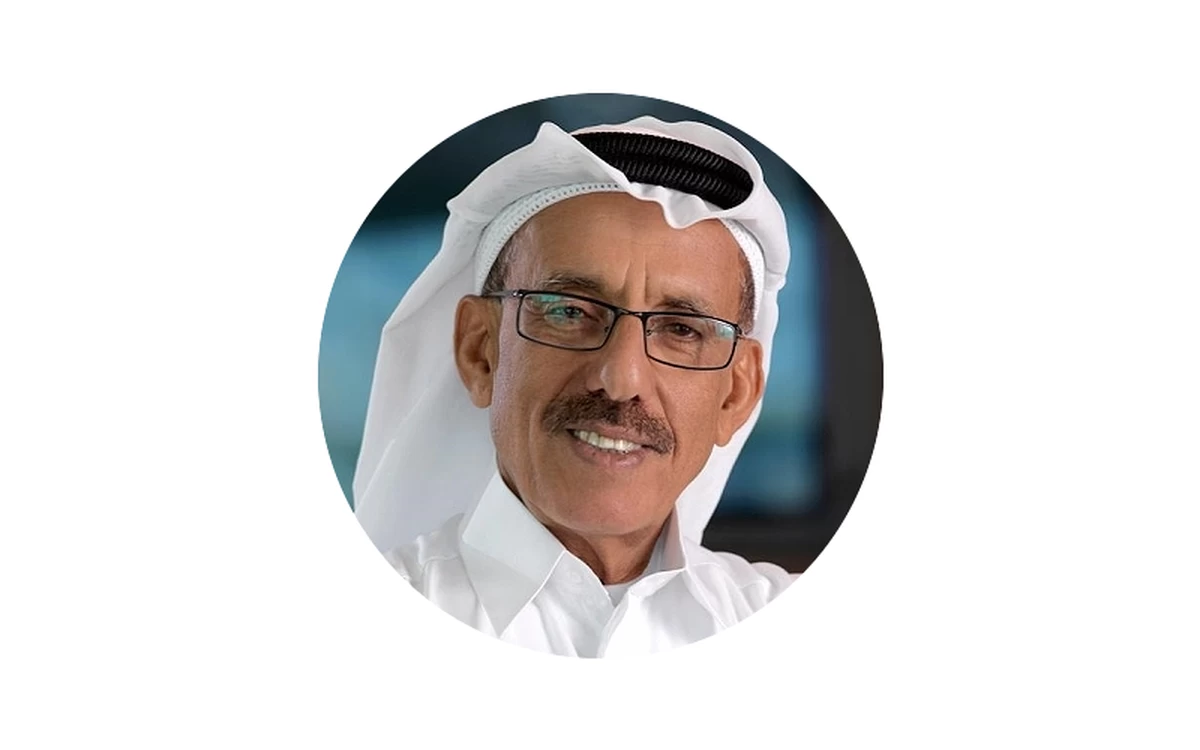
By Khalaf Ahmad Al Habtoor UAE Businessman