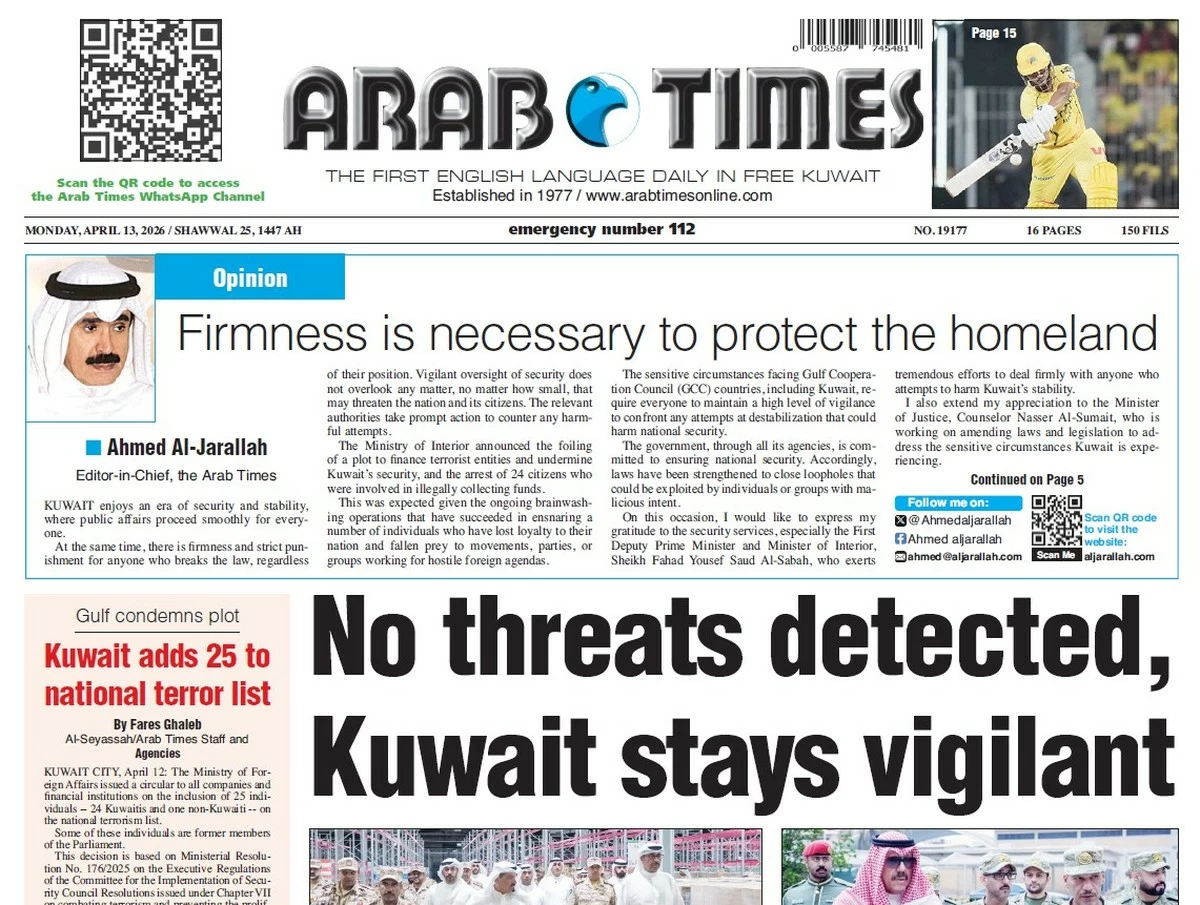





In today’s interconnected world, acts of charity are often immediate, personal, and driven by genuine compassion. A donation can be made in seconds, sometimes without a second thought.
But recent developments in Kuwait serve as a powerful reminder that even the most well-intentioned acts can carry serious legal consequences when they fall outside the boundaries of the law.
At its core, the issue is frequently misunderstood. This is not a matter of religion. It is not a matter of discouraging charity. Nor is it a challenge to long-standing traditions such as Zakat or Khums. Rather, it is a matter of legal compliance and financial accountability.
A Structured Legal Framework
For decades, Kuwait has maintained a clear and consistent legal position on public fundraising. Beginning with the 1959 law regulating the collection of funds for public purposes, reinforced by Law No. (24) of 1962 governing public benefit associations, and further developed through modern ministerial regulations, particularly those issued in 2021 the framework is unequivocal:
Funds collected from the public must be channeled exclusively through licensed entities, regulated financial systems, and under official supervision. This is not a procedural formality. It is a protective mechanism designed to ensure transparency, accountability, and lawful use of funds.
Where the Risk Begins
The legal risk does not arise from the act of giving itself. It arises when donations are:
Collected informally
- Transferred through unregulated channels
- Or redirected away from their declared purposes
At that point, what may have started as a charitable act can quickly evolve into a legal issue, potentially involving regulatory violations or more serious financial implications. Importantly, this transformation does not depend on malicious intent. It is triggered by the absence of compliance.
A Critical Distinction
There is a fundamental distinction that must be clearly understood: Religion encourages giving. The law governs how that giving is executed. This principle applies universally.
Whether the donation takes the form of:
Zakat
- Khums
- General charity
- Or contributions from any faith tradition
No exception exists outside the legal framework.
Beyond Compliance: A Matter of National Interest
In the current regional and global context, the issue extends beyond regulatory discipline. Unregulated financial flows, even when originating from legitimate intentions, can create vulnerabilities within the financial system. For this reason, adherence to the legal framework is not only a matter of personal compliance.
It is also a matter of:
- Protecting public trust
- Preserving the integrity of charitable institutions
- And safeguarding national stability
Presumption of Innocence
As with any matter under investigation, it is essential to reaffirm a core principle of justice: Every individual remains presumed innocent until proven guilty through a fair and transparent legal process. This principle must remain intact, regardless of public discourse or speculation.
The Broader Lesson
Beyond the specifics of any individual case, the broader message is clear. Good intentions, while essential, are not sufficient. From a legal standpoint, individuals are accountable not only for the purpose of their donation, but also for the path it takes, from collection to final use.
Final Word
A donation is not defined solely by its intent. It is defined by its compliance and in that distinction lies the line between lawful charity… and unintended legal exposure.
By Dr. Fawaz Khaled Alkhateeb