


30/03/2026

Share:
30/03/2026
Share:


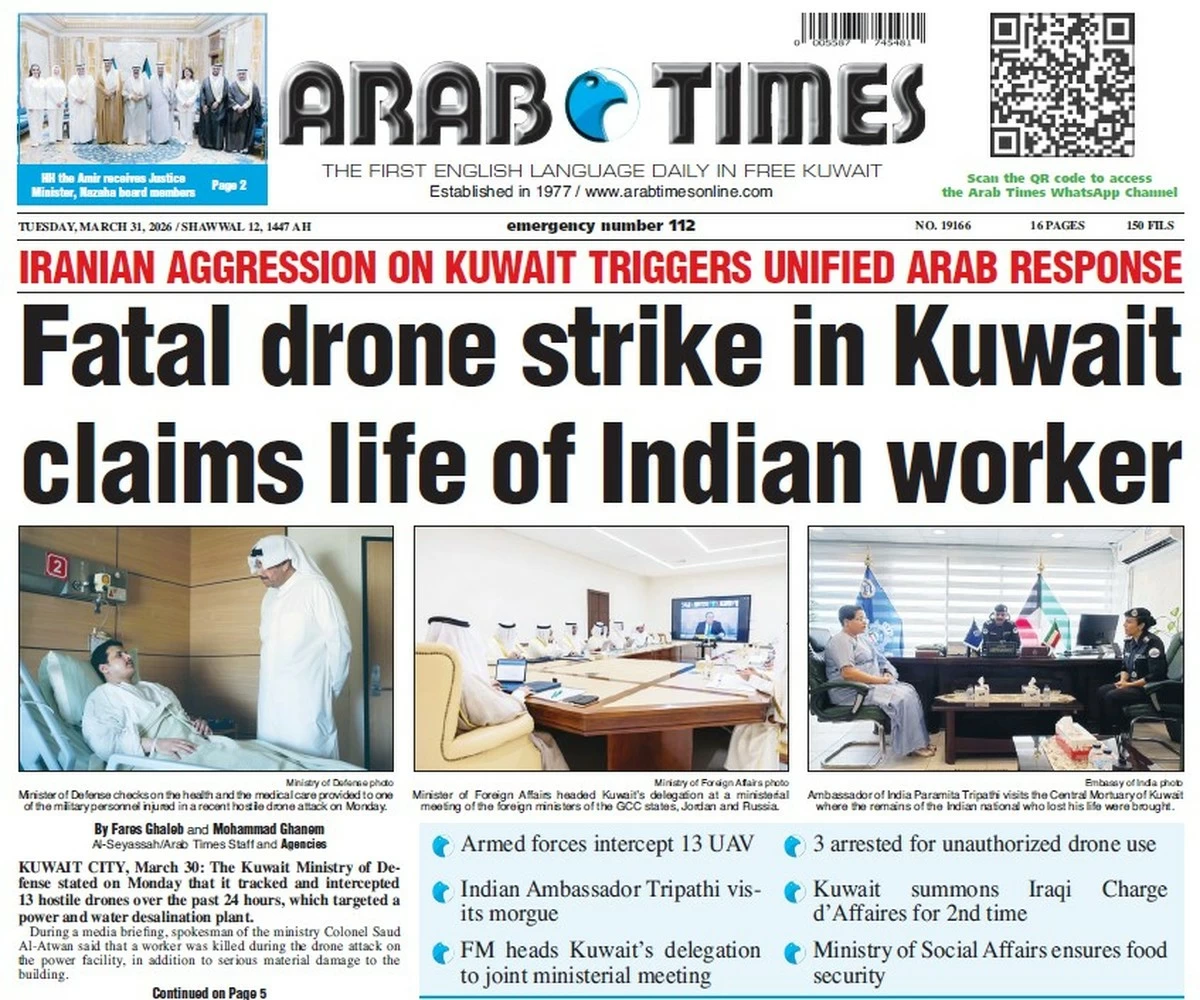
In times of conflict, numbers often take over the story. We hear about strikes, targets, and damage. But behind every headline, there is a human life. Yesterday, that life was Santhanaselvam Krishnan. He was not a soldier. He was not part of any conflict.

Santhanaselvam Krishnan
He was simply a worker, living his life, doing his job, and likely thinking about his future and his family back home. Like many others in Kuwait, he came here to build a better life, to support those who depend on him, and to work with dignity. And yet, in a single moment, his life was taken. It raises a simple but difficult question. What did he do to deserve this?
The truth is, nothing. He did nothing wrong. He was not a target, but he became a victim. And that is the reality of war that is often ignored. It does not always reach those who are part of the conflict. Sometimes, it reaches those who have nothing to do with it at all.
In Kuwait, we live among people from all over the world. They are not strangers. They are part of our daily lives. They work beside us, support our economy, and contribute effectively to the country we all call home. When something like this happens, it is not distant. It is personal. Santhanaselvam Krishnan was one of many who came to Kuwait in search of decent work and a better future. He had every reason to believe he would be safe and able to continue his life normally. But when the Iranian regime chose to target Kuwait and its vital infrastructure, that sense of security was tragically and unjustly shattered.
This moment should remind us of something important. Behind every political decision, every escalation, and every strike, there are real people. People with families, responsibilities, and dreams. People who are not part of any conflict, yet carry its consequences. As we reflect on what happened, we should not only focus on the event itself, but on the life that was lost.
His name should not be just another passing mention. It should be remembered as a reminder of the human cost of conflict.
Because in the end, the question remains.
What did Santhanaselvam Krishnan do to deserve this?
By Nasser Al-Hajeri