



Sadegh Zibakalam, an Iranian reformist intellectual at the University of Tehran, states, “It seems that we Iranians have not yet forgotten our historical defeat at the hands of the Arabs, nor have we forgotten the Battle of al-Qadisiyyah, which took place 1,400 years ago. We continue to harbor deep-seated resentment and hostility towards the Arabs. It is like a fire smoldering beneath the ashes, ready to flare up whenever an opportunity arises. Intellectuals despise the Arabs, and even religious people feel repelled by them. The animosity many Iranians feel towards Arab figures reflects a broader hostility toward Arabs.”
Despite the widespread use of Arabic vocabulary in official correspondence and everyday conversation, this linguistic presence does not necessarily indicate cultural acceptance or a sense of belonging to the Arab world. Perhaps the opposite is true. Iranians appear to have retained Arabic words without attempting to “Persianize” them, i.e., replace them with Persian equivalents, as the Shah sought to do. Although Iranians embraced Islam, they have not, even after 1,400 years, fully integrated it into the identity of the state.
To counter this perception, Iranians emphasize their historical role in shaping Islam’s linguistic, religious, and cultural dimensions. They frequently point out that many of those who compiled canonical hadith collections, established Islamic schools of thought, and developed the rules of the Arabic language were of Persian origin. The difficulty, however, lies in the fact that Iran’s ruling class, perhaps unlike those in most other Islamic countries, derives much of its religious and sectarian legitimacy from the Arabic language and Islamic tradition. Yet, for nationalist reasons, it is not inclined towards Arabs, viewing its own history and civilization as superior to those of the peoples who conquered Persia and ruled its lands for centuries.
This tension remains unresolved and may persist indefinitely. Efforts to reconcile these competing identities have so far failed. Iran has tried, and for a time succeeded, in governing several Arab countries, almost directly. To achieve this balance, Mohammad Al-Rumaihi said, “The Iranian regime has pursued two parallel paths. The first seeks to amplify the sectarian dimension beyond Iran’s borders, particularly in certain Arab countries, to demonstrate that the Islamic Republic’s influence extends through sectarian affiliations. Locally, this approach is presented as evidence of strength and expansion. The second path involves maintaining political and psychological distance from Arabs, even through the use of terms with negative connotations, such as ‘Bedouins.’ Although this term appears in the Quran in reference to a specific group of people who deviated from Islamic values, it has subsequently been used to refer to Arabs in ambiguous ways that serve Iranian political discourse and depart from its precise linguistic and religious meaning.”
This duality suggests that Iran’s crisis extends beyond foreign policy to the very question of state identity: Is Iran a Persian nationalist state, a transnational religious state, or a sectarian project seeking to expand its influence? The simultaneous pursuit of these three objectives has left official discourse marked by contradictions. It is worth noting that large segments of Iranian society do not share this view. Educated and progressive groups played a role in the downfall of the previous regime, aspiring to build a modern state that could engage with the world and benefit from its achievements. However, the revolution took a different course, ultimately marginalizing these forces in favor of the religious establishment and security apparatus.
For these reasons, the Islamic Republic has failed to resolve its identity crisis. It has been unable to build a stable nation-state, present a religious model compatible with the modern age, or establish normal relations with its neighbors and the wider world. Iran’s external crises therefore appear to reflect a deeper internal crisis - the ruling elite’s inability to answer a fundamental question: what is our identity? Many of the conflicts plaguing the region cannot be understood without considering the profound ambiguity surrounding the identity of the Iranian state. This ambiguity leaves political decision-making caught between nationalism, religion, and revolution, preventing it from settling on a project capable of producing a balanced state at peace with itself before seeking reconciliation with others. When a state fails to define its identity, those who disagree with its vision risk being treated as adversaries, and conflict becomes a means of asserting its authority.
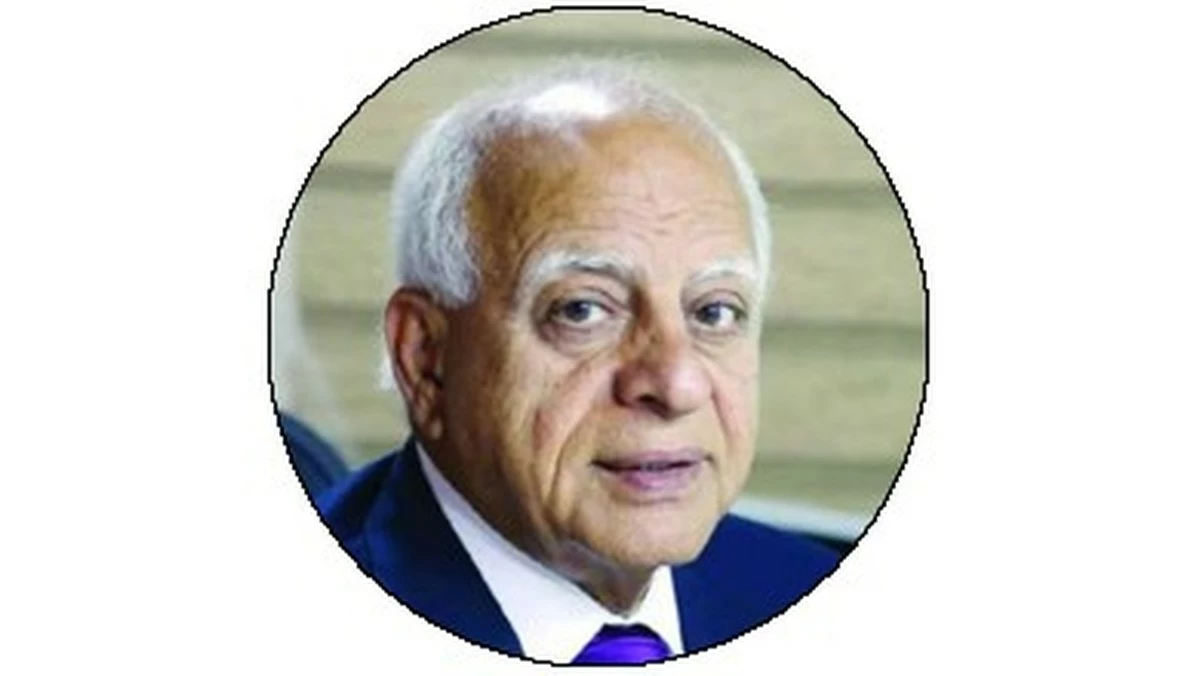
By Ahmad alsarraf
email: [email protected]
email: [email protected]