


13/09/2026

Share:
13/09/2026
Share:

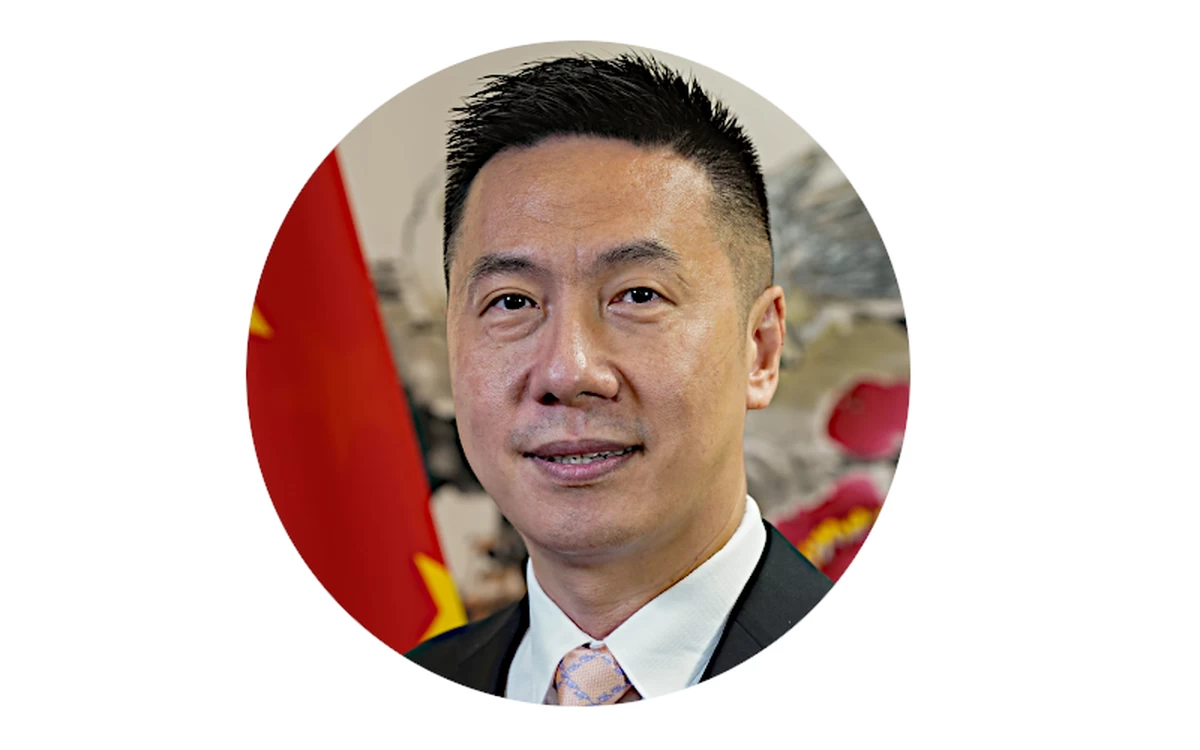
Since arriving in Kuwait, I have been deeply impressed by the unique character of this society where different civilizations interact and coexist in harmony. Here, time-honored Arab traditions meet cultures from around the world, with different languages, cuisines and lifestyles shaping the vibrant rhythms of everyday life. More importantly, when the country is confronted with difficulties and challenges, people are able to put aside their differences, find common ground and look out for each other to weather the storm together.
This spirit of embracing cultural diversity while cherishing their shared home is what makes Kuwait so remarkable. Likewise, China presents its own vibrant picture, where diverse cultures blend and coexist, and multiple ethnic groups prosper together. China is a big family composed of 56 ethnic groups. Each ethnic group has its own distinctive language, costume, music, diet and festivals, all of which contribute to the defining hallmark of Chinese culture — unity in diversity. Today, from the Uyghur dance to the Tibetan costume, from the Mongolian diet to the Dai festivals, all are alive in the everyday life of Chinese people. As a matter of fact, over the long course of more than 5,000 years of Chinese civilization, all ethnic groups of China have, through their exchanges, interactions and integration, jointly created the splendid Chinese culture and forged the great national spirit.
They have come together as one community with a shared future, characterized by blood ties, common beliefs, shared culture, interdependent economy and close emotional ties. Fine traditional culture of every ethnic group is an integral part of Chinese culture. China attaches great importance to protecting and developing the best of all traditional ethnic cultures. To this end, China has created a harmonious and inclusive environment for the coexistence, mutual learning and shared development of all ethnic groups, and incorporated its effective theory and practice into the legislation, so that people of various ethnic groups are united as one, like seeds of a pomegranate sticking together. In July 2026, the Law of the People’s Republic of China on Promoting Ethnic Solidarity and Progress entered into force. It is the first law to explain, from a legal perspective, core concepts such as “advancing the building of the Chinese national community”.
It also provides for the “respect for and protection of the learning and use of ethnic minority languages and scripts”, and underscores the importance to “promote mutual learning and integration among all ethnic cultures and encourage ethnic groups to admire each other’s fine traditional culture and learn each other’s languages and scripts”. The law will provide strong support for efforts to carry forward the fine traditional cultures of all ethnic groups, promote interaction, communication, and integration among them, and further enrich and develop the Chinese culture. Solidarity and common progress of all ethnic groups, and their shared prosperity and development, are the lifeblood, strength and hope of the Chinese nation.
The Chinese government is committed to achieving the shared development of all ethnic groups. From 2012 to 2025, the combined GDP of the five autonomous regions (Inner Mongolia, Xizang, Ningxia, Xinjiang and Guangxi), grew from 3.25 trillion yuan to 8.66 trillion yuan. In 2021, all 420 national level poverty-stricken counties in ethnic autonomous areas were lifted out of absolute poverty, and 28 ethnic groups with smaller populations were entirely lifted out of poverty. On delivering prosperity for all ethnic groups, the Law of the People’s Republic of China on Promoting Ethnic Solidarity and Progress makes specific requirements regarding support to areas with large ethnic minority populations in deepening reform and opening up across the board, fully aligning with national development strategy and improving their capacity for self-development. This ensures that all ethnic groups could benefit from the dividends of development on an equal footing.
Looking ahead, all ethnic groups of China are marching forward in unity toward the rejuvenation of the Chinese nation. Though geographically far apart, China and Kuwait share the same conviction that people living on the same land should take pride in their own distinct culture, while standing united for a shared future.
By H.E. Yang Xin
Ambassador of China to Kuwait
Ambassador of China to Kuwait