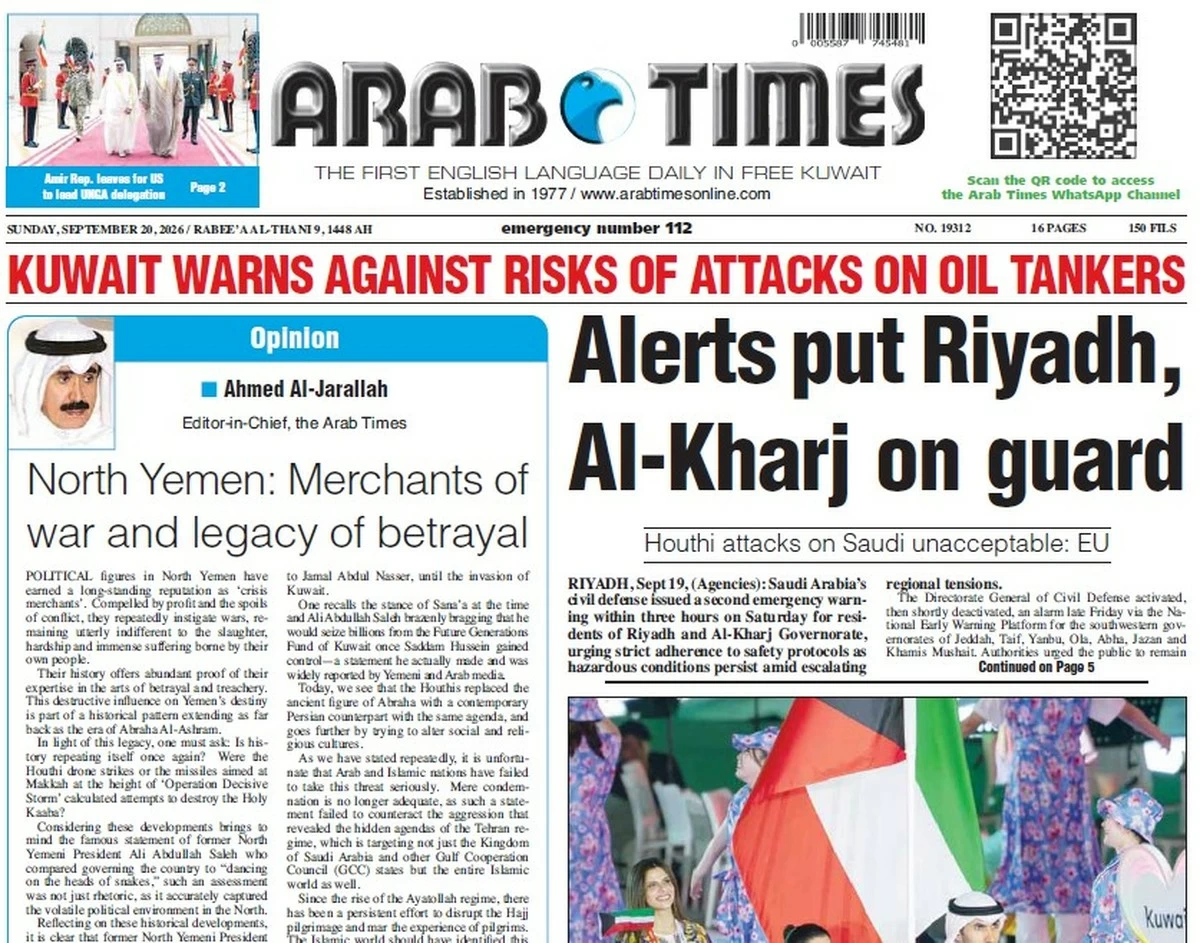





Sometimes, it is wise to respond with a deterrent punishment, especially after a long period of patience with the aggressor. This is even wiser when the punishment is directed at a group that violated the law, and the national and international legitimacy. This introduction matches the Saudi response to terrorist crimes committed by Iranian- backed militias operating in the Iraqi territory.
The harsh punishment for terrorist aggression must be severe by all standards -- national, regional and international. Sometimes, discipline comes through amputation. The response of the Saudi Army to the crimes of the Iranian-backed Iraqi factions was a successful surgical operation and it conveyed a clear message: targeting the Kingdom of Saudi Arabia and the other Gulf states will never be tolerated. The same applies to the Houthi group, which received a resounding response as a result of its repeated attacks on Saudi Arabia.
Restraining a reckless individual involves stages, beginning with patience and gentle treatment, in the hope that they will return to reason. Therefore, diplomatic means should be allowed to restrain the enemy and preserve relations between two Arab neighbors, even if they involve a mercenary group serving the interests of the Iranian regime. The Saudi response was expected long ago, so that terrorists in Iran and Iraq would know they are not immune from punishment. For the past six months, these terrorist groups have been launching attacks on the Gulf Arab states whenever the United States and Israel bombed Iran. They were mistaken when they thought that Gulf wisdom and patience in front of dangers are signs of weakness. The truth is that the Gulf Cooperation Council (GCC) countries have been working hard throughout the past months to deny Tehran and its proxies in the region, such as the Houthis, Hezbollah and Iraqi groups loyal to Iran like the Popular Mobilization Forces, the opportunity to retaliate.
The GCC states have armies and weapons capable of responding to the attacks of Iran or any of its proxies with overwhelming force. The Gulf states are not as weak as these barbaric thugs believe -- thugs who disregard international values, norms, treaties and conventions. Over the past six months, the Iranian regime and its proxies in some Arab countries have been attempting to muddy the waters whenever they felt weak. The Iranian regime deluded itself into thinking it could dodge punishment for its crimes, and that the Gulf states would not retaliate. Now, the tables have turned. From this day forward, terrorist attacks will not go unanswered, the response will be far more severe than these fools expect. The strategic course of the Gulf has shifted since the very first moments of the aggression against the GCC states.
This new course is meticulously calculated, affirming that there are no limits to deterrence when it comes to the sovereignty of the Gulf states. While diplomacy has been given a chance to operate, de-escalation will not come without a price for the aggressor. The Iranian regime and its proxies have consistently thwarted moves toward de-escalation, believing this will help them achieve their objective of subjugating the region. Hence, they resorted to escalating tension in the Bab el-Mandeb Strait through the Houthi terrorist attacks on Saudi ships, in addition to launching drones at Saudi oil facilities, coinciding with attacks by the Iraqi proxy militias.
This situation is now a thing of the past, because Saudi Arabia and the other GCC states have drawn red lines that Iran and its proxies cannot cross. The proxies of Iran must reconsider their calculations. They must understand that the future of the region is determined by the GCC states, not by any other party. I would like to thank Mr. Muqtada Al-Sadr for his comments on what happened, as he did not deny that Iraq harbors many agents and sectarian groups. It will be beneficial if Iraqi Prime Minister Ali al-Zaidi presses ahead with his plan to visit Saudi Arabia, so that the proxies of Iran will stop meddling in Iraqi affairs.