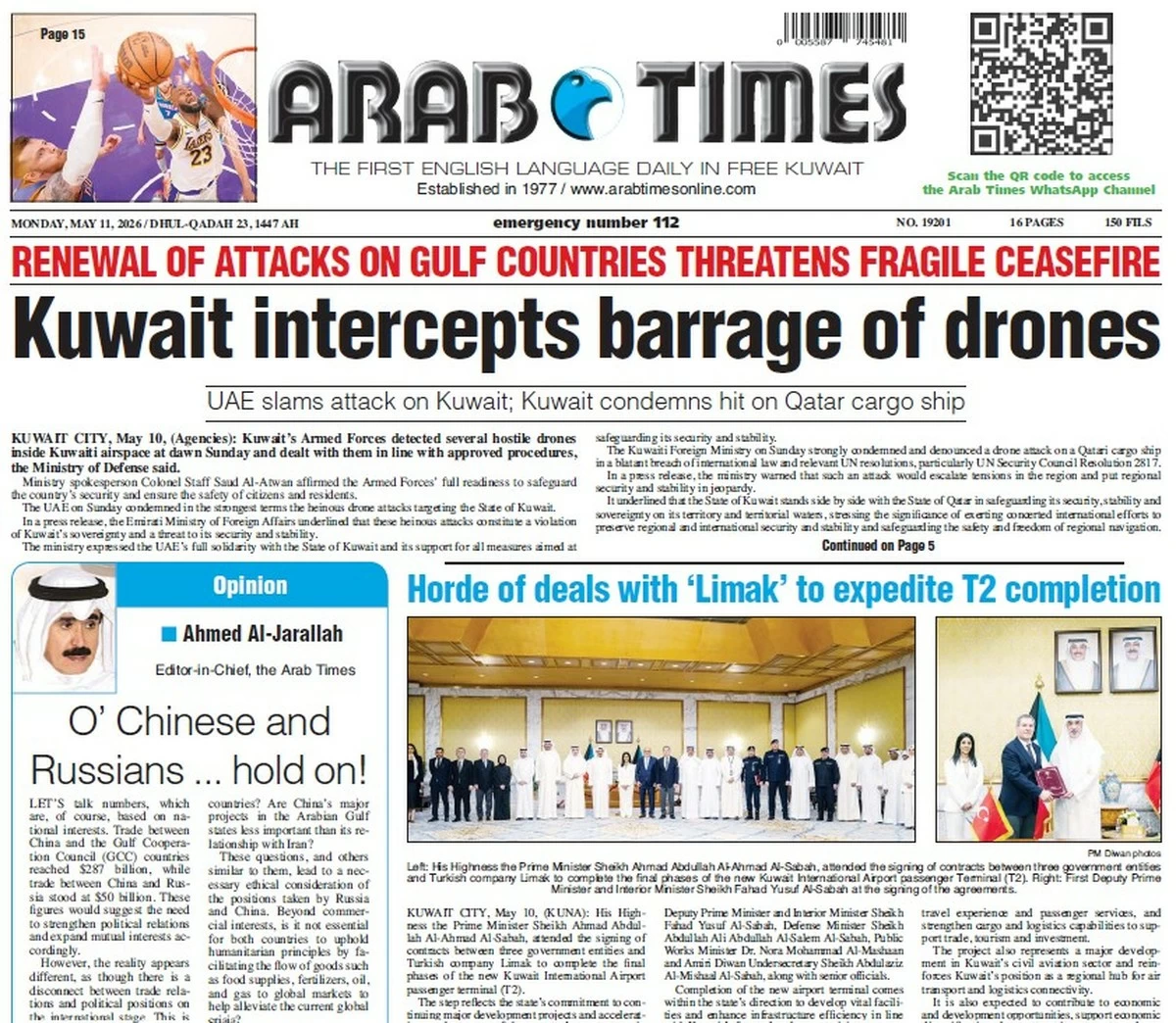




Let's talk numbers, which are, of course, based on national interests. Trade between China and the Gulf Cooperation Council (GCC) countries reached $287 billion, while trade between China and Russia stood at $50 billion. These figures would suggest the need to strengthen political relations and expand mutual interests accordingly. However, the reality appears different, as though there is a disconnect between trade relations and political positions on the international stage.
This is reflected in the stances of Beijing and Moscow in the United Nations Security Council. Every time the crisis of the Strait of Hormuz, which is controlled by Iran, is raised, China and Russia use their veto power, even though the closure of the Strait would disrupt global economic activity and increase inflation worldwide. On the other hand, trade between Russia and Iran amounts to $4.8 billion, while trade between China and Iran reaches $13.37 billion.
This indicates that trade relations between Russia and China on one side, and the GCC countries on the other, are significantly larger compared to their trade with Iran. Why prioritize Iranian interests over those of the GCC countries? Are China’s major projects in the Arabian Gulf states less important than its relationship with Iran? These questions, and others similar to them, lead to a necessary ethical consideration of the positions taken by Russia and China.
Beyond commercial interests, is it not essential for both countries to uphold humanitarian principles by facilitating the flow of goods such as food supplies, fertilizers, oil, and gas to global markets to help alleviate the current global crisis? I will not discuss the crimes committed by the Iranian regime against its own people and towards the peoples of the region. Nor will I focus on the crimes perpetrated by Iranian proxies to destabilize security and peace in several Arab countries and threaten global stability. This is a fact that is well known to the international community.
Chinese and Russian interests with Arab states are far greater than their interests with the rogue Iranian regime, which has never missed an opportunity to use terrorism as a tool to blackmail countries, including those with strong ties to Russia and China. At times, tactical calculations by states may not fully align with their strategic interests. Accumulated mistakes can lead to a major crisis.
Because politics is the art of the possible, the constant use of the veto power in the Security Council to grant Iran more time to blackmail the world will ultimately weaken the Russian and Chinese positions within the Council. Undoubtedly, the very tool used to bolster Iran’s terrorist stance will be turned against Moscow and Beijing in the future, especially since Russia needs the support of the international community in its war against Ukraine, and China needs the major powers to resolve its trade disputes with the United States. This situation compels Russia and China to stand against the rogue, terrorist state, not to support it. Moscow and Beijing should stand with the Gulf capitals, with which they have strong relations and significant trade ties.
The Gulf states possess substantial global energy reserves, estimated at approximately 511 billion barrels of oil and 44.3 trillion cubic meters of gas. Consequently, the Gulf states are best positioned in terms of meeting the long-term energy needs of China and global markets. This reality should be reflected in the positions of Russia and China. Both countries must punish the Iranian terrorist regime by ceasing to use their veto power in the Security Council against UN resolutions and by refraining from providing Iran with intelligence and weapons.