



Nothing is more dangerous for a state than a passing economic crisis, except the moment when the absence of the rule of law becomes the norm, when slander replaces truth, and defamation takes the place of accountability. At that point, it is not investment alone that collapses; the very idea of the state begins to unravel. What Lebanon is experiencing today is neither a media debate nor a personal dispute. It is a decisive test of whether the rule of law still exists.
Lebanon was never, to me, a temporary venture, a testing ground, or a transactional deal. It is a country I genuinely loved, invested in with conviction, and stood by during its darkest times; when remaining was a risk, not a gain. My investments in Lebanon have exceeded USD 1.7 billion, and despite the continuous financial haemorrhage and heavy losses we have endured, I did not abandon the country, shut down my institutions, or leave employees to face their fate.
I did not do so because circumstances were favourable, but because I believe that people are a trust. Hundreds of families who work with us should never pay the price for chaos, negligence, or the absence of the state. We endured patiently, absorbed losses, and chose to remain when others chose to withdraw, out of respect for livelihoods and human dignity.
But what is happening in Lebanon today has crossed every red line.
This is no longer merely a difficult investment environment. It has become a complete legal exposure, where anyone who seeks to help, invest, or even defend themselves is subjected to orchestrated campaigns of defamation, false accusations, and media attacks, without evidence, without accountability, and without deterrence.
Here, the truth must be stated clearly: no state can invite people to invest while abandoning the defence of their most basic rights. Investment is not a favour to be granted; it is a partnership built on trust, and the first pillar of that trust is legal protection.
What we are witnessing is a dangerous transformation in the role of the media; from a watchdog to an instrument of violation. The media is not a court. Defamation is not criticism. False reporting is not opinion. Constructive criticism is legitimate, and offering advice is a duty. But insult, baseless accusations, and systematic incitement are acts punishable by law in any state that respects itself.
In fairness, it must be said that this conduct does not represent Lebanese media as a whole. There remains professional, national media that we respect and value. What we are addressing is a segment of paid media that has deliberately chosen to become a tool of distortion and slander rather than a platform for truth and responsibility.
No one should be blamed for defending themselves when they are unjustly targeted. Silence in the face of defamation is not wisdom; it is encouragement. Dignity is not a luxury that can be bargained away under any pretext.
In this context, I extend my sincere appreciation to Ahmed Al Jarallah, Dean of Kuwaiti Journalism, and to Fouad Al Hashem, for their principled and professional positions. This is the media we respect: media that speaks the truth, defends human dignity, and does not trade in reputations or hide behind hollow slogans.
This breakdown has not stopped at defaming individuals and institutions. It has expanded to include attacks on Gulf states and their leaderships; an unacceptable violation that strikes at sovereignty and dignity and violates all political and ethical norms. Allowing insults against states and their leaders, or dragging their names into populist smear campaigns, does not merely damage historic relations; it constitutes a serious offense, and tolerance of such conduct once again exposes the absence of a legal authority capable of imposing limits.
Most alarming is that Lebanese law itself explicitly criminalizes insults against a sister state or its leadership, and obliges judicial authorities to act when such offenses occur. In such cases, the Public Prosecution is expected to act ex officio, on its own initiative, without awaiting any complaint or request from any party. This article itself constitutes a clear legal notification to the Public Prosecution, from which action is expected, in accordance with due process, to initiate the necessary measures.
Any state that respects itself does not allow its territory or media platforms to become arenas for attacks against others, nor does it permit international relations to be violated under the pretext of freedom of expression. Official silence in the face of such abuses cannot be interpreted as neutrality; it is read as weakness, and sends a dangerous message that there are no limits, no red lines, and no accountability.
What is happening in Lebanon today is a clear institutional failure.
The state is absent. Institutions are paralyzed. The law is not enforced. I have explicitly called on the President of the Republic and the Prime Minister to take concrete steps to put an end to this lawlessness, yet to this day, no meaningful action has been taken; not even a symbolic measure to restore the minimum authority of the state.
One legal principle must be reaffirmed without ambiguity: the application of the law is not optional, not selective, and not subject to public mood. The law must apply to all and must stand as the highest authority, not as a tool used at times and suspended at others.
This is not a personal assessment.
The United Nations Special Rapporteur on human rights and poverty has confirmed that impunity and corruption are deeply entrenched in Lebanon’s political and economic system, and that the absence of accountability is a central cause of institutional failure. The United Nations further affirms that the rule of law is the foundation of peace, stability, and economic progress, and that its absence opens the door to abuse and collapse.
The legal philosopher Montesquieu summarized this reality with precision: “There is no liberty if the law is not above all, and no state without an independent judiciary.”
Most dangerous of all is that this approach does not merely destroy investment, it threatens the interests of more than two million Lebanese living in Gulf countries, and the millions inside Lebanon whose livelihoods depend on them.
No investor, partner, or visitor will return if this approach persists. The problem is not the Lebanese people; it is a system that consumes, through corruption and indifference, all who become part of it.
When investors feel exposed, unprotected, and targeted by media attacks without legal safeguards, the message is unmistakable: no state, no law, no safety.
I say this today clearly and responsibly: there is no investment without dignity, no economy without law, and no state without institutions that protect people, not slogans.
Every defamation campaign without accountability is another blow to what remains of Lebanon’s credibility, reputation, and future. Every instance in which slander goes unchecked is another nail in the coffin of the state.
Lebanon deserves better. It deserves a state that protects it, not one that looks on. It deserves a law that is applied, not exploited.
And I say this as someone who loves Lebanon, not one who has abandoned it; as a responsible investor, not a bystander: A state that does not protect the rule of law cannot ask for trust.
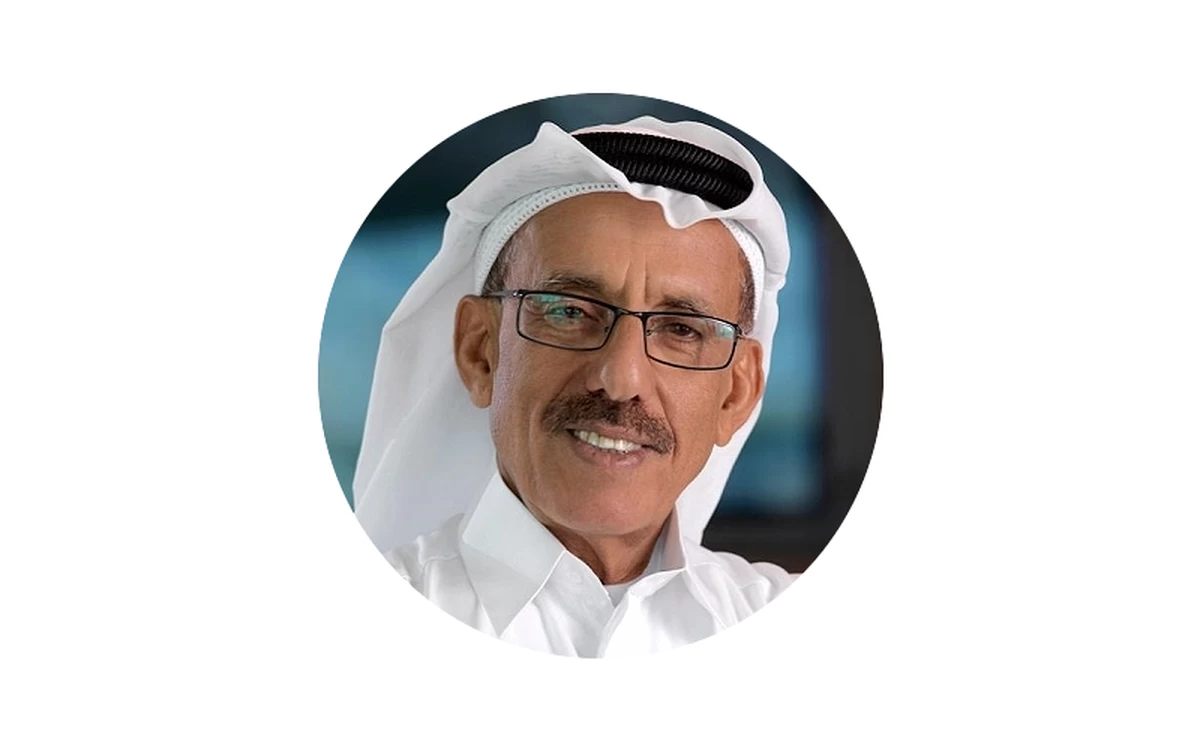
By Khalaf Ahmad Al Habtoor