



24/08/2026

Share:
24/08/2026
Share:


KUWAIT CITY, Aug 24: Kuwait’s Public Authority for Manpower (PAM) has issued an advisory outlining when employment contracts can be terminated, emphasizing that both workers and employers have specific rights and obligations under the Labour Law.
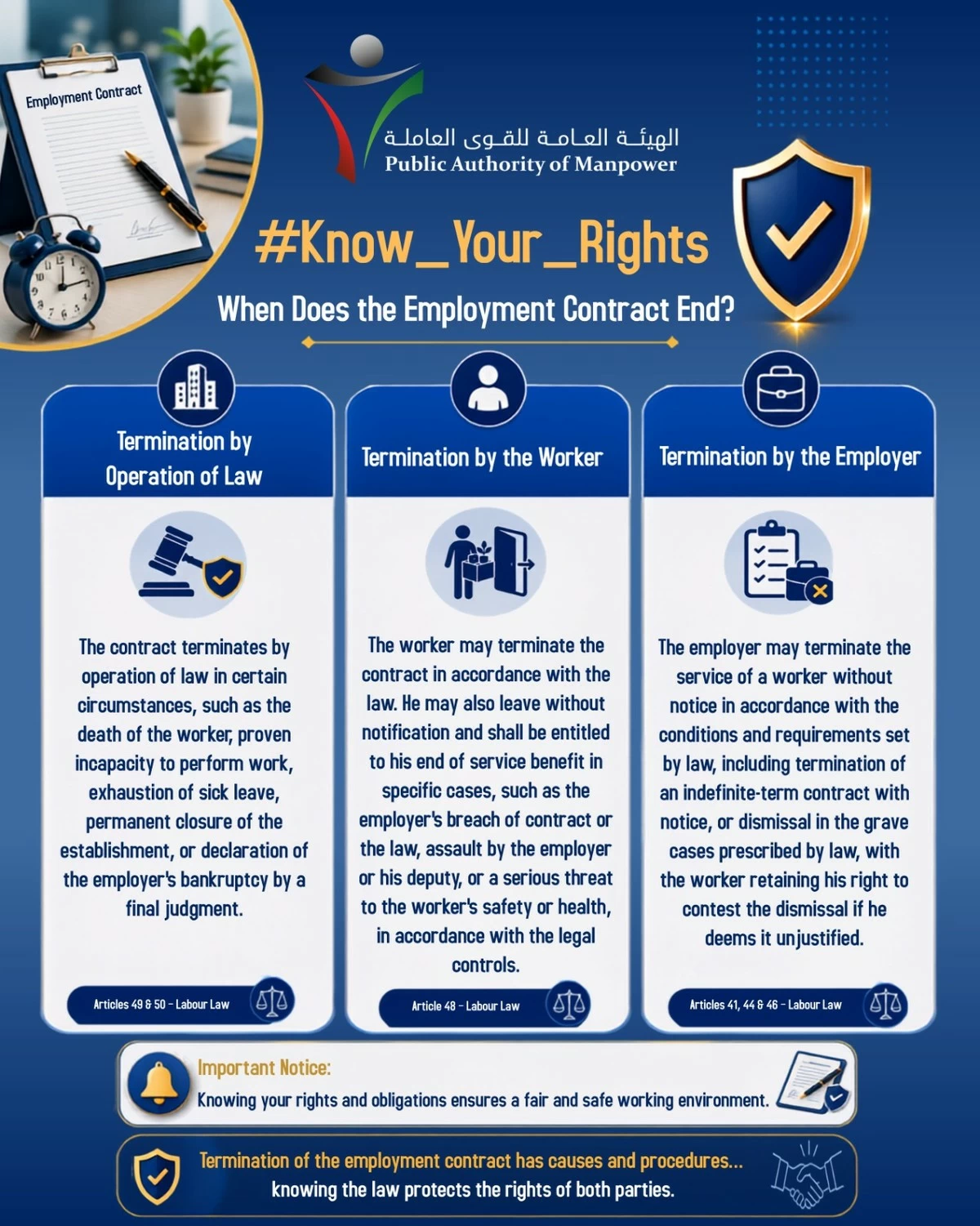
Under the advisory, an employment contract may end automatically by operation of law in certain circumstances, including the worker's death, proven inability to perform the job, exhaustion of sick leave, permanent closure of the establishment, or a final court judgment declaring the employer bankrupt.
Worker’s right to terminate
PAM said workers may terminate their employment contracts under the law. In certain cases, workers may leave without prior notice and still retain their entitlement to end-of-service benefits.
These circumstances include a breach of the employment contract or Labour Law by the employer, assault by the employer or the employer’s representative, or a serious threat to the worker’s safety or health, subject to the applicable legal requirements.
Employer’s right to terminateEmployers may also terminate a worker’s service without notice in cases permitted under the Labour Law. For indefinite-term contracts, termination may take place with the required notice, while dismissal without notice is permitted in serious cases specified by law.
PAM noted that workers retain the right to challenge a dismissal if they believe the termination was unjustified.
The advisory referenced Articles 41, 44, 46, 48, 49 and 50 of Kuwait’s Labour Law, depending on the circumstances of termination.
PAM urged both employers and workers to understand their legal rights and obligations, stressing that knowing the applicable procedures can help ensure a fair and safe working environment.
“Termination of the employment contract has causes and procedures,” the advisory emphasized, noting that awareness of the law helps protect the rights of both parties