



A few days before the start of the latest war between Iran, Israel, and the United States, I posted a message on social media, stating that Iran is not Venezuela, and Khamenei is not Maduro, etc. That post didn’t sit well with some individuals, who misinterpreted it.
However, time proved me right. Due to many reasons, there is nothing more difficult than opposing religious regimes. No religious regime in the modern era has succeeded in achieving progress and stability for its people because the priorities of the leaders of such regimes have no relation to the daily needs of the citizen, nor to their advancement in modern sciences, nor to developing their capabilities, nor to their freedoms.
We also observe a similarity between religious regimes and radical regimes in their emphasis on adhering to a quasi uniform dress code, their refusal to wear a necktie because it is associated with Western culture, while still wearing Western-style suits. A somber expression is evident on everyone, and women are required to wear the headscarf or chador. Almost everyone, from field commanders and military experts to bank presidents, ministers, and even candy vendors, tends to look alike and often imitates their leaders in behavior and speech.
This reflects a common feature of these religious and radical regimes, where the state is the leadership and the leadership is the state. Amidst all this activity, both military and civilian, in Iranian cities, the focus is largely on the major cities, which are predominantly Persian. There is near-total disregard or marginalization of other cities and minority groups, who make up no less than half of the country’s 90 million inhabitants.
With the exception of some participation from the Azeri minority, there is a near-total disregard for minorities in general, whether they are non-Persians, non-Shia, or non-Muslim Iranians. According to CIA reports, the Persian population in Iran is estimated to be slightly more than half, including the Mazandaran and Gilak minorities.
Although the Mazandaran and Gilak peoples are not Persian but rather Caspian Sea peoples, they are classified within the Iranian family, like the Kurds and Baloch, and have their own languages. The largest minority after the Persians are the Azeris, who make up approximately 25 percent of the population. They are followed by the Kurds (about ten percent), the Lurs (five percent), the Baloch (mostly Sunni), the Turkmen (two percent), and the Iranian Arabs, who comprise between one percent and three percent, and are concentrated in Khuzestan.
The Iranian Arabs have suffered greatly under the central government since the fall of their state. Other minorities include Armenians, Chaldeans, Assyrians, Georgians, Circassians, Jews, and Mandaeans, who make up approximately one percent of the population. It was inevitable, given the realities on the ground, that the revolution would eventually transform into an institutionalized system focused on survival at any cost.
This led to the entrenchment of clandestine and religious institutions, forming complex networks run by clerics and the Revolutionary Guards, who controlled money, power, weapons, and supporting bureaucratic and commercial structures. Over time, they were able to exploit sanctions and turn them to their advantage.
The popular religiosity that marked the early days of the revolution began to decline after the end of the war with Iraq, due to ongoing suffering from the American and Western embargo, and the regime’s insistence on spending the state’s limited resources on acquiring nuclear weapons, buying foreign allegiance, and consolidating religious rule.
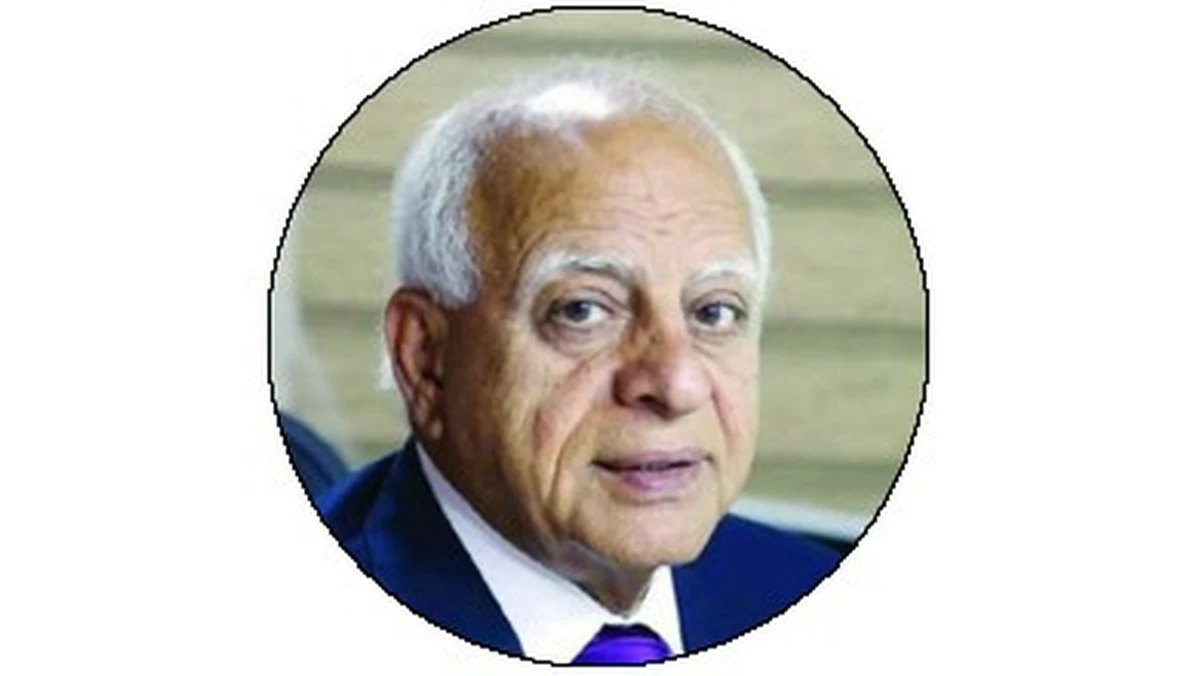
By Ahmad alsarraf
email: [email protected]
email: [email protected]