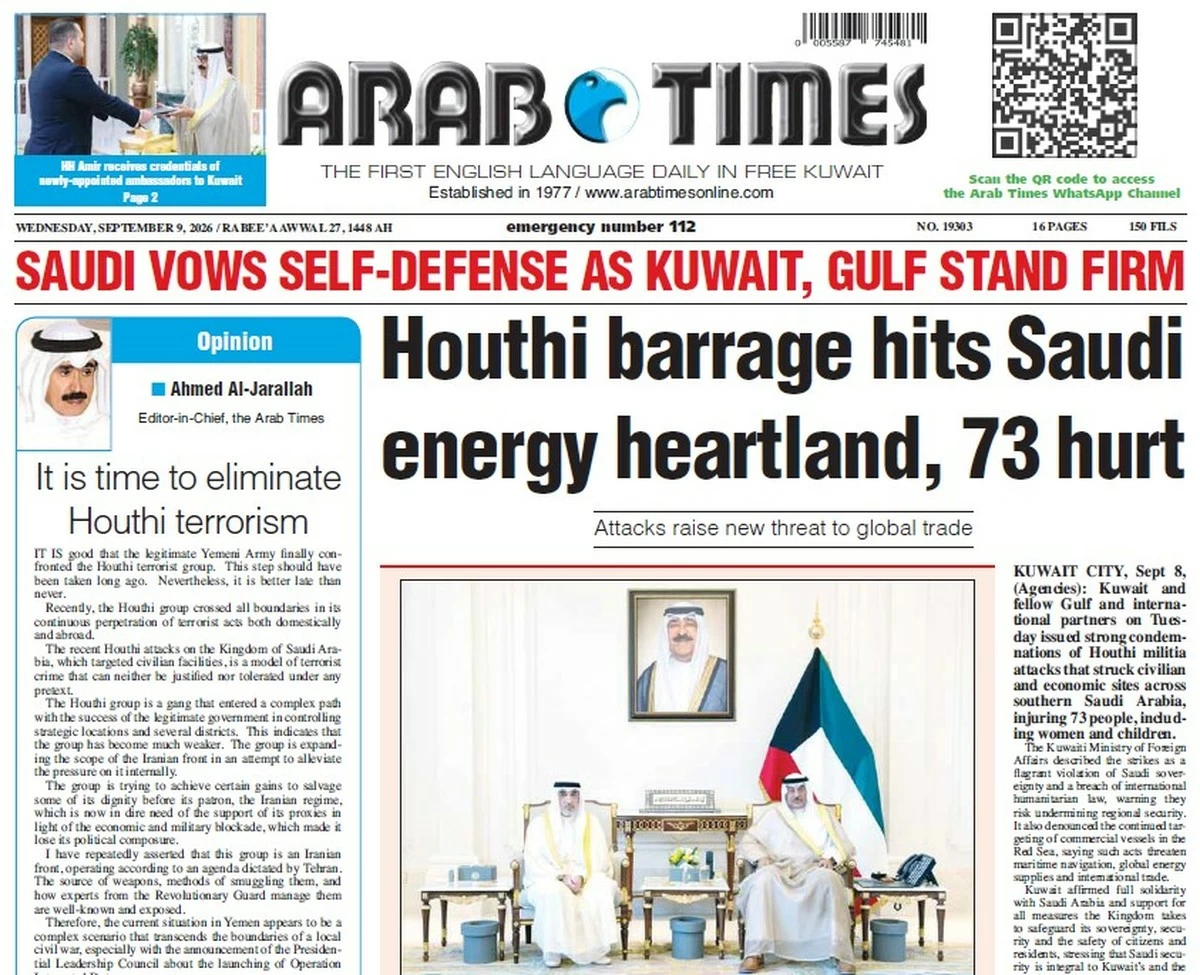





The Security Council’s resolution against Iran, adopted with the support of the six Gulf Cooperation Council (GCC) states and 135 other countries, was a much-needed development. The Gulf region has been facing great harm due to the Iranian regime’s destructive actions since the successful 1979 coup that overthrew the Shah.
For 47 years, Iranian terrorist operations have been a continuous threat to all Gulf states. Despite the persistent bitterness and suffering caused by such terrorist acts, the Gulf states have repeatedly attempted reconciliation, hoping for a change of heart and a move toward common ground from the leadership of Tehran.
However, these malevolent actors have consistently shown arrogance and unyielding intransigence, frustrating every effort at rapprochement. The region is burdened by an intricate geography that has amplified these calamities. It is crucial to understand that the Gulf leaders’ commitment to wisdom and good neighborliness has been wrongly perceived as weakness, a perception far removed from the truth.
A genuinely wise leader secures favorable conditions for the future, a practice entirely absent in the conduct of the reckless. For five decades, the Iranian regime has demonstrated this recklessness through sustained efforts to destabilize the entire Arab world, extending its reach from Iraq, Yemen, Syria and Lebanon all the way to the Maghreb countries.
The sheer scale of the latest aggression stripped away any pretense regarding its true nature. Our countries, subjected to the relentless aggressions daily, must transcend from mere diplomatic posturing to adopt a resolute and decisive stance. Strategic patience, though demonstrated by our governments, has reached its limit. Restraint is indefensible when the enemy is vigorously killing you. This aggression now imperils our very existence, evidenced by the bombing of civilian infrastructure and innocent people and the grave threat to maritime navigation -- the vital economic artery of the region
The brutality and desire of the regime to impose its divisive vision throughout the Arab region make it inherently untrustworthy. Its aggression is well-documented, from the terrorist attacks our nations have suffered to the recent war. Trust is impossible with a state that views others as perpetual enemies due to sectarian differences, regardless of its diplomatic facade. Their true intentions were revealed during the recent conflict. Their leaders offered hollow apologies to the Gulf states, while their Revolutionary Guard escalated attacks and issued threats against our peaceful nations. Perhaps, this aggressive regime underestimates our region, mistaking it for a mere desert and oil. They fail to understand that while our people are peaceful, we are fiercely committed to defending our security, borders and sovereignty.
Today, we are facing a crucial challenge -- ending this aggression. The path forward begins with our unity and strength, because the post-war world demands a new and resolute approach. The current Iranian regime, often characterized as a rogue state, demonstrates a failure to draw constructive lessons from its rich, ancient history. The ruling authorities appear rooted in an outdated, even prehistoric, mindset.
This reality necessitates a cautious and deliberate approach to any future engagement with this hostile neighbor. Trust is not warranted. It is imperative that those who have endured repeated suffering remain highly vigilant. Our future strategy must be built upon this foundation, in solidarity with our Gulf partners. We have the capacity to emerge from this challenge, stronger than ever. For the past 47 years since the Iranian revolution, this terrorist regime has consistently sought to manipulate the Gulf states into serving its narrow sectarian agenda.