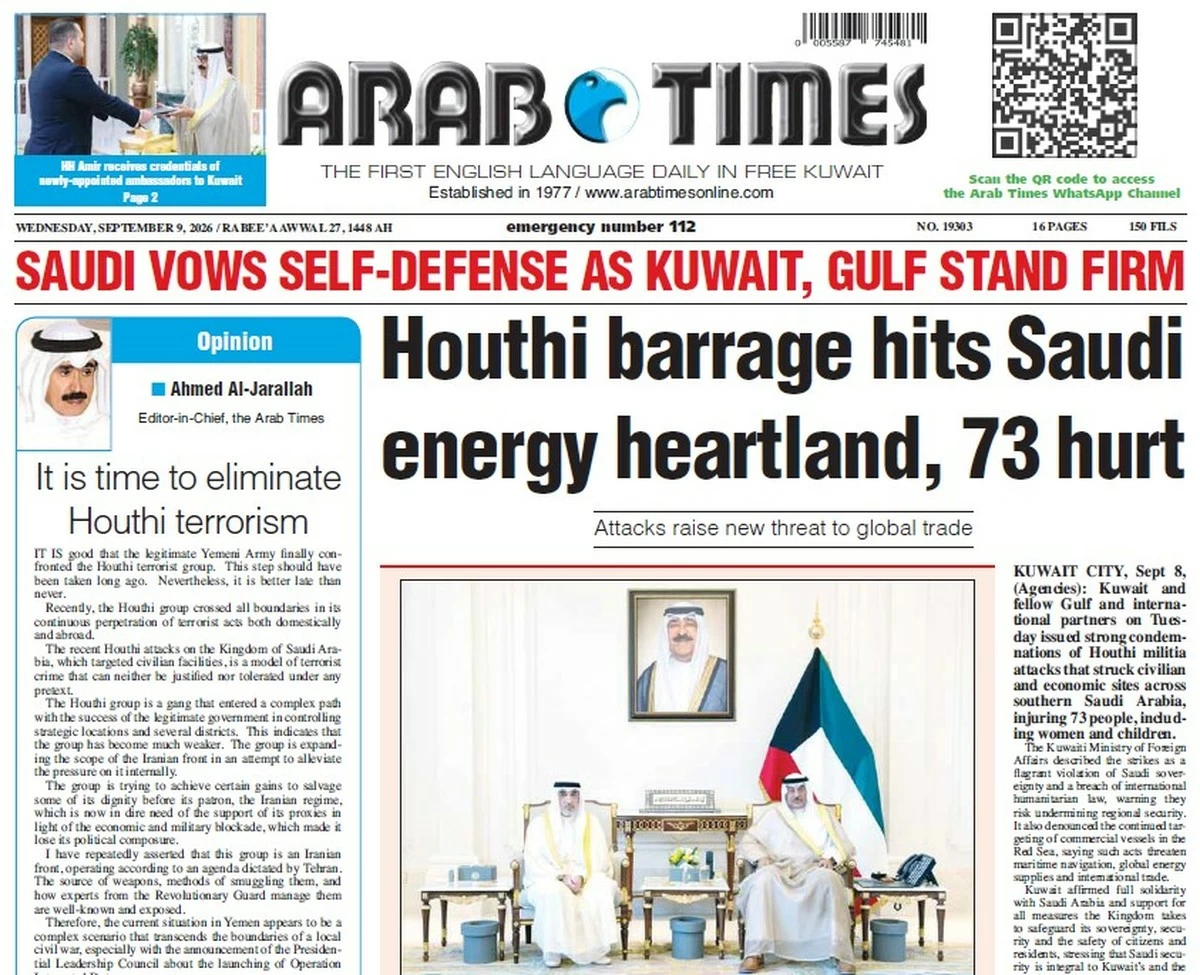





Regardless of the Iranian media’s lies, Tehran has capitulated. When the Iranian regime’s foreign minister says he has received the Supreme Leader’s approval to end the war as quickly as possible, it signals that Iran is once again preparing to drink the poison. However, it will not be like what happened in the 1980s, because the world has changed.
, it will take decades to repair trust between Iran and its neighbors due to the transformations witnessed in the Gulf Cooperation Council (GCC) countries. The same applies to all Arab states, as the experiences they have endured cannot be forgotten easily.
Therefore, the dramatic developments of the past few days have determined how this phase is likely to end and may shape the regional trajectory for decades to come. This situation forces the leaders of the Persian regime to do whatever they can to preserve their image in the eyes of their people. From this perspective, one can understand the Iranian regime’s demand that the United States acknowledge itself as the aggressor and agree to pay compensation to Iran. Regarding the first condition, Iran’s leaders seem to ignore the fact that the issue is not limited to recent actions but spans a history of terrorism that began in 1979 and continues to this day.
Therefore, it is Tehran that should acknowledge its aggression, not Washington or the Gulf capitals, which have suffered greatly from Iranian hostility. Secondly, compensation is paid by the defeated, similar to what happened with Germany after World War II. Despite the fall of the Nazi regime and Hitler’s death, Berlin continues to pay reparations to all countries harmed by Nazi aggression. The same applies to Japan, which paid reparations for decades to the neighboring countries it attacked.
Therefore, the GCC countries, which have suffered greatly from Iranian aggression, have the right to demand compensation for all damages. Likewise, the United States and Israel will seek compensation. Countries affected by the closure of the Hormuz Strait and the ships left stranded also deserve reparations. This means that Iran, regardless of the government that comes to power after this war, will be required to pay a hefty bill that could take decades to settle. This will undoubtedly trigger a major crisis in Iran, as the people, who have endured 47 years of poverty, hunger, and oppression, will not accept bearing the costs of the current regime’s adventures. As a result, the people will revolt against the regime sooner rather than later.
Tehran’s pretense of victory is largely deceptive. Every day, Iran demonstrates its subjugation and defeat. Its statements are intended for domestic consumption and are not directed at the international community. In reality, Iran has entered an even darker tunnel, as the situation in the Middle East has changed significantly since the beginning of the war. This change will not be complete unless Iran and all its proxies in the region pay a heavy price.
Undoubtedly, Iran will also have to pay reparations for the damage caused by its affiliated sectarian groups in Lebanon, Syria, Iraq, and Yemen. Consequently, Iran must realize that it will never be the same as it was before this war. Anyone who encourages Iran to target the Gulf states and Iraq, distance itself from Israel, or avoid antagonizing the United States is paving the way for Iran to fall into the abyss it has reached through reckless adventures.