
Sunday, November 01, 2026
 
search-icon
search-icon
close-icon

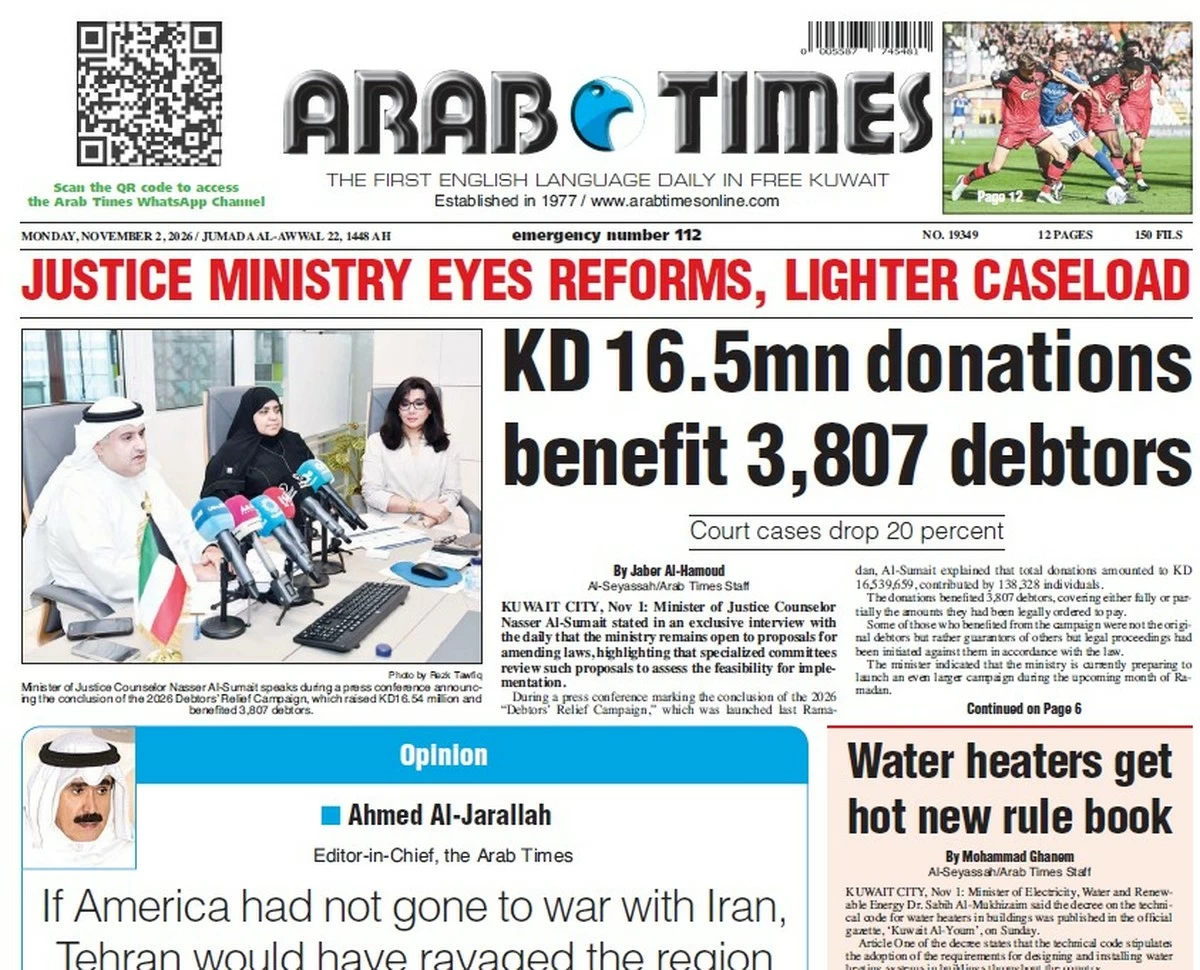
If America had not gone to war with Iran, Tehran would have ravaged the region

publish time

01/11/2026

publish time

01/11/2026

If America had not gone to war with Iran, Tehran would have ravaged the region
Add as Preferred Source on Google

A distinct clash is taking place today, marked by escalating rhetoric between Tehran, Washington and Tel Aviv that signals the possibility of a bigger war. However, the initial results of the campaign launched by the United States and Israel point to a different direction. This stage commenced after Tehran attempted to broaden its intimidation campaign to include the Gulf Cooperation Council (GCC) and other Arab nations, exposing the regime at its most vulnerable point. Tehran lost its regional advantage, unable to withstand an international alliance of more than 30 countries. It can no longer obtain the public support it once generated through indoctrination and sectarianism.

Historical context is the key to grasping this shift. Foundational ideological texts, including the writings of Khamenei (senior) and the doctrines of Khomeini, put the transformation of cultural and religious dogma at the heart of their revolutionary efforts against the so-called ‘tyrants’. Thus, the current confrontation extends far beyond the global economic strains. The ultimate goal has far greater weight -- eradicating a cancerous threat to global stability, echoing the historical imperative of confronting the Nazi regime. Over the past years, Tehran’s regional infl uence expanded by appealing to sectarian minorities and broadcasting slogans. The current clash strips away this facade, laying bare a system founded purely on propaganda—one that lost all meaningful support, even in the territories it previously claimed to dominate.

This reality is further underscored by the recent provocative statements of Khamenei’s son, who is openly broadening the reach of terrorism by asserting that “the response to any new threat or attack on Iran by the United States or Israel has neither geographical restrictions nor boundaries.” This escalating rhetoric poses grave danger to neighboring nations that are earnestly pursuing diplomatic mediation to ease tension or broker a ceasefire. Iran’s regional influence is rapidly crumbling on multiple fronts. Syria has slipped from its grasp, Hezbollah is on the verge of collapse, its Iraqi proxies have been exposed as mere propagandistic posturing, and the Houthis face a campaign aimed to curb their power. In plain language, the military campaign launched by the United States and Israel shielded the region from a disastrous and terror- driven threat.

This conflict heralds a new era, offering our nations and the Arab world the prospect of liberation from a regime that would have otherwise subjected the globe to constant threat of nuclear menace. Tehran’s nuclear ambitions have never been peaceful despite assurances by its leaders, whose religious decrees adapt to political expediency. The American campaign launched in February, which President Donald Trump vowed to end, goes far beyond posturing, as increasing force deployments and diplomatic warnings signal an imminent resolution. The Iranian regime must accept the demands of the United States and the GCC countries to prevent total devastation. These nations will no longer tolerate the persistent threat of Iranian- backed terror, as they are keen on maintaining regional security.