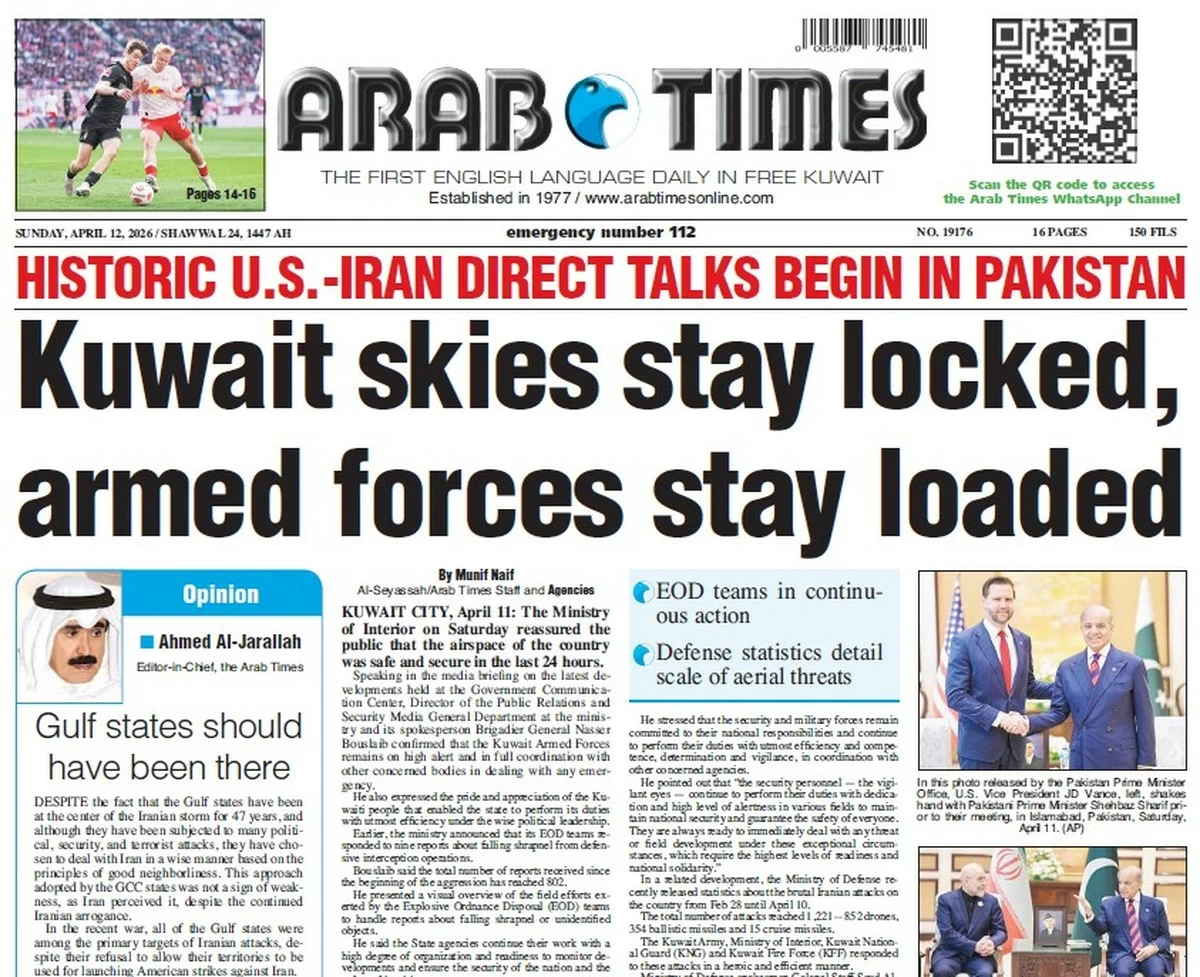





Although the Gulf states have been at the center of the Iranian storm for 47 years, and although they have been subjected to many political, security, and terrorist attacks, they have chosen to deal with Iran wisely based on the principles of good neighborliness. This approach adopted by the GCC states was not a sign of weakness, as Iran perceived it, despite the continued Iranian arrogance.
In the recent war, all of the Gulf states were among the primary targets of Iranian attacks, despite their refusal to allow their territories to be used for launching American strikes against Iran. From the very first minutes, Iran began targeting GCC states. This attack exposed Iran’s hostile intentions. I will not elaborate further on these intentions, which have become clear to everyone. For the first time, the Gulf states are openly highlighting the damage caused by attacks from Iran and its proxies. The Gulf states must consider demanding compensation from Iran for these losses, in addition to compensation for indirect damages. Undermining the economies of countries is not a trivial matter.
Anyone examining the details of this situation can see that it appears systematic and aimed at weakening the Gulf states financially and economically. The losses suffered by the Gulf states, in line with the global recession, will not be easily recovered and are likely to persist for years. The serious repercussions of Iranian actions are hindering the development cycles of Gulf states, with wider implications for the Arab world and the global economy. There is no doubt that the Iranian regime, since 1979, has sought to weaken the Gulf states to its own level of poverty and underdevelopment.
In fact, the Iranian regime sought to make the Gulf states subservient to it, similar to what it did in Lebanon since 1984, Iraq after 2003, and Yemen after the so-called Arab Spring. The Iranian regime has adopted a policy based on inciting popular uprisings against governments, thereby undermining the strength of states and weakening their ability to resist, ultimately aiming to control their decisions. Iranian plans have failed in the Gulf states due to the harmony between their people and leadership, in addition to maintaining excellent and stable relations with all countries of the world. These advantages have made the task difficult for the mullahs’ regime, hence its severe and massive retaliation, particularly through the destruction of civilian facilities and economic infrastructure.
Iran must be held accountable for the damage it has inflicted on the Gulf states. The affected populations have the right to demand compensation, just as Germany paid reparations to all countries harmed by its actions after World War II. Japan also paid reparations to neighboring countries for losses incurred due to occupation or war. The most recent example, which is still fresh in people’s minds, is Saddam Hussein’s invasion of Kuwait in 1990. The United Nations mandated compensation for Kuwait, which Iraq continued to pay until very recently. Today, American-Iranian talks have begun.
The Gulf states should have been partners at the negotiating table to demand reparations and participate in shaping the future of relations with Iran after this aggression. Although this has not yet happened, it is not too late, especially given the continued Iranian aggression against the Gulf states. The Gulf Cooperation Council (GCC) must state be present at the negotiating table, as they are the primary stakeholders in everything happening in Islamabad.