The statement of US President Donald Trump that he will not allow Iran to bully the region and the efforts of Washington to form an international coalition to stop the Iranian aggression in the Strait of Hormuz and the Bab el-Mandeb Strait indicate that the international community has taken a step forward from mere political condemnation to the beginning of a serious process to punish the rogue Iranian regime.
However, this step is insufficient as long as there are major powers that continue to provide the Iranian regime with ample support by obstructing any international resolution that could subject Tehran to international law. Since relations among states are based on interests, it is a must to work seriously to stop the violence and terrorism practiced by Iran. I mentioned in a previous article that the volume of trade and the political relations of Russia and China with the Gulf Cooperation Council (GCC) states are far greater than with Iran. This fact makes the alignment of Moscow and Beijing with the Gulf states more important than their support for a rogue regime. Tehran is harming the entire world by blocking the Strait of Hormuz and directing the Houthi group in Yemen to disrupt traffic in the Bab el-Mandeb Strait. Major Asian countries rely on the region’s oil for most of their energy needs; hence, their support for Iran is like shooting themselves on the foot despite the lower price of Iranian oil that China receives compared to the global market price. In the end, the US will toughen its sanctions on Iran, leading to the loss of this advantage, especially given the lack of land routes between Iran and China.
Russia's continuous stance on this war is prolonging its conflict with Ukraine. European and Western countries will exacerbate the situation if they do not receive a firm Russian position against Iran. This equation has been clear since the beginning of the war. Nevertheless, it seems that some parties in these countries are prolonging the pressure on the global economy despite their losses for illogical reasons. Consequently, the announcement of Beijing about its attempts to resume the Islamabad negotiations is inadequate as long as it continues to turn a blind eye to the Iranian practices. This does not mean that the US and European countries will offer concessions in facing Tehran’s hardening stance due to the growing global economic losses. It must be emphasized that the Iranian regime operates according to a military doctrine founded on an existential ideological principle.
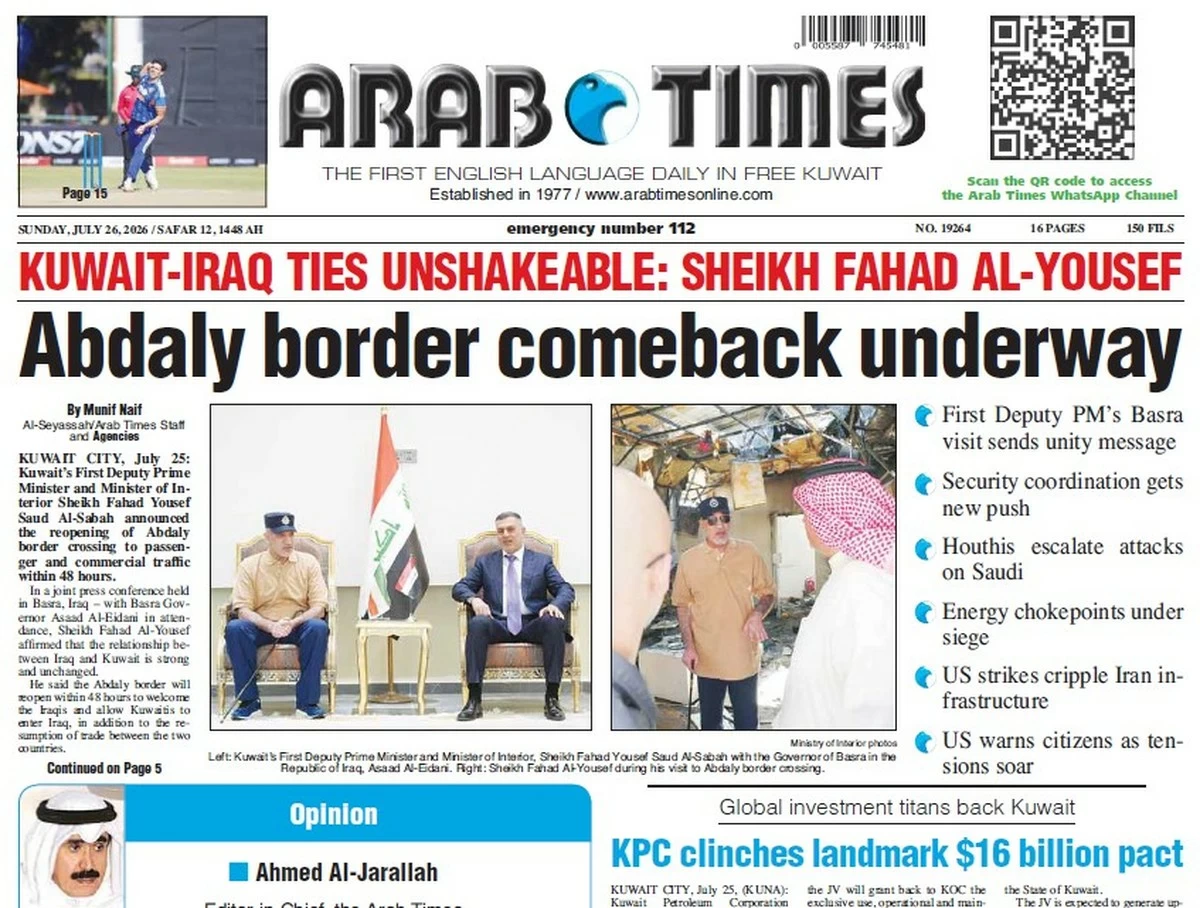
Thus, the Iranian regime will not abandon this doctrine, which underscores the need for a radical regime change. The Iranian regime is gambling with its people and the fate of the entire nation to buy more time. From this perspective, we can understand the objective of the regime in expanding the scope of the war by targeting civilian infrastructure and employing its proxies in the region to bomb border crossings, as it occurred recently in Abdaly, in addition to disrupting shipping traffic in the Bab el-Mandeb and Hormuz straits. The Iranian regime believes it is exhausting its adversaries, even though it practices terrorism and violates international laws and conventions. This situation requires the whole world to stand against the Iranian regime, just as it did against Al-Qaeda and ISIS.
Countries that turn a blind eye to the practices of the Iranian regime and its proxies in the region must realize that establishing the language of terrorism as the basis for relations between states is a double-edged sword. The continuous support of these countries for the Iranian regime and its proxies, and their threat to the global economy, will not benefit them in the long run, even if it weakens the power of the United States. The reason is that the cost will be extremely high for all parties and the world will suffer a crisis that will take decades to recover from. This, in itself, undermines international stability and peace.