



Freedom of opinion is a constitutional right guaranteed to every person in Kuwait. Article 36 of the Constitution protects freedom of opinion and the right to express and publish it, subject to the conditions established by law. Those words reflect an important balance at the heart of any society governed by the rule of law: freedom must be protected, but its exercise also carries responsibility.
That balance has come into renewed focus following a recent ruling by Kuwait’s Court of Cassation concerning statements published on social media. The significance of the ruling goes beyond the individuals involved or the particular facts of the case. It raises a question relevant to every citizen, journalist, lawyer and social-media user: when are we expressing a protected opinion, and when can what we publish cross into the sphere of legal accountability?
The distinction is important. Criticising a decision, questioning a policy or expressing disagreement is not conceptually the same as disseminating information presented as fact. In its reasoning, the Court distinguished permissible criticism - the expression of an opinion concerning an issue or action - from the dissemination of false or malicious news, statements or rumours concerning the country’s internal affairs where the legal elements of the offence are established. The Court also addressed criminal intent, making the state of mind accompanying publication part of the legal analysis.
This distinction deserves attention because freedom of opinion and legal responsibility are not opposing principles. The existence of legal boundaries does not erase the constitutional right, just as invoking freedom of opinion does not automatically remove responsibility where the elements of a criminal offence are established. The real legal question is therefore not whether freedom of opinion exists - it unquestionably does - but whether the particular expression remains within its lawful exercise.
This question has become considerably more important in the digital age. A statement that once might have been heard by a handful of people can now reach thousands within seconds. A post can be copied, forwarded, translated and circulated far beyond its original audience. Almost every smartphone has become a publishing platform. With that power comes a simple principle that deserves greater public awareness: the wider the reach, the greater the responsibility.
That should not discourage legitimate criticism. Responsible criticism can expose weaknesses, challenge assumptions and contribute to better decisions and stronger institutions. We can disagree firmly without attacking others, question actions without abandoning objectivity, and participate actively in public debate while respecting the law. Responsible opinion builds; objective criticism elevates dialogue.
The practical lesson is therefore not to speak less, but to publish more consciously. Before posting, we should distinguish between opinion and allegation, between criticism and assertion of fact, and between information we believe to be true and information we have actually verified. The greater our ability to communicate, the greater our responsibility to understand the legal consequences that may accompany publication.
This is also why legal awareness matters. The role of law should not begin only when a dispute reaches the courtroom. People should understand both the rights the Constitution guarantees and the responsibilities the law imposes, so that they can participate in public life confidently, constructively and lawfully.
Freedom of opinion is a constitutional right. It is not absolute, and it is exercised within the framework established by law. Responsible opinion builds, objective criticism elevates public dialogue, and when expression crosses the boundaries established by law, it enters the sphere of legal accountability.
In an age when every individual can become a publisher, the principle is perhaps clearer than ever: the greater the freedom to communicate, the greater the responsibility to communicate wisely.
May God protect Kuwait, its people and its leadership, preserve its security and unity, and keep our country prosperous - a nation where rights are protected, responsibilities are understood and the rule of law brings both together.
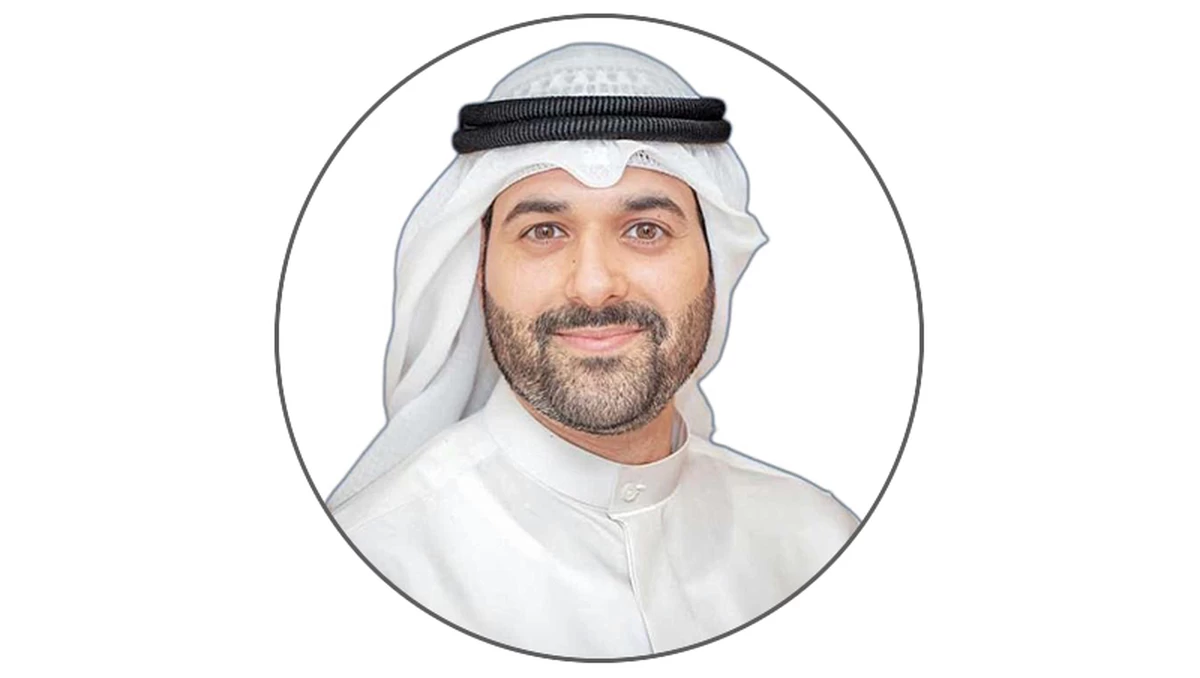
Dr Fawaz Khaled Alkhateeb
Managing Partner, Taher Group Law Firm
[email protected]