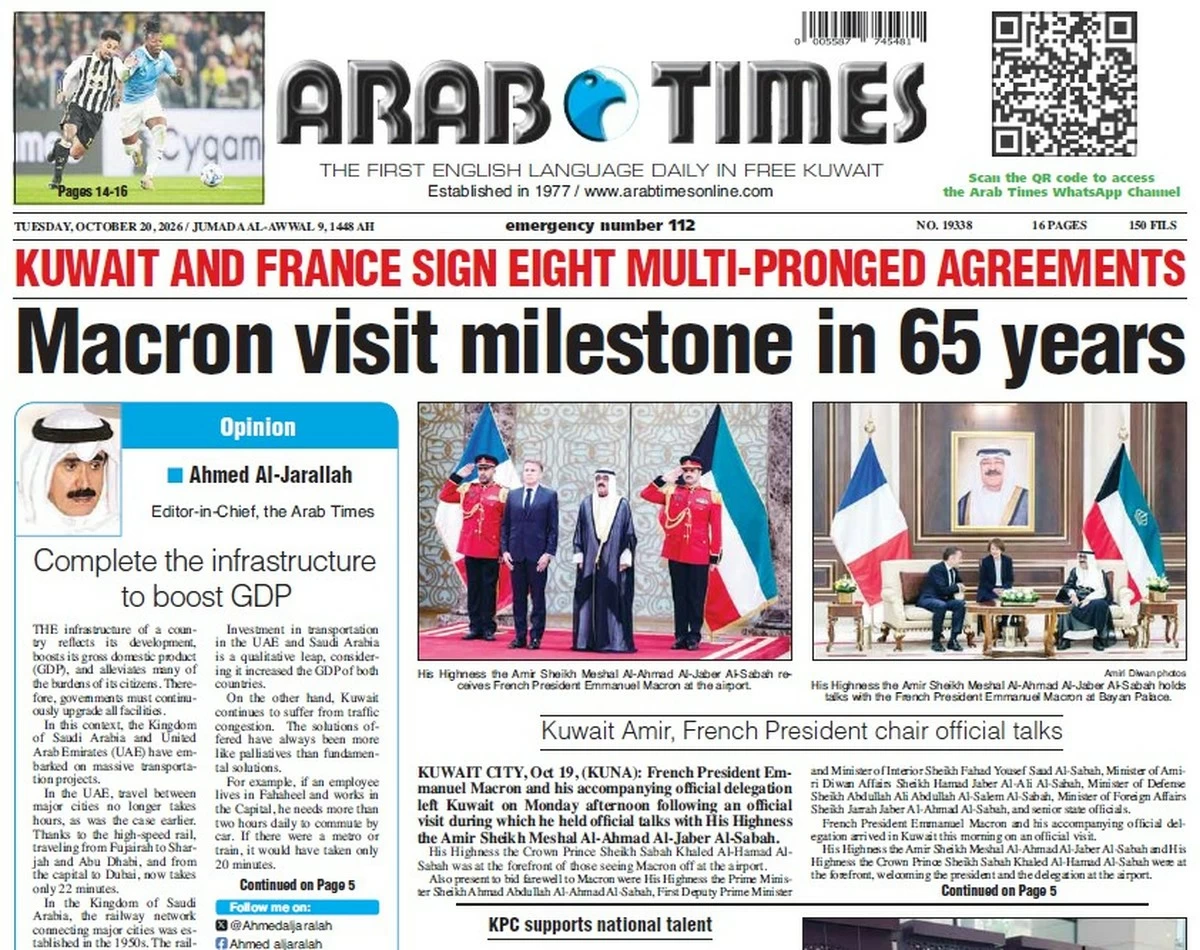




The railways have undergone massive modernization in recent years. A high-speed rail line connecting Madina to Makkah has been added, positively impacting the lives of citizens. Investment in transportation in the UAE and Saudi Arabia is a qualitative leap, considering it has increased the GDP of both countries. On the other hand, Kuwait continues to suffer from traffic congestion. The solutions offered have always been more like palliatives than fundamental solutions. For example, if an employee lives in Fahaheel and works in the Capital, he needs more than two hours daily to commute by car. If there were a metro or train, it would take only 20 minutes.
Thus, Dubai and the rest of the Emirates overcame the recent war crisis with minimal losses. The recent war changed the equation forever. We must acknowledge that Kuwait has significant financial resources, strategic geographic location, and vast tracts of undeveloped land suitable for investment, particularly in highly profitable logistics services. If the government were to begin developing infrastructure projects, both within Kuwait and those connecting it to neighboring countries, Kuwait would have regained its position as a vital economic and maritime hub -- a status it held before the discovery of oil.
These projects are productive and generate substantial profits. The government can utilize local and international companies and leverage the more than KD79 billion in bank funds to invest in these projects. The Public Institution for Social Security (PIFSS) holds around KD40 billion, which can also be invested in these projects, along with funds from other financial institutions. All that is needed is a decisive move to kick off the development process in Kuwait.