


17/11/2026

Share:
17/11/2026
Share:

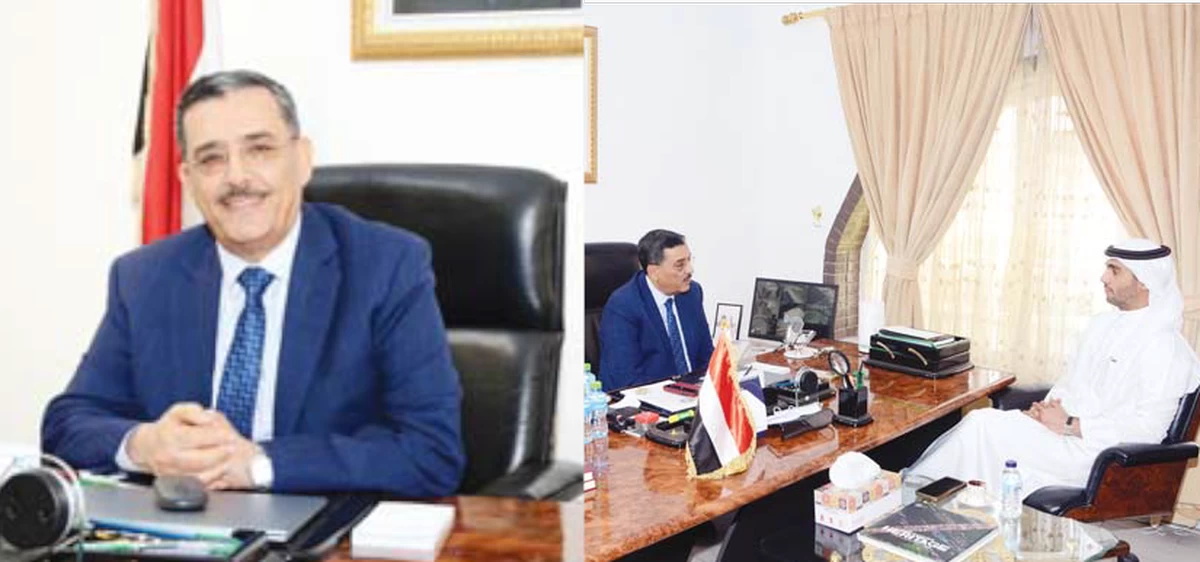
He pointed out that accepting coexistence with the Houthi coup has proven to be an ineffective and costly approach. He stated that restoring state institutions is now an urgent necessity to protect international navigation rather than an internal demand. He pointed out that in recent years, the international community focused on approaches aimed at freezing front lines and pursuing temporary humanitarian arrangements, hence accepting an imposed coexistence with the Houthi militias, which operate as a de facto authority backed by Iran.
“However, the latest developments exposed the limitations of this approach and its inability to achieve sustainable stability in Yemen. The repercussions of the political vacuum and the fragility of state institutions are not limited to Yemen, but extend to threaten some of the world’s most strategically important maritime routes,” he asserted. He added that the policy of “managing” the crisis gave armed groups ample time to regroup, and with Iranian support, expand their stockpiles of missiles and drones, transforming them from a threat to local and Gulf stability into a direct danger to international shipping. He stressed that “military patrols alone cannot guarantee maritime security or the freedom of global trade as long as the source of the threat remains on land.”
He stated that “restoring the Yemeni state and its institutions has become a regional and international security imperative, based on three fundamental considerations as follows:
■ Protecting the Yemeni people and putting an end to the deterioration of their economic and living conditions,
■ Safeguarding the Gulf and the wider Arab neighborhood while containing Iranian expansion,
■ Securing international maritime routes, upon which the interests of the entire world depend. He argued that “any political process that does not result in the disarmament of militias and the exclusive placement of weapons under state authority will only defer the crisis and open the door to an even greater catastrophe. Yemen needs a genuine international partnership that tackles the underlying causes of the war and restores the country’s position as an active contributor to regional security and stability.”
Asked about the latest military developments, he indicated that “the redeployment of southern forces in Bab al-Mandab and Al-Dabab Airport is consistent with strategic priorities, such as securing the interim capital -- Aden, enhancing the protection of maritime routes, and supporting efforts to end the siege of Taiz, while continuing the ‘Dawn of Yemen’ (Fajr al-Yemen) Operation until its objective of ending the Houthi coup is achieved.” He explained that “this redeployment is a restructuring of forces following the considerable attrition sustained by government troops over the past several years.”
He also stressed the importance of “strengthening the capabilities of the state and coastguard to protect the coastlines, ports and territorial waters, as well as combat smuggling, along with international efforts to protect vessels operating in the Red Sea.” He affirmed that “Yemen will not allow its territory, ports or maritime routes to become launching grounds for threats against neighboring countries or international interests.” He reiterated that “the Houthi threat has now expanded to include regional security, international navigation and humanitarian operations.” He drew attention to the “steadfastness of Taiz in confronting the Houthi siege and the militias have been unable to achieve their objectives in the city despite using various military tactics and putting sustained pressure.”
On the humanitarian situation, he called for “a clear distinction between civilians residing in Houthi-controlled areas and the militias themselves.” He clarified that “the legitimate government is responsible for all Yemenis, whether they live in liberated territories or areas under Houthi control. It remains committed to providing humanitarian assistance to every citizen, while rejecting all forms of collective punishment.” He appealed to the international community to “extend economic, security and institutional assistance to the legitimate government so that it can discharge its responsibilities toward the Yemeni people throughout all governorates.” He urged the international community to “ensure the implementation of the United Nations Security Council resolutions on the arms embargo, dismantle smuggling and funding networks whether connected to Iran or other parties that support the Houthi militias, and put the Houthis on the Arab lists of terrorist organizations.”
He underscored the importance of “exerting international pressure to guarantee the immediate release of the United Nations (UN) employees held by the Houthis.” He voiced concern over the “trial of UN personnel in Sanaa and the possibility of unjust rulings,” emphasizing that these developments call for a unified international position focused on restoring state institutions and ending security threats. He is hoping for a “breakthrough in the Yemeni crisis,” indicating that “the Houthis’ practices have eroded their popularity, including among residents of territories under their control.”
He said the group has become increasingly dependent on intimidation and force to enlist young people and pressure students into joining it, as the slogans it previously used have gradually lost their appeal among the people. Addressing the Houthis, he called on them to “surrender their weapons and participate in political life as one Yemeni faction.” He asserted that they could “engage in party politics, participate in elections and seek public office, just like any other Yemeni citizen rather than enforcing their rule through force.” He challenged the Houthi doctrine that “governance is a divine entitlement belonging exclusively to a particular group,” declaring that “such notions cannot provide a viable basis for establishing a modern state founded on equal citizenship.”
He concluded that “the prospect of resolving the Yemeni crisis remains active regardless of how prolonged the war may become. A genuine political settlement must rest on equality among all Yemenis, respect for constitutional institutions and commitment to the democratic process. The restoration of state institutions and national sovereignty remains the national objective and the route to securing peace and stability in Yemen and the areas around it, while protecting international interests.”