



13/08/2026

Share:
13/08/2026
Share:

Commodities have always been at the heart of global trade, underpinning everything from energy production to industrial manufacturing and everyday consumption. From crude oil and natural gas to precious metals like gold and silver, these raw materials form the backbone of the world economy, with prices that ripple across markets, currencies, and geopolitics.
Retail traders can easily gain exposure to commodities through futures or contracts for difference (CFDs). For example, they can join the broker on this website and trade oil, natural gas, gold, and silver, among others.
However, nations have traded differently, and the USD has played a central role. Most commodities, especially oil, have been settled in USD for decades, given that the USD has been the world’s reserve currency. But today, things are changing.
For the first time since the mid-1990s, the dollar's grip on global reserves has slipped below 57%. That figure comes from the IMF's Currency Composition of Official Foreign Exchange Reserves data, which tracked total allocated foreign exchange reserves at roughly $13.0 trillion as of the third quarter of 2025.
What does de-dollarization mean for commodity trading, and what should investors expect? Before answering these questions, let’s quickly see how the USD earned its status.
How Did We Reach the Petrodollar System?It all started long ago with the USD as a global reserve currency backed by gold. After World War II, delegates from 44 countries gathered in the summer of 1944 for the Bretton Woods conference in the US. Since the US held over two-thirds of the world’s gold reserves at the time, it was decided that its currency should be used in international trade as a global currency, while its value was pegged to gold at a price of $35 per ounce.
The problem is that the US took to printing paper money to cover internal deficits and provide credit. The expansion of the money supply contributed to inflation.
After several countries asked the US to give them gold in exchange for the accumulated dollars, as stipulated by the Bretton Woods agreement, President Nixon announced in 1971 that he would suspend gold convertibility and effectively end the gold standard era. This move is known as the “Nixon shock”.
With the dollar no longer convertible into gold, maintaining international demand for the USD became increasingly important. This plan culminated with the concept of the petrodollar, which can be defined as a US dollar earned from the sale of oil.
It all started with the US reaching a powerful agreement with the Saudi royal family in 1974. The US strengthened economic and security cooperation with the kingdom, while Saudi oil was sold exclusively for USD and revenues were recycled into US financial assets.
Saudi Arabia was later joined by other OPEC nations that chose to price their oil in dollars and benefit from generous offers from the US.
Why Was De-Dollarization Triggered?The petrodollar system has been around for more than 50 years, but it is currently shaking.
As you know, oil is the blood of the economy. You cannot do without it if you want to build infrastructure, operate factories, transport goods, etc. The ongoing demand for oil has maintained the USD’s global demand and relevance.
In 2023, Saudi Arabia announced that it was open to trade in currencies other than the USD. China and Saudi Arabia have also expanded arrangements that facilitate the use of their respective currencies in bilateral transactions.
This triggered the de-dollarization trend, in which countries are looking to trade directly, without using the US as a global intermediary currency.
Besides Saudi Arabia’s decision, there is an even bigger story. In October 2024, Russia hosted the 16th BRICS summit in Kazan, joined by leaders and representatives from China, India, South Africa, Brazil, and other countries.
BRICS is an economic bloc formed by developing economies, with China, Russia, and India playing particularly important roles. The original five countries, plus the over 20 nations that have joined BRICS, account for about half of the world’s population.
The main goal of the bloc is to form an economic alternative to the current financial system dominated by the US. BRICS wants to ditch the dollar and use their national currencies for trade.
At the BRICS summit, participants signed a declaration to build an alternative payment system to SWIFT and reduce reliance on the dollar.
How Does De-Dollarization Affect Commodities?The ongoing de-dollarization may contribute to inflationary pressure in USD-dependent economies if it eventually reduces international demand for dollars. Commodities like gold and silver would be the main assets to preserve wealth due to their scarcity.
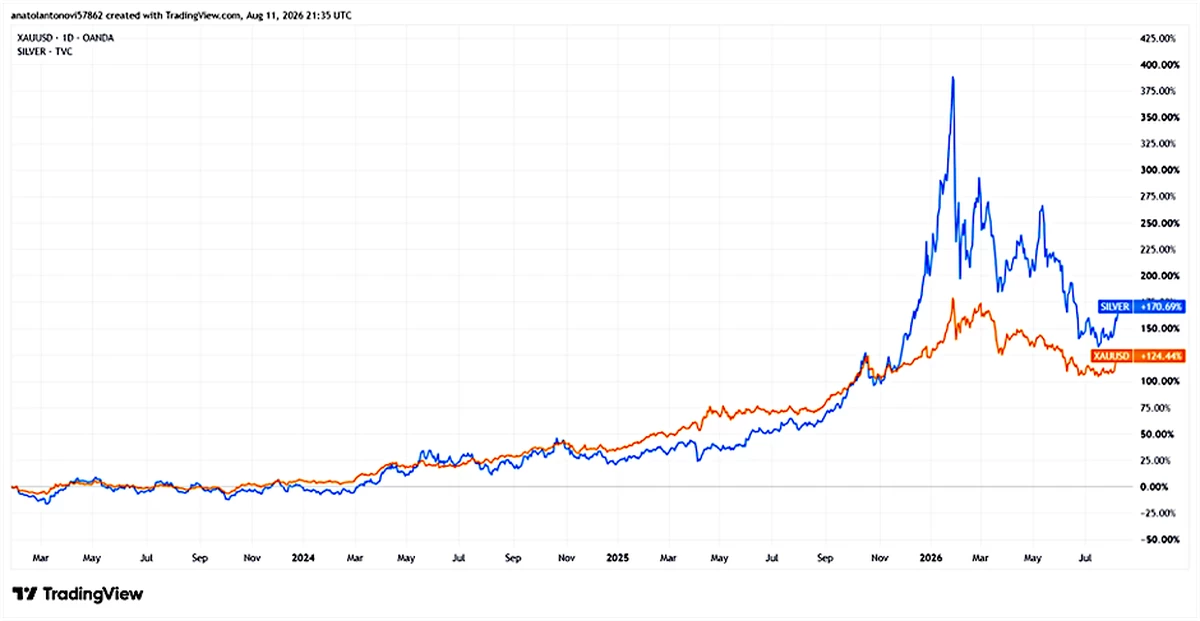
In fact, you can already notice it happening, with both gold and silver reaching all-time high levels in January 2026.
De-dollarization may also have an impact on how commodities themselves are traded. To this day, oil, natural gas, precious and industrial metals, as well as agricultural commodities, have mostly been priced and settled in dollars.
However, if more producers start settling in yuan, euros, or their own currencies, commodity markets could become more fragmented.
This means traders may face additional currency exposure and hedging costs, more volatility, and more arbitrage opportunities across commodity markets.
However, this process wouldn’t materialize overnight, as the dollar still benefits from its deep ties to the financial markets.