



10/03/2026

Share:
10/03/2026
Share:

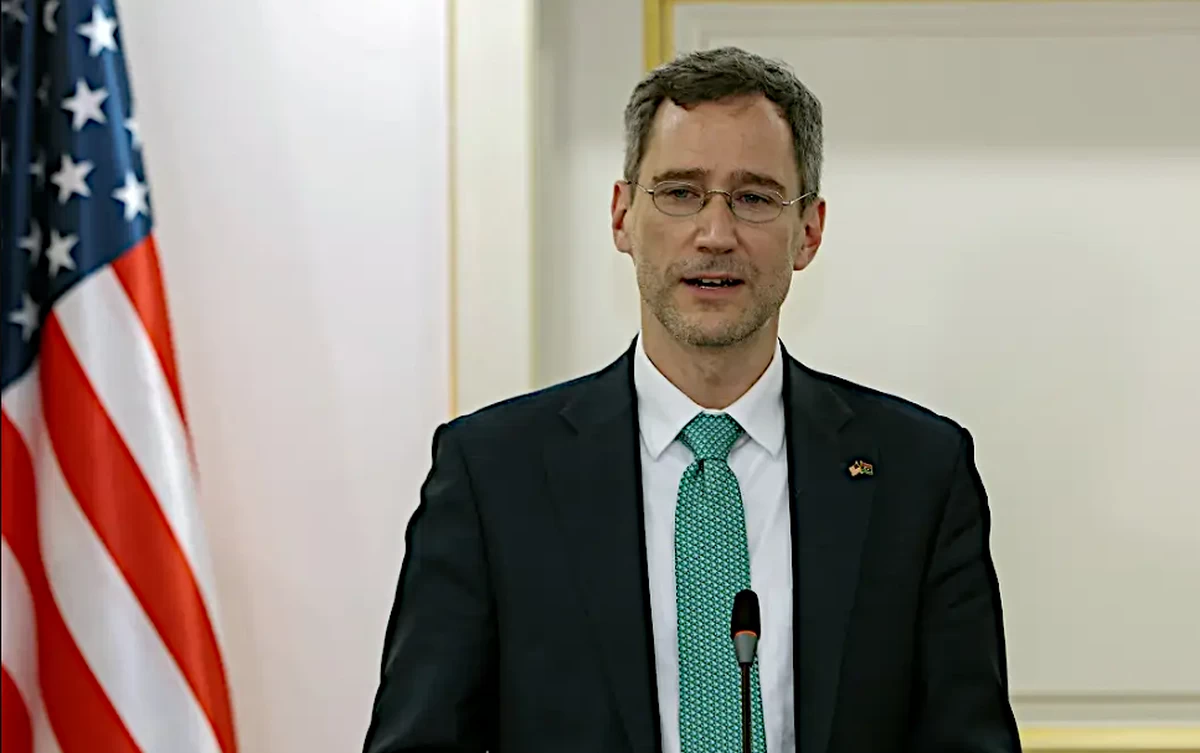
1. You served in Kuwait and know the country closely. What was your personal reaction when Iranian missiles and drones began threatening Kuwait and the Gulf?
My first reaction was deeply personal. I wished I could get on a plane immediately and go sit with my friends in Kuwait – in their diwaniyas, their offices, and their homes – to show solidarity in a difficult moment. That is what real friendship demands. Instead, we found ourselves in the disturbing position of watching Kuwait and other Gulf states absorb the shock of a crisis they did not create, while air travel was disrupted and civilians were left facing a threat no country should have to face alone. I have tremendous confidence in Kuwait’s security institutions and in the resilience of Kuwaiti society, but that does not lessen the seriousness of what has happened.
2. Many in the Gulf feel they were dragged into a confrontation they did not choose. Is that a fair view?
I think that feeling is understandable. Gulf countries did not ask to become the arena in which regional escalation is tested. At the same time, no one in this region is surprised by the nature of the Iranian regime. For decades, Tehran has relied on militias, proxies, intimidation, and ideological expansionism to project power beyond its borders. But understanding the nature of the regime is one thing. Being properly consulted, properly prepared, and properly treated as a partner is another. Those are separate issues. One can recognize the Iranian threat while still asking whether Washington handled this crisis in a way that fully respected the interests, vulnerabilities, and political realities of its Gulf partners.
3. Do you believe Washington adequately consulted its Gulf allies before this escalation?
From outside government, I have to speak with some caution. But based on everything I know about how diplomacy works, I believe there are serious reasons to question whether consultation was adequate. Consultation is not a box to tick. It is not one phone call between capitals. It is not a hurried exchange after decisions are effectively made. Real consultation means sustained engagement, advance political signaling, embassy- level dialogue, and a serious effort to understand what partners will actually face if a crisis spills over onto their territory. If Gulf states felt exposed, surprised, or politically cornered, then that itself tells you something important.
4. You have been unusually critical of the suspension of U.S. Embassy operations in Kuwait. Why do you see that as such a serious mistake?
Because diplomats are most valuable in moments of crisis, not in moments of comfort. Anyone can attend receptions and smile during calm periods. The real test of diplomacy is whether you remain present when your partners are under pressure, when your own citizens need help, and when difficult coordination is required as events are unfolding. Of course governments have to think about safety, and of course family members may need to be moved in volatile circumstances. But emptying out diplomatic presence sends the wrong message at exactly the wrong moment. It can easily be read as: we will stand with you – but from a distance. That is not how trust is built in the Gulf, and it is certainly not how trust is sustained in Kuwait.
I think Washington too often underestimates Kuwait politically, even while depending on it strategically. That is a mistake. Kuwait is not just a military staging point, a logistical convenience, or an old chapter in the history of 1991. It is a country with memory, dignity, political culture, and a society that notices very clearly who shows up and who does not. Too many American officials have behaved as though the bilateral relationship can run on autopilot – as though past gratitude guarantees future alignment. That is not how any serious partnership works. Friendship is not self-sustaining. It requires presence, humility, and effort. If Washington takes Kuwait for granted, it will eventually discover that even strong relationships can weaken through neglect.
6. Some would say your criticism is not really about military strategy, but about a wider American diplomatic failure. Is that fair?
Yes, that is fair. This moment has exposed something larger than a military confrontation with Iran. It has exposed a diplomatic mindset in Washington that too often treats regional partners as people to be informed rather than people to be deeply consulted. That is not smart statecraft. It is not sustainable. And in a region as sensitive and interconnected as the Gulf, it is dangerous. The United States still has enormous strengths in the region. No other outside power replicates its security depth, educational attraction, business ties, or political reach. But influence is not maintained by inertia. It has to be renewed. If Washington wants lasting influence in the Gulf, it must act less like a distant superpower and more like a disciplined ally.
7. What, in your view, did the United States get wrong operationally once the crisis began?
It appears that the United States was not as prepared as it should have been to manage the civilian side of escalation. That is troubling because this is not unfamiliar terrain for the State Department or for American crisis planners. The U.S. government has longstanding procedures for warning citizens, preparing contingencies, coordinating with host governments, and managing departures from conflict zones. If the possibility of confrontation with Iran had been visible for weeks, then planning should have matched that reality. Citizens should have received clearer guidance earlier. Embassies should have been postured for crisis. Coordination with local authorities should have been airtight. These are not impossible tasks. They are basic responsibilities. When governments fail at basics during a crisis, partners notice.
8. Kuwait has traditionally favored de-escalation and mediation. Do you believe Washington listens enough to that kind of Gulf advice?
Not always, and it should. One of Kuwait’s real strengths is that it combines credibility, caution, and regional legitimacy. It is not reckless. It is not theatrical. When Kuwait speaks in favor of restraint, dialogue, and de-escalation, that voice carries weight precisely because it is seen as serious and responsible. Washington would be wise to listen more carefully to that kind of counsel. Gulf diplomacy is not a decorative add-on to hard power. It is often the difference between containing a crisis and widening it. If the objective is stability, then the U.S. should not only defend Gulf partners militarily; it should also take Gulf political wisdom more seriously.
9. What should Washington do now if it wants to restore confidence in Kuwait and the Gulf – and what message would you send to the people of Kuwait?
First, Washington needs to show up – physically, politically, and diplomatically. It should send senior officials, fill ambassadorial gaps, and restore visible diplomatic presence. Gulf partners should not be left to interpret silence as solidarity. Second, the United States needs to communicate more clearly and more respectfully. Gulf leaders and Gulf publics alike deserve to know not only what Washington is doing, but what broader outcome it is seeking. Confidence is built through clarity, presence, and serious consultation. Third, Washington must stop treating consultation as a formality. Kuwait and the other GCC states should be engaged as serious partners whose concerns matter before, during, and after major decisions. And to the people of Kuwait, I would say this directly: you have many friends in the United States who care deeply about your safety and well-being and who remember your extraordinary hospitality over many decades. I have never forgotten that when I was serving in Iraq for two years, I entrusted my wife and children to life in Kuwait, and Kuwaiti society embraced them with generosity, friendship, and care. That kind of trust is not forgotten. Kuwait is a special country, and its people are special as well.
10. Many Kuwaitis and Gulf citizens do not closely follow how power works in Washington. When they hear influential American voices openly calling for escalation, a prolonged war, and a more offensive military role for Gulf states, how should they interpret that?
The U.S. Constitution clearly states that only the Congress has the power to declare war. However, a political consensus has prevailed since 1945 that favors placing that power solely in the hands of the President. Nonetheless, every President has sought the support of Congress in some form, often what is called an “authorization for the use of military force.” What is different in this case is that President Trump has not sought the views of Congress at all, which provides a useful indication of how much influence the current Congress holds over the President. And in any case, military operations are always decided by the President in his role as Commander in Chief of the armed forces. With all of this in mind, I would advise Kuwaitis not to put too much stock in what they hear from people who are not President Trump. Instead, they should watch the U.S. stock market and the price of retail gasoline; these are indicators that President Trump also watches closely, as he does not want his decisions to have a long-term negative effect on the economy. A broader challenge that your question illuminates is the relative lack of Gulf citizens’ role in the American policy conversation during moments of crisis. Too often, hawkish voices dominate the space while too few credible Gulf-linked analysts, former officials, and informed interlocutors are present to explain the political, social, and strategic costs of escalation as seen from Kuwait and the wider GCC region.


