

02/11/2026

Share:
02/11/2026
Share:
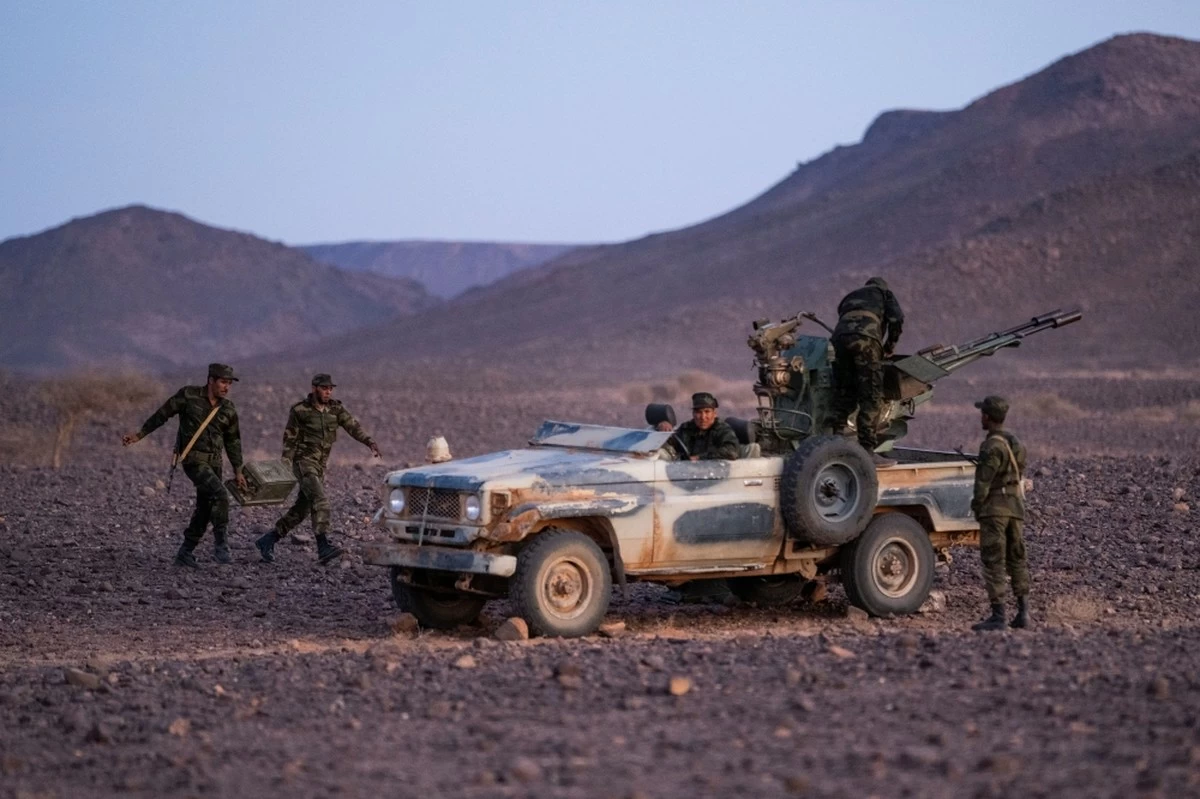

CASABLANCA, Morocco, Nov 2, (AP): The UNs long-running peacekeeping mission for the disputed Western Sahara ceased operations Sunday after 35 years, as a result of a US-Russia standoff at UN headquarters over the territory’s future. The end of the mission raises concerns about stability in the region. Rich in minerals and fisheries, Western Sahara is a vast desert territory roughly the size of Colorado along Africa’s northwestern Atlantic coast.
Once ruled by Spain, it is claimed by both Morocco and the pro-independence Polisario Front. "This 1 November 2026 marks the start of the liquidation period,” Stéphane Dujarric, spokesperson for the UN secretary general, said in a statement. "A smaller team reporting to the United Nations’ Department of Operational Support will oversee the orderly transportation of assets belonging to troop-contributing countries to their respective nations, and the appropriate disposal of equipment belonging to the United Nations.'' The mission had been repeatedly extended since it was established in 1991.
In the UN Security Council on Friday, Russia vetoed a draft US resolution that would have supported Morocco’s demand for sovereignty over Western Sahara and ended the peacekeeping mission next year. Then a rival Russian resolution to extend the mission was voted down. The disagreement led to an abrupt end of the force’s mandate. Morocco’s royal palace welcomed the non-renewal of the mission.
It called it an "instrument to internationalize the dispute.'' The Polisario Front, backed by Algeria, called it "an unacceptable decision.'' The Algerian foreign ministry said it profoundly regrets the non-renewal of the mandate and criticized what it called the ‘’excessive bias'' of the US draft resolution. The UN classifies Western Sahara as a "non-self-governing territory,” while critics of Morocco’s control describe it as Africa’s last colony. Morocco administers nearly all of the disputed territory, except for a narrow strip known as the "free zone” that lies east of a Moroccan-built sand wall.
After Morocco annexed it in 1975, the dispute escalated into an armed conflict that lasted more than 15 years and claimed more than 16,000 lives on both sides, according to the French Senate. Bringing Western Sahara under its full sovereignty has been a central objective of Morocco’s foreign policy for decades. Rabat, which has secured the backing of a growing number of Western capitals, including Washington, Paris and London, refers to the territory as its southern provinces.
The dispute has become a defining feature of Morocco’s diplomacy, with the kingdom often measuring its relations with other countries by their position on the issue. The Polisario Front seeks independence for the territory, which it considers the homeland of the Indigenous Sahrawi people. Operating from refugee camps in the Algerian city of Tindouf, the movement aims to establish an independent Sahrawi Republic. Mainly backed by Algeria, Russia and South Africa, the Polisario has seen its international support dwindle in recent years.