



13/04/2026

Share:
13/04/2026
Share:
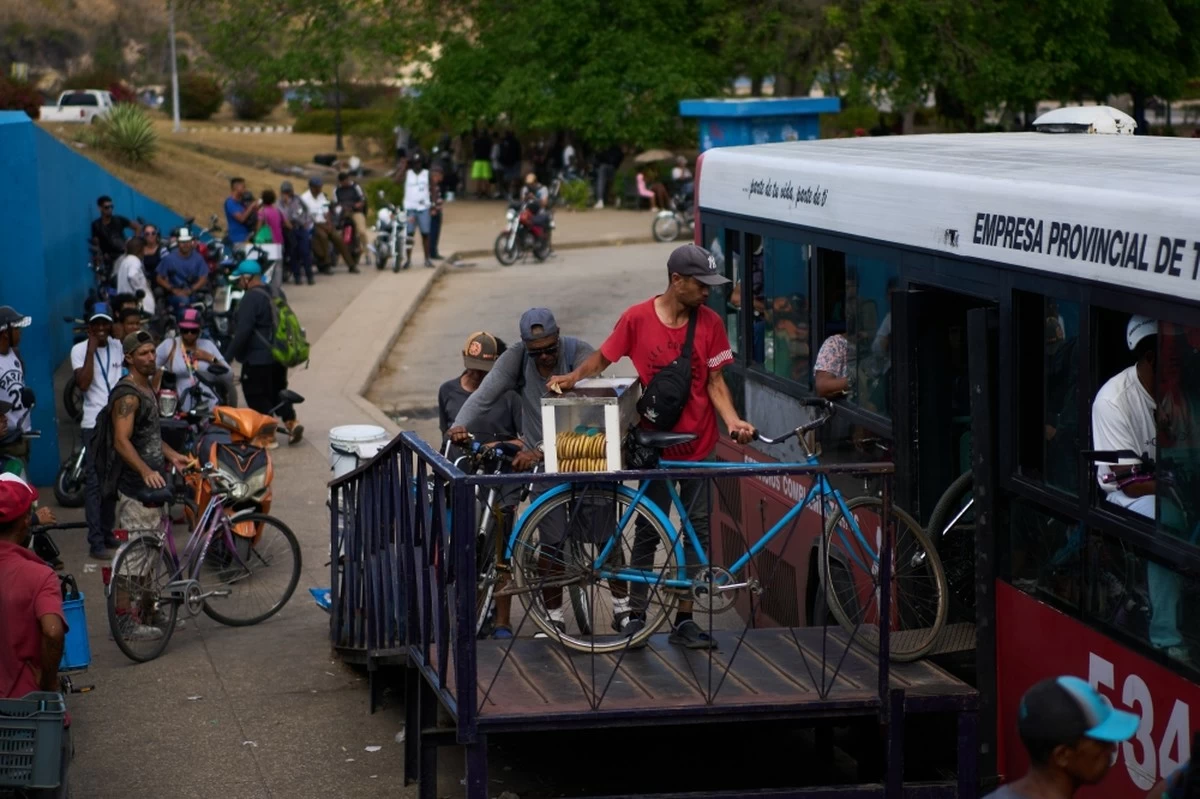

HAVANA, April 13, (AP): On a recent sweltering afternoon in the Cuban capital, dozens of commuters on bicycles, scooters and electric motorcycles gathered in a tidy row at the entrance of the Havana Bay Tunnel. They were waiting for the Ciclobús, a bus specially fitted to take people - and their rides - through the underwater tunnel linking Old Havana to the eastern side of the island.
The diesel-powered bus can accommodate around 60 travelers and their vehicles, making enough trips to transport more than 2,000 people per day. It features a front seating section, but half its metallic frame is an open bay for cargo. Riders enter via a specialized ramp and stay with their vehicles for the duration of the trip, holding onto wall-mounted grab bars for balance.
Bicycles, motorcycles and scooters are not allowed in the tunnel. While the Ciclobús is not new, it has never been as popular - and essential - as Cuba navigates its most severe energy crisis in decades. The energy blockade imposed by US President Donald Trump in January has forced the country to ration gasoline to only 20 liters (5 gallons) per vehicle through a cumbersome appointment process that can take weeks, or even months, halting public transportation.
These days, the streets of Havana are almost empty of cars but teeming with thousands of bicycles and small electric motorcycles that have become the only way to get around. "My husband owns a bicycle, so I'm riding as his companion,” said Ingrid Quintana, a resident of East Havana, who works in the old part of Havana, while waiting for the tunnel bus.
"It’s an option we have, because there’s no public transportation and we can’t afford to pay for a private taxi, so we ride the Ciclobús." The Ciclobús is the shortest public transportation route on the island, covering 3 kilometers (1.8 miles) in about 15 minutes. After boarding near the Havana Bay Tunnel in Old Havana, passengers endure a rattling journey through the darkness of the underwater passage.
They emerge in eastern Havana, a sprawling residential zone where hundreds of thousands reside. By contrast, the alternative land route must skirt the massive bay, a 16-kilometer (10-mile) trek through sparsely populated and poorly paved industrial port areas.
The fare for boarding ranges from 2 to 5 Cuban pesos (a tiny fraction of a US dollar on the informal market) depending on whether you are transporting a bicycle or a motorcycle. In comparison, a ride in a shared taxi from the eastern neighborhoods - passing through the tunnel - costs 1,000 Cuban pesos (about $2). A Cuban worker can earn a monthly salary of 7,000 Cuban pesos (about $14).