



01/10/2026

Share:
01/10/2026
Share:
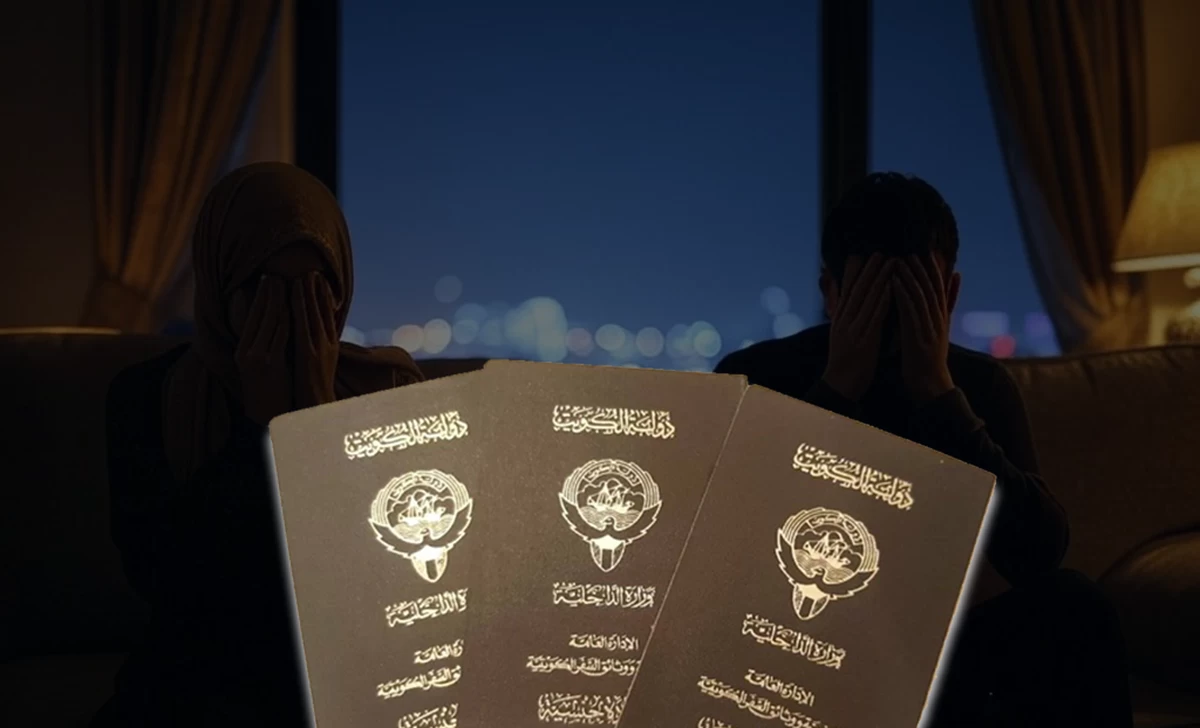

KUWAIT CITY, Oct 1 : A widening nationality investigation has uncovered a dramatic trail of alleged identity and citizenship fraud involving a man and woman who were registered as siblings in a Kuwaiti family file, but whose Gulf identities and DNA records allegedly told a very different story.
The case emerged during an expanded review of the family file of Mohammed Rashid, a fugitive convicted in enforceable cases who resides in London. After his Kuwaiti citizenship was withdrawn, followed by the withdrawal of his father’s citizenship in the public interest, Nationality Investigation officers continued examining the family records and uncovered allegations involving his uncle and aunt, who were officially registered as his father’s siblings.
According to the investigation, Mohammed Rashid’s grandfather had added a man and a woman to his file as his children, although subsequent inquiries allegedly established that they were not his biological children.
The aunt with two completely different identities
The woman, born in 1965, allegedly had a Gulf identity completely different from the Kuwaiti name under which she was registered.
Investigators discovered that she had previously used her Gulf documents to enter and leave Kuwait. She had also avoided renewing her Kuwaiti passport, with the investigation indicating that the requirement linking travel procedures to passport validity eventually helped expose the suspected identity duplication.
The breakthrough came through biometric fingerprinting. When her fingerprints taken under her Gulf identity were compared with fingerprints already stored in Kuwait's records under her Kuwaiti civil ID, they allegedly matched — despite the two identities having completely different first, second, third and fourth names.
Investigators concluded that the biometric match pointed to the same individual being recorded under two identities.
Uncle's children lead investigators to Gulf identity
Investigators then turned to the woman's alleged brother, identified in the Kuwaiti file as “S.M.J.,” born in 1960, who was also allegedly known under the Gulf name “H.A.A.”
He was registered as the son of Mohammed Rashid's grandfather and therefore as the brother of Mohammed Rashid's father.
Investigators examining his children's records reportedly found a striking connection: the first names of his children matched those appearing in Gulf records, while their second, third and fourth names differed between the Kuwaiti and Gulf identities.
The children's records were also reportedly present in Ministry of Interior databases as Gulf nationals who had previously entered Kuwait under their Gulf identities.
DNA delivers another shock
The investigation then moved beyond documents and fingerprints.
A DNA sample was obtained from the man identified as “S” and compared with DNA profiles of individuals recorded as his brothers in the Kuwaiti family file.
The DNA examination definitively ruled out a sibling relationship, according to the investigation.
Even before the genetic testing, investigators had reportedly noticed blood-type discrepancies in some family records, with combinations recorded for the alleged father and mother being scientifically incompatible with the blood types of certain registered children.
26 people linked to the file
Following the findings, the man identified as “S” was referred to the Public Prosecution for completion of the legal procedures.
Investigators said 26 people are linked to his nationality file, including his sons, daughters and grandchildren.
The case highlights how Kuwait's nationality investigations can combine biometric fingerprints, civil records, travel data, DNA testing and blood-type analysis to investigate suspected identity duplication and irregular nationality records.