


20/06/2026

Share:
20/06/2026
Share:

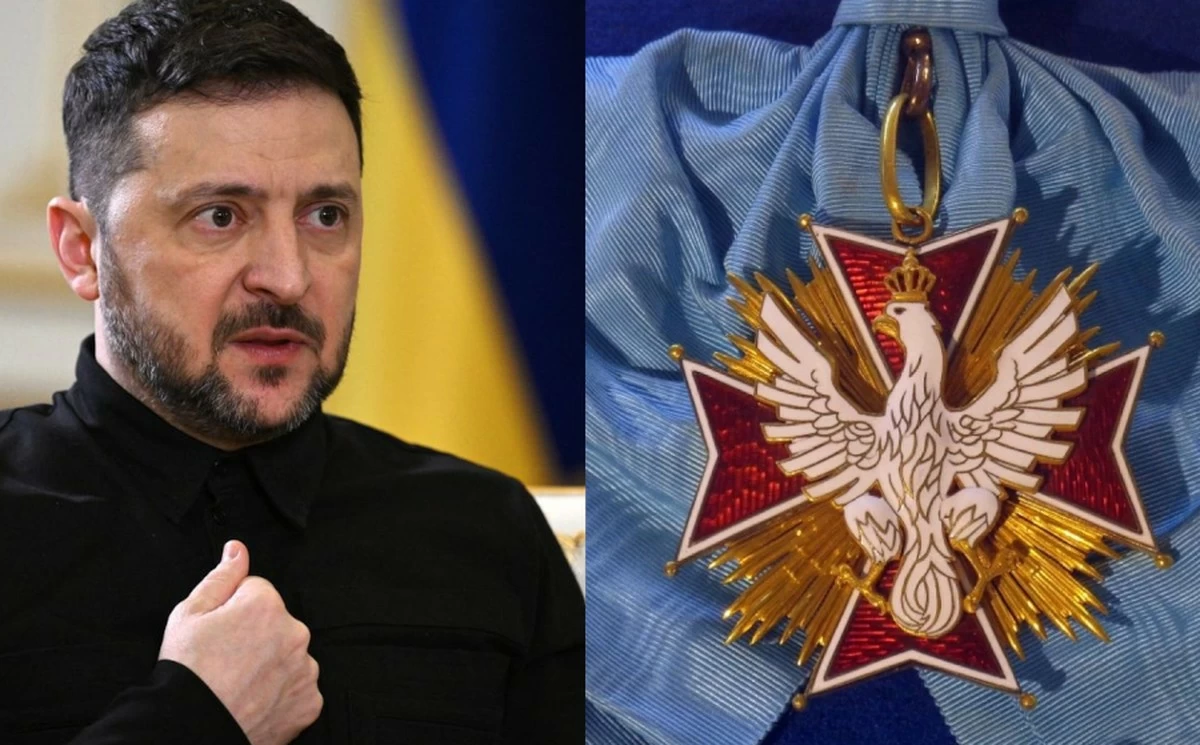
KYIV/WARSAW, June 20: Ukrainian President Volodymyr Zelenskyy said Saturday that he has returned Poland’s highest state honor, the Order of the White Eagle, to Polish President Karol Nawrocki after Warsaw revoked the award amid a dispute over historical memory.
Zelenskyy said Ukraine remains committed to dialogue with Poland to address sensitive issues from their shared past while expressing gratitude to the Polish people for their support and cooperation during Russia’s war against Ukraine.
The Ukrainian leader said the Order of the White Eagle represents values that go beyond recognition and requires “not only merit but also respect for the values that form the foundation of our community.”
“Therefore, if it is considered that this special symbol may remain with Catherine II, Benito Mussolini, and Gerhard Schroder, then we in Ukraine will not argue with that,” Zelenskyy wrote on the social media platform X.
Zelenskyy said Kyiv had understood that the award, which was presented to him in 2023, represented appreciation for the Ukrainian people and armed forces.
“That is what was said at the time. Today, I sent the Order back to the President of Poland,” he said.
The decision followed Nawrocki’s move on Friday to revoke the honor after criticism in Poland over Ukraine’s decision to name a military unit after the Ukrainian Insurgent Army (UPA), a nationalist organization that remains deeply controversial in Polish history.
Polish historians and officials accuse the UPA of responsibility for the killing of tens of thousands of Polish civilians in Volhynia and Eastern Galicia during World War II. The issue has long been one of the most sensitive points in relations between the two neighboring countries.
Nawrocki said the revocation was directed at actions by the Ukrainian government rather than against the Ukrainian people, emphasizing that it did not represent a change in Poland’s strategic support for Ukraine amid the ongoing war with Russia.
The UPA remains a major historical dividing line between Warsaw and Kyiv. While many Ukrainians view the group as part of the struggle for independence against Nazi Germany and the Soviet Union, Poland considers the 1943-44 massacres of Polish civilians to be ethnic cleansing and genocide.
The diplomatic dispute comes as Poland continues to play a key role as one of Ukraine’s strongest supporters since Russia launched its full-scale invasion.