

27/10/2026

Share:
27/10/2026
Share:

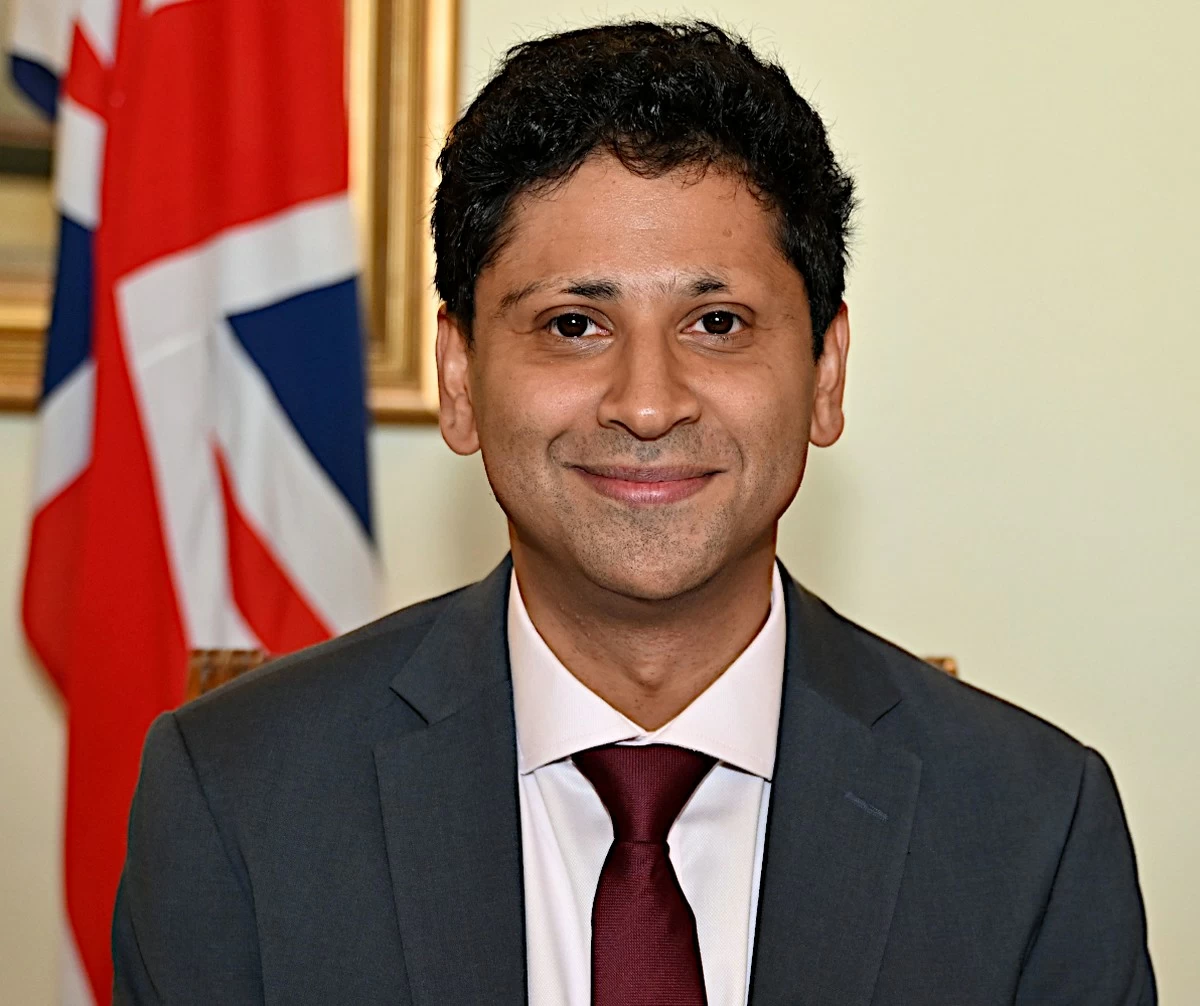
KUWAIT CITY, Oct 27: British Ambassador to Kuwait Qudsi Rashid has reaffirmed the United Kingdom’s firm commitment to Kuwait’s security, sovereignty and territorial integrity, describing the two countries’ relationship of more than 125 years as a strategic partnership built on mutual trust and cooperation.
In an exclusive interview with Kuwait News Agency (KUNA) on Tuesday, Rashid said the UK considers Kuwait one of its oldest and most important partners in the Gulf, with bilateral ties spanning defense, security, trade, investment, healthcare, education, energy, culture and innovation.
He said the two countries continue to work closely to address common challenges, particularly regional security, economic diversification and opportunities arising from modern technologies.
Rashid pointed to high-level reciprocal visits, including the visit of former British Deputy Prime Minister David Lammy in April 2026, as well as visits by senior British defense officials and the UK’s Senior Defence Advisor for the Middle East and North Africa, Vice Admiral Edward Algren.
He said these engagements demonstrate the depth of the strategic partnership and reinforce Britain’s commitment to supporting Kuwait during difficult times.
Defense cooperation remains key pillarThe ambassador described military cooperation as one of the strongest pillars of Kuwaiti-British relations, noting that the ties forged during Kuwait’s liberation in 1991 continue to provide a strong foundation for mutual trust and close cooperation between the two countries’ armed forces.
Defense cooperation covers military training, specialized military education, the development of defense capabilities and equipment, the exchange of expertise in countering drones, and stronger coordination between defense and security institutions.
Rashid said continuous communication between military authorities enhances readiness and strengthens both countries’ ability to address current and future security challenges.
He added that recent visits by senior British military officials had helped deepen cooperation and improve the ability of Kuwaiti and British forces to operate together.
The main objective, he said, is to maintain the exchange of experience and knowledge between the two armed forces and strengthen their capacity to support regional security and stability.
UK working with Kuwait to support regional stability
Addressing regional security developments, Rashid reiterated that Britain’s commitment to Kuwait’s security, sovereignty and territorial integrity remains firm and unwavering.
He said the UK had stood alongside Kuwait at pivotal moments in history and that its position remained as strong as it was during Kuwait’s liberation.
During recent regional tensions, Britain worked closely with Kuwait and its Gulf partners to support security and stability through continued coordination, maintaining an appropriate presence in the region, and protecting freedom of navigation and the safety of its partners.
According to Rashid, these efforts demonstrated the practical value of the bilateral security partnership and the importance of coordinated action in responding to regional developments.
He also praised Kuwait’s role in promoting regional stability, describing the country as a respected regional partner because of its consistent emphasis on dialogue, diplomacy and de-escalation.
The UK, he said, highly values Kuwait’s efforts to advance constructive solutions to regional challenges and considers the country a key partner in its long-term strategy for the Gulf.
AI, cybersecurity and clean energy among prioritiesLooking ahead, Rashid said the two countries had promising opportunities to expand cooperation in sectors shaping the future of their economies and security.
British priorities include deepening military cooperation, expanding joint training programmes, exploring emerging technologies and cybersecurity, and developing future defense capabilities.
On the economic front, he said there was considerable scope to increase bilateral trade and investment. The UK remains a major destination for Kuwaiti investments, while British companies continue to contribute to Kuwait’s economic development and the objectives of New Kuwait Vision 2035.
He identified artificial intelligence, digital technologies, clean energy, healthcare, higher education and financial services as areas offering opportunities for closer cooperation in support of economic diversification and innovation.
Rashid also highlighted the conclusion of negotiations on a free trade agreement between the UK and the Gulf Cooperation Council (GCC), announced on May 20, 2026, as an important milestone in strengthening economic and trade relations.
Once the agreement enters into force, he said, it is expected to help reduce trade barriers, improve market access and create new opportunities for businesses and investors in Kuwait, the UK and other GCC countries.
The agreement is also expected to strengthen cooperation in services and digital trade, supporting the two sides’ shared ambitions for economic diversification, innovation and long-term investment partnerships.
Strategic dialogue to drive future partnershipRashid said the Kuwaiti-British strategic dialogue and regular high-level meetings provide an important framework for identifying new areas of cooperation and monitoring the implementation of joint initiatives across different sectors.
He concluded that both countries aim to build a modern, innovative and forward-looking partnership that delivers sustainable benefits for Kuwait, the United Kingdom and their peoples.