


03/10/2026

Share:
03/10/2026
Share:

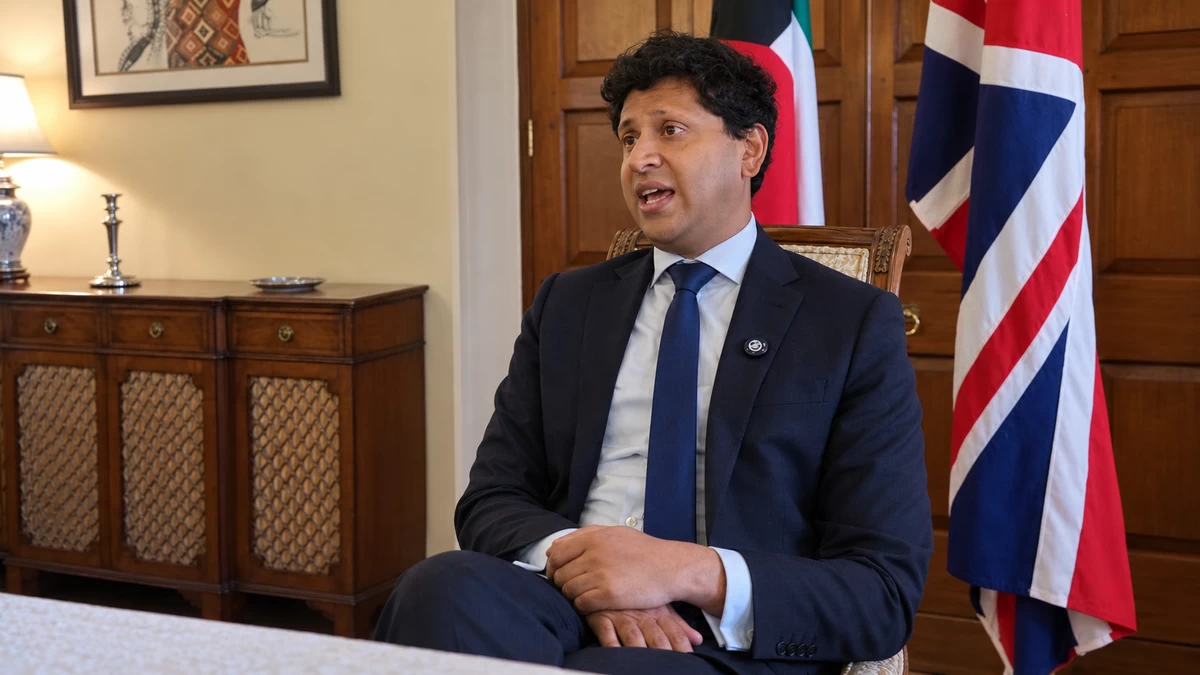
UK Ambassador to Kuwait H.E. Qudsi Rasheed
KUWAIT CITY, Oct 3: HE. Qudsi Rasheed, British Ambassador to Kuwait said the UK government has significantly changed its approach to Israel, saying the policy shift was driven by the need to preserve the two-state solution and address developments in the West Bank and Gaza.
Explaining the changes during a press briefing in Kuwait, the ambassador said the UK government now officially considers the Israeli occupation of the West Bank to be unlawful under international law, going beyond its previous position that Israeli settlements in the territory were unlawful.
“The policy has changed, the tone has changed and the actions have changed as well,” the ambassador said, outlining the government's new approach.
The ambassador said British Foreign Secretary Ed Miliband had also publicly described what the UK government considers ethnic cleansing of Palestinians in parts of the West Bank by settler groups, alleging that the Israeli government had at times ignored such actions. The Foreign Secretary has made similar statements in Parliament, saying the British government considers there to be ethnic cleansing of Palestinians in areas of the West Bank perpetrated by settler terrorists.
On Gaza, the ambassador said the Foreign Secretary had referred to credible evidence of war crimes and that Britain would support independent investigations, including those conducted by the International Criminal Court (ICC) or International Court of Justice (ICJ).
The ambassador also outlined practical measures announced by the British government, including restrictions targeting goods from illegal Israeli settlements and measures aimed at preventing British companies from providing services to such settlements. The UK government has confirmed that it intends to restrict trade in goods from settlements and has advised British businesses against economic and financial activity in illegal Israeli settlements.
The ambassador cited the example of property advertisements for homes in Israeli settlements, saying such advertising in Britain would no longer be permitted under the new measures.
The UK has also expanded restrictions on arms exports to Israel, according to the ambassador, saying the prohibition now covers arms that could be used to further what Britain considers the unlawful occupation of the West Bank.
The ambassador stressed, however, that the policy shift should not be interpreted as the UK turning against Israel or the Israeli people.
“The UK's position continues to be that the two-state solution is the right solution,” the ambassador said, adding that this was in the interests of both Palestinians and Israelis.
He also reiterated Britain's condemnation of the October 7, 2023 attack by Hamas, saying the attack was unacceptable and that Hamas could have no future in Gaza. At the same time, he said Israel has a legitimate right to self-defense, but argued that this right did not justify all of the actions witnessed in Gaza.
The ambassador said Britain continued to recognize Israel as a legitimate state while supporting the establishment of a Palestinian state. He referred to the UK's recognition of Palestine in 2024 and said Britain had subsequently taken further measures in support of Palestinian statehood.
Asked how the UK could recognize Israel while describing its presence in the West Bank as an occupation, the ambassador said Britain's position was based on support for a two-state solution, with Israel having the right to exist and Palestine being allowed to exist as a state.
The UK government's current position is that Israeli settlements in the West Bank are illegal under international law and that the Israeli occupation of Palestinian territory is unlawful. Prime Minister Andy Burnham reiterated that position in his September 22 UN General Assembly speech, saying Britain had acted by banning trade in goods with illegal settlements and recognizing the occupation as unlawful.
The ambassador also noted that Britain was not acting alone, pointing to France, Canada and other countries that have taken or are considering similar measures concerning Israeli settlements. A September 8 joint statement involving the UK and several other countries confirmed plans for national and/or European restrictions on trade in goods from settlements.
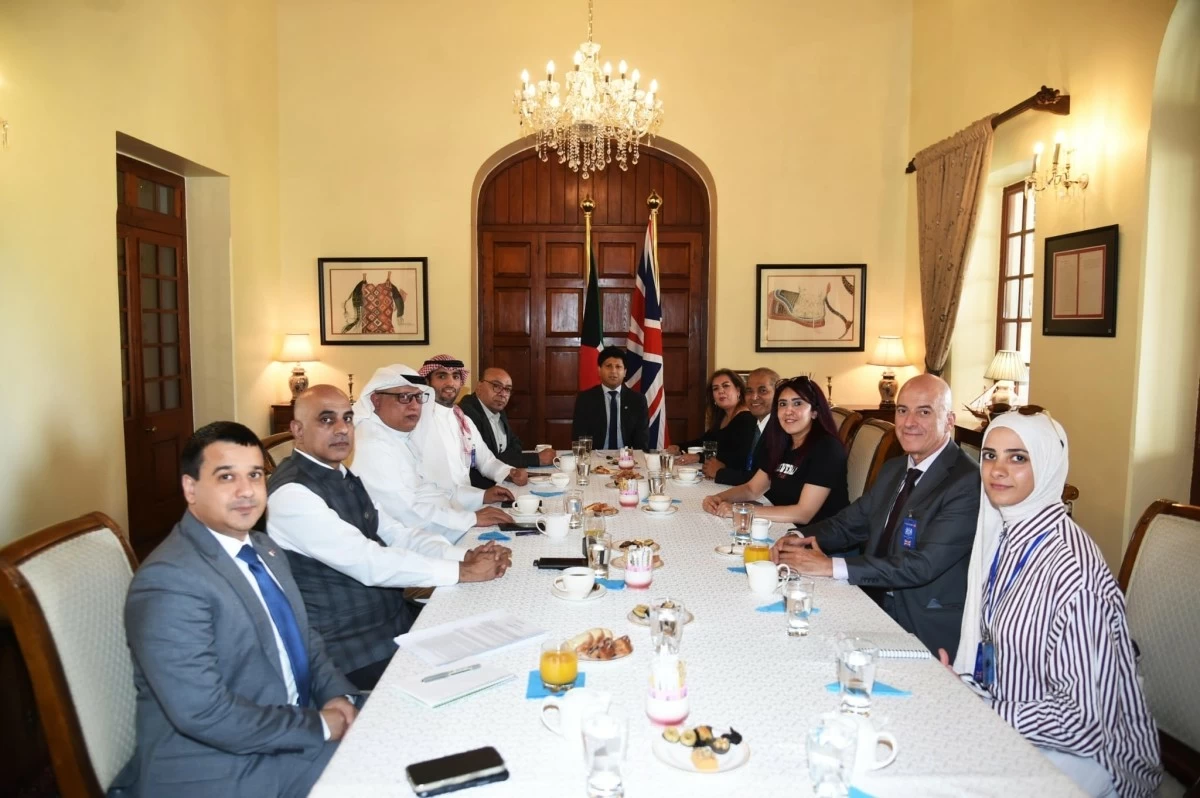
Media delegation with HE. Qudsi Rasheed during press briefing
In an interview with Arab Times, HE. Qudsi Rasheed said:
Arab Times. Britain is moving to restrict trade in goods from Israeli settlements, but if the origin of those goods becomes difficult to establish once they enter Israeli or Palestinian supply chains, what prevents the restrictions from being bypassed through relabelling or Palestinian intermediaries? What specific enforcement mechanisms will Britain use to close that loophole?
British Ambassador: The Foreign Secretary of the UK has announced the Government's intention to ban imports of goods from illegal Israeli settlements in the Occupied Palestinian Territories as part of a wider package of measures to protect the viability of a two-state solution. The detailed implementation and enforcement arrangements will be set out in the relevant legislation and guidance.
And the ban on goods is only one part of it. At the same time, we are prohibiting the provision of UK services to the settlements.
For example, banks, advertising companies and construction companies from Britain would not be able to provide services to the settlements. British construction companies cannot go and build or help support building in settlements.
It puts the burden on the private sector to ensure that their goods are not coming from settlement areas. Of course, all around the world you see examples of people trying to break the law, but it's very clear that if an importer is doing this, or an exporter is doing this, they're breaking the law. It is unlawful to do that and to try to circumvent the sanctions in that way.
So, you are rightly focused on the import of goods from the settlements, but there is also the provision of services from the UK.
Q. After one year of serving as the United Kingdom’s Ambassador to Kuwait, how would you assess what has been achieved during this period in terms of strengthening Kuwait–UK relations? What are the main areas or initiatives that you believe you have helped advance?
British Ambassador: Over the past year, one of our key priorities has been to deepen the UK-Kuwait economic partnership, and I am proud of the progress we have made. We have strengthened commercial links, supported new business opportunities across a range of sectors, and worked closely with partners in both countries to promote investment and trade. The conclusion of negotiations on the UK-GCC Free Trade Agreement was a particularly significant milestone, laying the foundations for an even more ambitious economic relationship in the years ahead.
But our relationship goes far beyond economics. Over the past year, we have continued to strengthen our long-standing security and defence partnership. During the Iran crisis, the UK stood side by side with Kuwait and worked closely with our Kuwaiti partners to support regional security and stability.
Following Iranian strikes in the region, the UK deployed the Rapid Sentry counter-drone air defence system to Kuwait, helping to protect British and Kuwaiti personnel and interests. Alongside this, the UK provided additional support through the ORCUS counter-uncrewed aerial systems capability and continued to share expertise, training and operational experience to strengthen Kuwait’s preparedness and resilience in the face of evolving threats.
The British Military Mission embedded within the Kuwait Armed Forces has also continued its engagement and training with Kuwaiti partners, including the Kuwait National Guard. This reflects the depth of our defence relationship and our shared commitment to regional stability.
More broadly, we have continued to expand cooperation across a wide range of areas, from trade and investment to security, education, culture and people-to-people ties.
The UK and Kuwait have a deep and enduring partnership built on trust, shared interests and a long history of cooperation. I am pleased that, over the past year, we have continued to strengthen those foundations and build on an already strong relationship.
Q. What are your plans and priorities for the coming period to further enhance the pace and scope of cooperation between Kuwait and the United Kingdom, particularly in the economic, investment, technology and defence sectors, and to take the relationship to broader levels of strategic partnership?
British Ambassador: My priority for the coming period is to build on the strong foundations of our relationship and ensure that the UK remains Kuwait’s partner of choice as it pursues its economic transformation ambitions.
I want to deepen cooperation in investment, life sciences, technology, innovation and clean energy, while continuing to strengthen our long-standing defence and security partnership. The UK-GCC Free Trade Agreement provides an important platform, but the real opportunity lies in translating it into tangible projects, greater two-way investment and closer collaboration among our businesses, institutions and people. My aim is to ensure that the UK-Kuwait relationship is defined not only by our shared history, but also by our shared future.
Q. Given the importance of education in Kuwait–UK relations, what are the latest figures available to you regarding the number of Kuwaiti students studying at or sponsored to attend universities in the United Kingdom? What are the main fields and disciplines in which these students are currently concentrated?
British Ambassador: Education is one of the strongest pillars of the UK-Kuwait relationship. We estimate that around 14,000 Kuwaiti students are studying at British universities, making the UK one of the most popular higher education destinations for Kuwaiti nationals. These include both government-sponsored students and those who choose to fund their studies independently.
What is particularly encouraging is the breadth of subjects Kuwaiti students are pursuing. Popular disciplines include computer science, cybersecurity, business management, accounting and finance, architecture, engineering, medicine, pharmacy and other health-related fields. These areas align closely with Kuwait’s ambitions under Vision 2035 and with the skills needed for a modern, knowledge-based economy. What continues to attract Kuwaiti students is not only the global reputation of UK universities, but also the diversity of institutions and courses available across the United Kingdom.
Q. Britain has repeatedly reaffirmed its commitment to Kuwait’s security and stability. How is the UK translating this commitment into practical measures at the present time?
British Ambassador: Our commitment is reflected in an enduring partnership covering defence cooperation, military training, professional exchanges, strategic dialogue and close diplomatic engagement. Recent support includes the provision of the Rapid Sentry air defence system and Air Surveillance Officers to Kuwait's Air Defence Operations Centre. The UK also maintains a significant defence presence in the region as part of our long-term commitment to the security of our Gulf partners. These efforts strengthen Kuwait's capabilities and enhance interoperability.
Q. What is the nature of the security and defence coordination between Kuwait and the United Kingdom, and have there been any recent developments?
British Ambassador: The UK and Kuwait have a deep and longstanding defence relationship covering military training and education, operational engagement, security consultations and high-level dialogue. The British Military Mission, which has been part of UK-Kuwait defence cooperation for more than 30 years, continues to work alongside the Kuwaiti Armed Forces, providing training, advice and expertise in support of Kuwait's defence priorities.
Q. To what extent does Britain remain committed to working with Kuwait and its regional partners to safeguard maritime security and ensure freedom of navigation, trade and energy flows?
British Ambassador: The UK remains firmly committed to working with Kuwait, GCC partners and the wider international community to safeguard freedom of navigation and international trade routes. The UK played a leading role in establishing the Multinational Maritime Mission for the Strait of Hormuz and continues to work with partners on maritime security activities in the vicinity of the Strait. These efforts help deter threats, reassure commercial shipping and support the free flow of trade and energy supplies in accordance with international law.
Q. How important is international cooperation in protecting Gulf security and preventing further escalation of regional tensions?
British Ambassador: The challenges facing the region cannot be addressed by any one nation alone. International cooperation is essential to reducing tensions and promoting stability. The UK supports dialogue, diplomacy and collective action among regional and international partners to address shared security challenges and reduce the risk of further escalation.
Q. How does the UK assess the renewed Houthi attacks in the region, including those targeting Saudi Arabia, critical infrastructure and maritime routes, and how is Britain working with Gulf partners to address these threats?
British Ambassador: The UK unequivocally condemns the Houthis' renewed attacks on Saudi Arabia, including strikes on civilian and energy infrastructure, as well as their continuing threat to international shipping. These actions endanger civilians, destabilise the region and put vital trade routes and energy supplies at risk. Our message is clear: the Houthis must cease their attacks immediately and return to the UN-brokered negotiation process. They pose a serious threat to Gulf security, freedom of navigation and the wider global economy. There is no long-term military solution; a durable settlement can only be achieved through diplomacy and negotiations.
The UK remains in close contact with Saudi Arabia, Kuwait and other Gulf partners on air defence, maritime security and the protection of critical national infrastructure, including through defence engagement, training, information sharing and coordination on shared regional threats. Following a request from the Saudi Government, the UK has agreed to provide one RAF Voyager air-to-air refuelling aircraft to support Saudi defensive activity in defence of Saudi Arabia and the legitimate Government of Yemen. This builds on UK ground-based air defence equipment and personnel already helping Saudi Arabia defend against missile and drone attacks.
by John C Fernandes
Online Media Manager Arab Times