



23/05/2026

Share:
23/05/2026
Share:
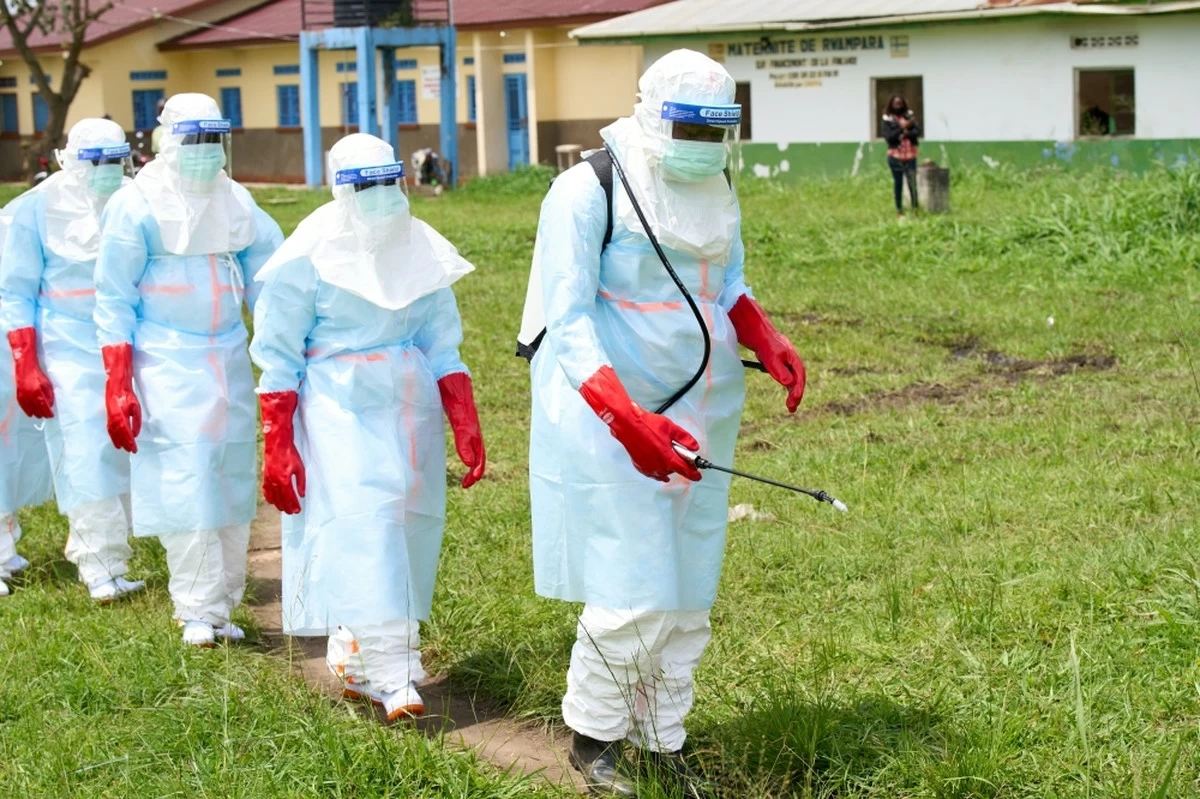

KAMPALA, Uganda, May 23, (AP): Boon-dee-BOO-joh. Before it became the somewhat easy-to-mispronounce name of a rare type of Ebola virus, Bundibugyo is a mountainous district in western Uganda that even some locals would struggle to pinpoint on a map. It's home to roughly 200,000 people. Many are cocoa farmers who search for whatever cultivable land they can find in the impossibly steep landscape of hills and valleys marking Uganda’s border with Congo.
As an example of the classic village idyll, Bundibugyo is a beautiful place. Yet it now trends for an unpleasant reason, making some Ugandans rue Bundibugyo's association with the current Ebola outbreak, which has infected hundreds of people in eastern Congo. There are 160 suspected Ebola deaths in two provinces.
The Ugandan district's connection to the Bundibugyo virus stems from an Ebola outbreak there nearly two decades ago that was flagged as a new species of Ebola, a viral disease that usually manifests as hemorrhagic fever. The outbreak wasn't the Sudan virus, named for the area in present-day South Sudan where that type was first identified.
It also wasn't the type known as Zaire, as present-day Congo was known when Ebola - itself the name of a Congolese river - was first discovered in 1976. So the November 2007 outbreak in a remote part of western Uganda came to be known as Bundibugyo, one that scientists even now haven't studied as much. That is why Ebola specialists say it is particularly dangerous.
Moreover, it was spreading in Congolese villages before health authorities there identified it as the cause of sickness in a growing number of people. The 2007 outbreak in Bundibugyo killed at least 37 people but had been contained by the end of the year. A second outbreak of the Bundibugyo virus, also relatively small, came in 2012 in Congo's northeast.
Initial cases in those outbreaks were identified early, allowing for a quick public health response, according to Dr. Tom Ksiazek, a University of Texas Medical Branch virologist who directed the group within the US Centers for Disease Control and Prevention that first identified the Bundibugyo virus.
This time, while there is no Ebola in Bundibugyo, a lingering connection to the picturesque Ugandan district is hurtful, said Ugandan government spokesman Alan Kasujja, who has urged global health authorities to clarify that Uganda isn't the epicenter of the latest outbreak. "Bundibugyo is too beautiful to be the name of a disease,” he said on X. "We need to take back its name from this madness.”