


25/10/2026

Share:
25/10/2026
Share:
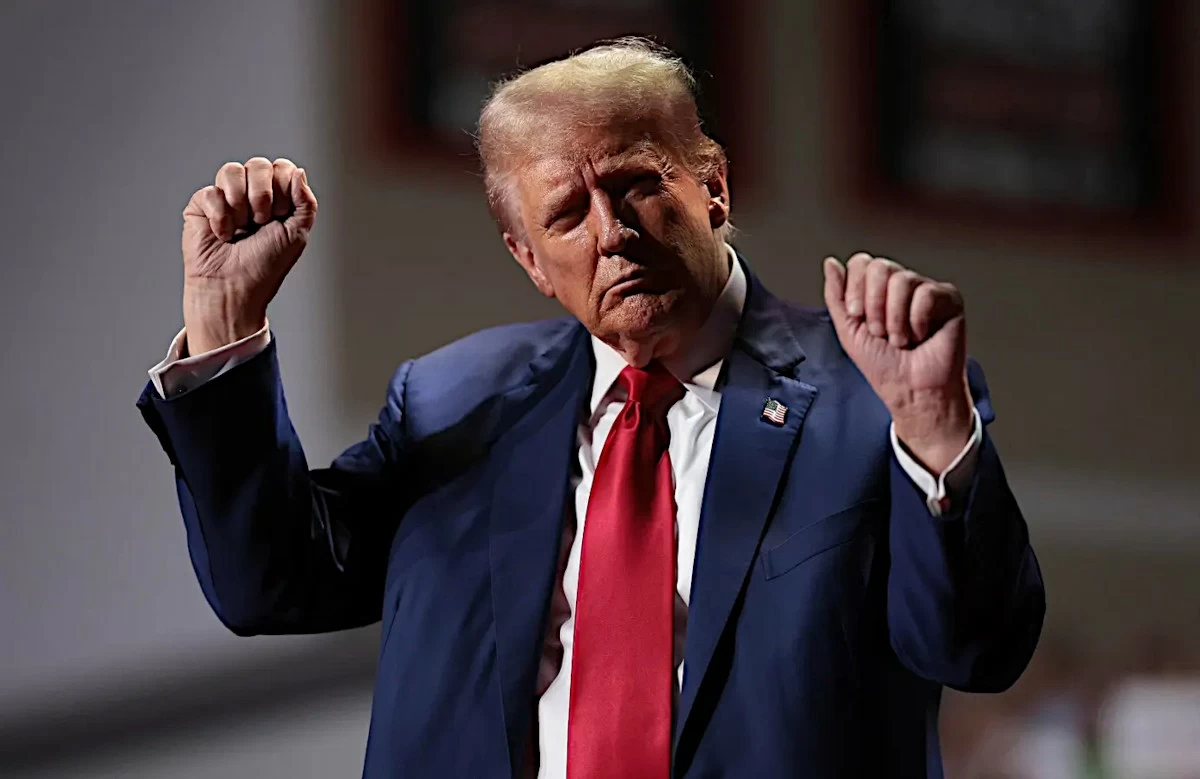

WASHINGTON, Oct 25: US President Donald Trump ruled out an immediate military strike against Iran on Sunday, saying Washington had no plans to attack Tehran as he weighed the prospects of a diplomatic agreement against further military action.
Asked by reporters whether the United States could launch an attack against Iran as soon as Sunday, Trump replied, “Would I tell you that? But the answer is no. There will not be a strike.”
Trump made the remarks while leaving the White House for a campaign rally in Michigan, following earlier comments in which he presented the future of the conflict as a choice between reaching an agreement with Tehran and pursuing further military escalation.
“Do I make a deal with them, or do I finish them off? That's the only question,” Trump told Fox News, portraying the decision as a choice between diplomacy and a more aggressive military campaign.
The comments came as tensions over the Strait of Hormuz, Iranian shipping and the enforcement of restrictions on Iranian ports remained central to the conflict.
Trump claimed that US forces had established control over the strategic waterway, declaring, “Remember, we now control the Hormuz Strait. They get nothing. Yes, we get everything.”
He also asserted that commercial activity through the chokepoint had exceeded pre-war levels and praised the US Navy's enforcement of the blockade on Iranian ports and shipping, describing it as “unbelievable.”
On Saturday, Trump had suggested that Washington could either launch further military strikes or reach a comprehensive agreement with Tehran. He questioned whether Iran would honour any commitments under a potential deal while maintaining that either outcome would represent a victory for the United States.
The conflict erupted in late February following joint US-Israeli strikes against Iran. Despite a ceasefire and a memorandum aimed at securing a final peace agreement, control over the Strait of Hormuz remains a major point of contention.
US, Russia and Ukraine peace talks
Turning to the war in Eastern Europe, Trump indicated that further high-level diplomatic engagements involving the United States, Russia and Ukraine could take place soon.
“We're going to be having some pretty soon, and I think they both want to make a deal,” he said, expressing optimism that the parties could move towards an agreement.
Trump did not provide further details about the timing or format of the anticipated discussions.
Trump declines to endorse Brazil presidential candidate
Asked about Brazil's presidential election, Trump declined to endorse any candidate, saying officials in his administration were monitoring the race.
He offered no further details about Washington's position or whether the United States intended to take any additional steps regarding the election.
Trump links European unrest to immigration policies
Trump also criticised immigration policies in Europe, linking protests and unrest in France, Italy, Belgium and Spain to what he described as inadequate border enforcement.
Contrasting the situation in Europe with US immigration controls, Trump claimed that the United States had prevented illegal crossings over the previous 18 months.
“I closed the border. You know that we've had zero infiltration,” he said, asserting that no illegal immigrants had entered during that period and blaming previous US policies for allowing millions of people to arrive.
His claims were not independently substantiated in the remarks.
Referring to French President Emmanuel Macron, Trump said he had previously warned him about the consequences of immigration policies.
“You are destroying France. You're letting people come in that hate your country,” Trump recalled telling Macron.
He also pointed to migration into Spain as an example of what he described as broader instability across Europe, arguing that governments needed stronger border controls.
Trump accuses Taiwan of taking US chip business
On semiconductor manufacturing and technology trade, Trump accused Taiwan of taking over the US chip industry through low-cost production and aggressive pricing.
“They stole our chip business, all of it, 100%, because they made chips at a ridiculous price, and they just pushed them in,” he said.
Trump argued that stronger leadership in Washington could have prevented the United States from losing ground in the semiconductor sector and suggested that the issue had contributed to broader regional tensions involving China.
Taiwan is a major global semiconductor manufacturing centre, particularly in advanced chips used in artificial intelligence, electronics and other high-technology applications. Trump's comments underscored the continuing debate in Washington over domestic chip production, trade competition and the strategic importance of semiconductor supply chains.