



19/03/2026

Share:
19/03/2026
Share:
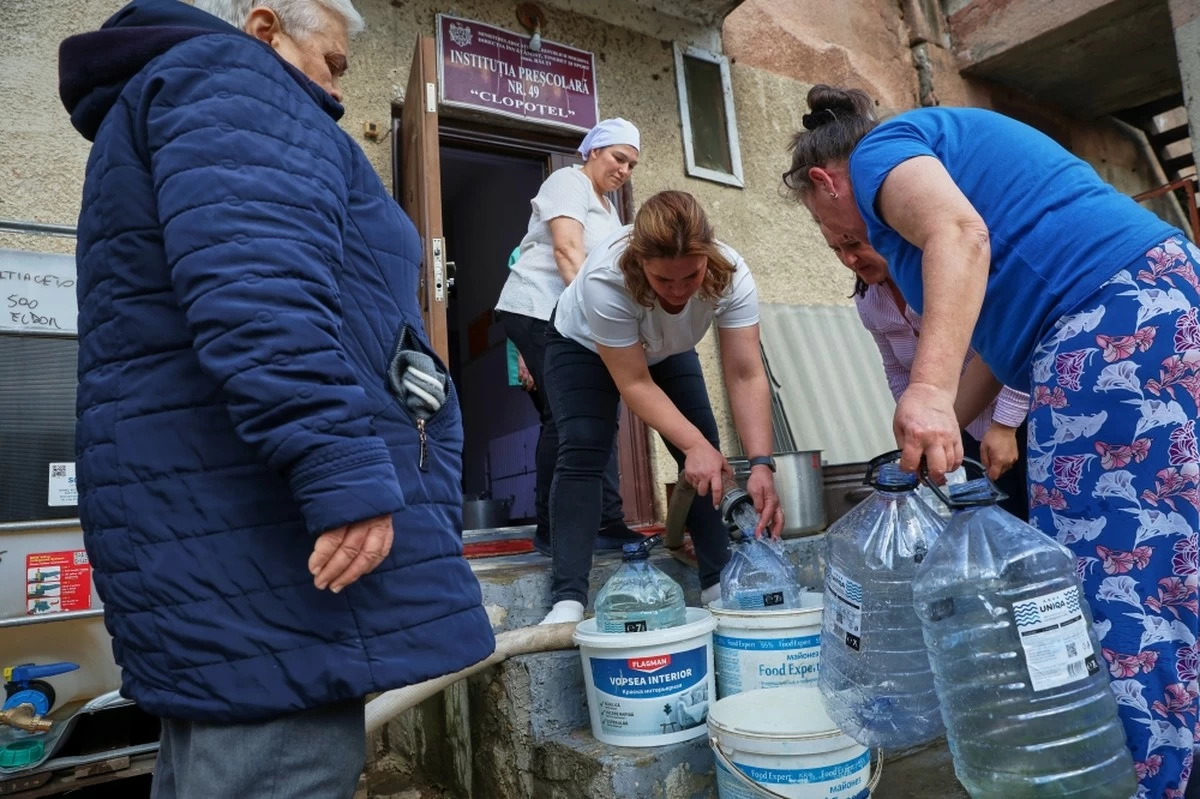

BALTI, Moldova, March 19, (AP): Tens of thousands of Moldovans have been left without water after a Russian strike on a hydroelectric plant in neighboring Ukraine resulted in oil polluting a major river that flows through both countries.
Moldovan President Maia Sandu has blamed Russia for the pollution on the Dniester River following an attack on Ukraine’s Novodnistrovsk hydropower plant on March 7, saying it’s "threatening Moldova’s water supply” in the European Union candidate country.
The Ukrainian plant is situated about 15 kilometers (9 miles) upstream from Moldova’s northern border with Ukraine and supplies water to about 80% of Moldova’s population of about 2.5 million.
Moscow has repeatedly targeted Ukraine's civilian infrastructure, such as dams and river ports, since it fully invaded the country in 2022. "Russia bears full responsibility,” Sandu said on Sunday in a post on X. Moldova’s environment ministry on Sunday declared an environmental state of alert for 15 days, giving the authorities a legal mechanism to boost technical interventions and impose temporary restrictions on water supplies.
"We are taking this decision to make sure we prevent any risk to the population’s health," it said. "Because of the continuous wave of pollution with oil products, the risk of the pollution spreading, and the exceedance of contaminant levels in the northern area of the Dniester River.”
While oil pollutants have been confirmed in the river following the strike, the exact source of the pollutant is not yet clear. The situation has forced the authorities to cut the water supply to several districts, including Moldova’s second-largest city of Balti, which has a population of about 90,000 people.
As well as humanitarian aid from neighboring Romania, Moldova’s military stepped in this week to distribute drinking water in the northern city from a 10-tonne tanker. "It’s very hard, very hard,” said 84-year-old Balti resident Liuba Istrati, who has been carrying buckets of water up to her apartment.
"We live on the fifth floor, it’s just the two of us, old people, my husband is sick in bed.” The water shortage has also forced some schools to close and move learning online. "It’s a complicated situation, I have to come every day to get water,” said Irina Mutluc, a teacher living in Balti.