


26/12/2025

Share:
26/12/2025
Share:
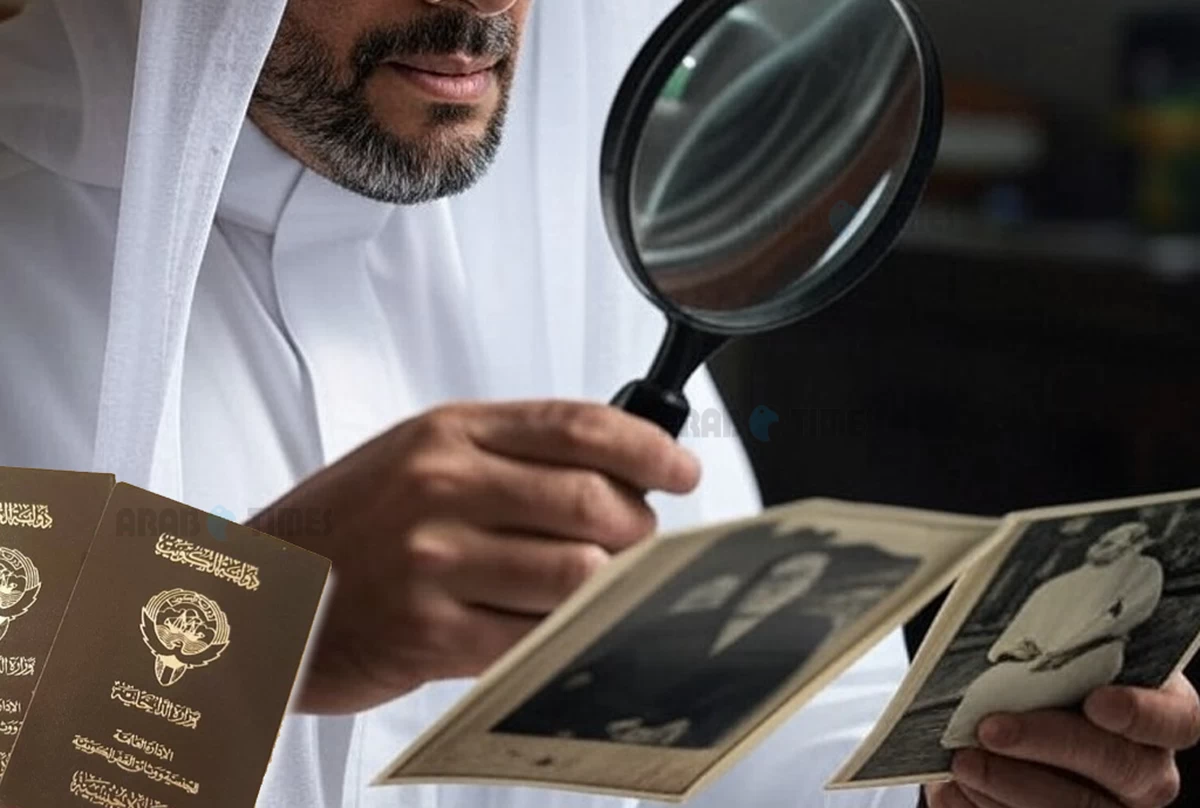

KUWAIT CITY, Dec 26: What began as an ordinary review of a long-closed citizenship file ended with the unravelling of a family history that never truly existed.
Informed sources stated that authorities reopened the file of a now-deceased naturalized citizen whose records listed twenty sons and daughters born to five wives. For years, the file stood untouched—until security investigations uncovered irrefutable evidence of systematic forgery hidden within its pages.
The first crack appeared with intelligence reports suggesting that two of the “sons” recorded in the file were not sons at all. They were Syrians who had fled Kuwait, falsely grafted onto the nationality record of the deceased man. That revelation prompted investigators to widen the scope of their inquiry, pulling apart what had long been accepted as a legitimate family tree.
DNA testing quickly dismantled the fiction. Genetic fingerprints taken from the children of the two fugitives were matched against samples from Syrians legally residing in Kuwait under their original nationality. The results were conclusive: the children were not linked to the naturalized citizen in any way. Instead, they were the biological children of the fugitives’ own brothers. The two men registered as sons in the nationality file were exposed as complete fabrications.
With two fraudulent names confirmed, the investigation deepened. Authorities summoned the remaining eighteen sons listed on the file to submit DNA samples. Seventeen appeared. One did not.
The genetic results delivered a rare moment of clarity amid the deception. All seventeen men were proven to be full brothers, sharing the same biological father—the deceased naturalized citizen. When questioned about the missing eighteenth son, the truth surfaced swiftly. He had fled the country in May 2025. When asked directly whether he was their brother, the seventeen answered in unison: he was not.
To close the final gap, investigators summoned the children of the fugitive son who remained inside Kuwait. Their DNA samples were compared with those of the seventeen verified sons—their supposed uncles. Once again, science spoke without ambiguity. There was no blood connection, no lineage, no kinship. The absent man, like the two fugitives before him, was a forger who had embedded himself in a family he did not belong to.
By the end of the investigation, the truth stood bare: the file contained seventeen legitimate sons—and three impostors.
The consequences were severe. The three fraudulent sons collectively had twenty-nine dependents—eleven linked to the first, nine to the second, and nine to the third. Citizenship had already been revoked from the first two men and their twenty children. The third, a retired employee of the Ministry of Electricity and Water, was now formally implicated. His case, along with that of his nine children, will be merged into the same file, clearing the path for citizenship revocation and the completion of legal proceedings against them.
What remained was not merely a corrected record, but a stark reminder: even death does not seal a forged legacy, and even the most carefully constructed false bloodlines can collapse—once truth is summoned by name, by DNA, and by law.