


26/12/2025

Share:
26/12/2025
Share:
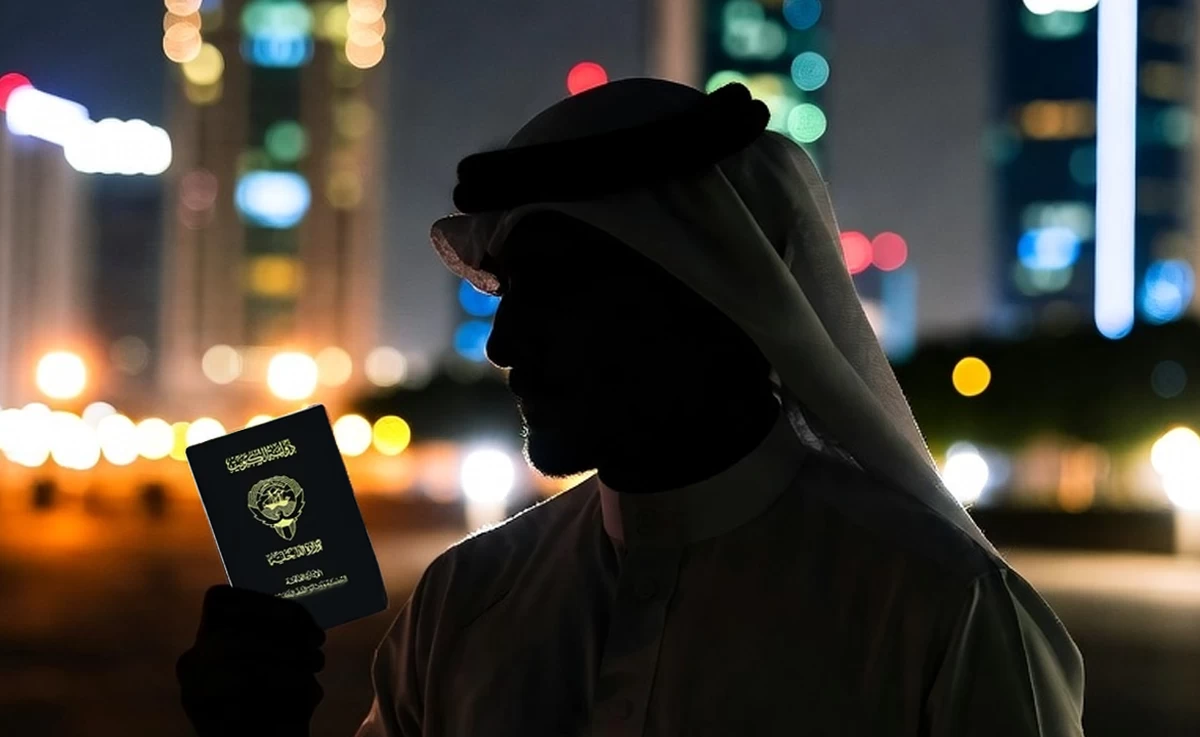

KUWAIT CITY, Dec 26: In the old files of official records, a startling deception came to light—one that reads less like a clerical error and more like a carefully staged drama of identity, age, and lineage.
On paper, the man is ninety years old in Kuwait. In another Gulf state, he is only seventy-two. In Kuwait, he bears one name; across the border, he answers to another entirely. Though he nominally surrendered his Gulf documents years ago, he continues to live there (under his real nationality) while maintaining a sprawling Kuwaiti citizenship file that lists thirteen sons and daughters.
The contradiction does not end there. His birth year, officially registered as 1935 in Kuwait, is recorded as 1953 in Gulf documents. This deliberate manipulation of time was not accidental. Investigators concluded that the date was falsified to allow the inclusion of an eldest son, born in 1950—a son who, by biological reality, is scarcely three years younger than the man claiming to be his father.
As the case unfolded, the details grew darker. The remaining children on the file were born between the 1980s and early 2000s; most of them were added after the liberation of Kuwait, based on a court ruling. Only the son born in 1950 appeared on the records before the Iraqi invasion—an anomaly that triggered deeper scrutiny.
That scrutiny revealed another fracture in the story. The Gulf name of this eldest son bore no resemblance to the Gulf name of the supposed father. Instead, it matched the name of another individual—previously recognized as Kuwaiti, later stripped of his nationality for forgery, yet whose genetic fingerprint remained preserved in official archives.
The coincidence was too precise to ignore. Two men, sharing nearly identical Gulf names, differed only by their first names. In Kuwait, they were registered as sons of two different fathers. In the Gulf, suspicion mounted that they might be brothers.
The truth, when it arrived, was devastatingly clear.
DNA tests confirmed that the son born in 1950 and the previously stripped individual were indeed biological brothers (Gulf brothers), each falsely anchored in Kuwait to a different fabricated father. The paradox could not have been more striking: brothers in the Gulf, strangers in Kuwait.
The investigation then circled back to the man whose Kuwaiti file claimed a 1935 birth. Five alleged brothers were summoned. Under questioning (and supported by Gulf documentation and genetic testing), they confirmed what the evidence already suggested: the man was not their brother. DNA tests proved they were full siblings among themselves, while he stood apart, unrelated, despite what the official records declared.
The scale of the deception was staggering. The primary file listed 179 dependents—children and grandchildren. The eldest son alone accounted for 118 dependents of his own. Entire family trees had been constructed atop false roots.
Authorities concluded that this case exemplifies what investigators grimly refer to as the “Matryoshka model” of fraud: a forgery nested inside another forgery, and within that, yet another—each layer revealed only by peeling back the one before it.
What began as a routine review of old citizenship renunciation cases—many conducted through illegal customary procedures—has now exposed a labyrinth of fabricated identities, manipulated ages, and invented bloodlines. And as the files continue to be opened, investigators warn that this story may be only one layer deep in a much larger design.