



24/09/2026

Share:
24/09/2026
Share:
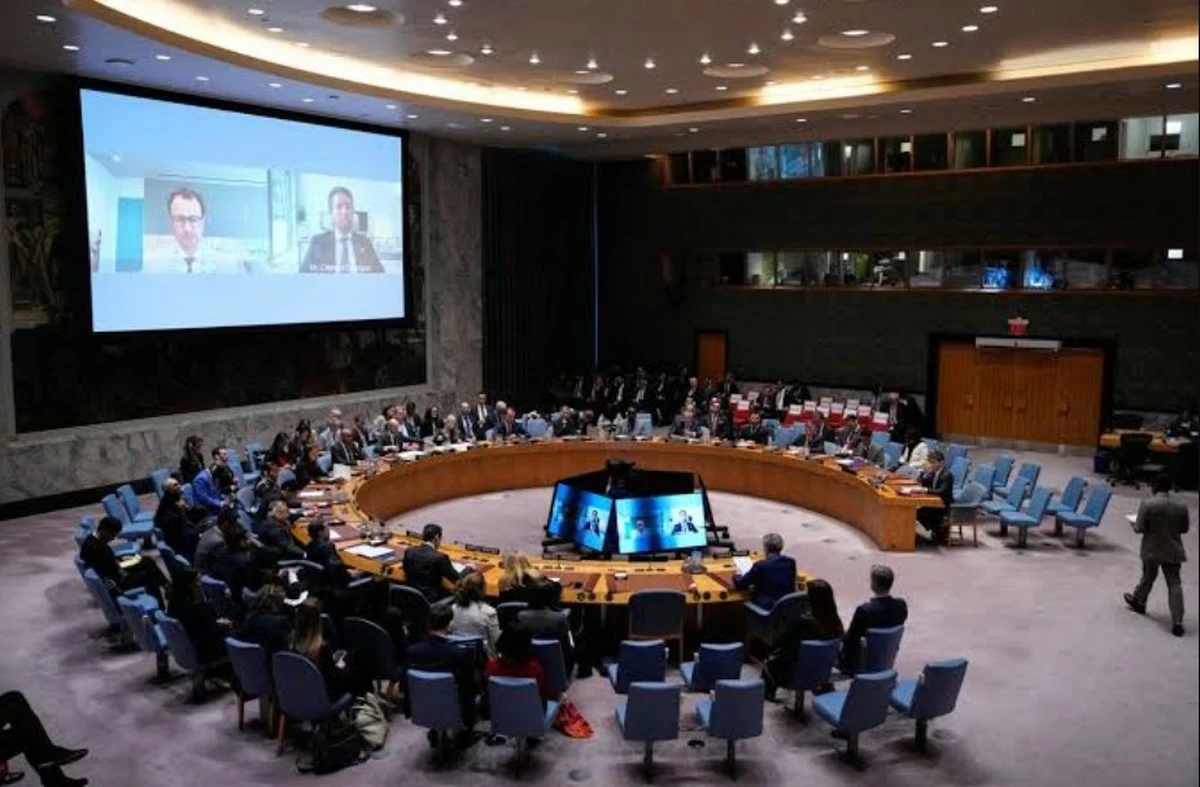
Dario Amodei, CEO of Anthropic, speaks remotely during a Security Council meeting on artifi cial intelligence at the 81st session of the United Nations General Assembly at United Nations headquarters, Wednesday, Sept. 23, 2026. (AP)

UNITED NATIONS, Sept. 24, (AP): The heads of major artificial intelligence firms pleaded with the United Nations on Wednesday to save the world or at least its people - by somehow regulating the fast-expanding technology that they have been designing. “If managed poorly, I even believe AI could be a risk to humanity as a whole,” said Dario Amodei, chief executive officer of Anthropic. And from his competitor Sam Altman, CEO of OpenAI, came this assessment: “We could lose control of the future to AI.” Both said the countries of the world, through the U.N. Security Council, where they testified Wednesday, have to set safeguards of some kind to prevent the technology from getting too powerful to rein in. They also called for the world to make sure that the power of AI isn’t concentrated in one company or country. They also touted the benefits of the technology for bettering humanity and what Altman called “giving people more power over their own lives.”
Those tech leaders “are telling us in stark terms that it cannot be left to them to prevent disaster from befalling the world,” British Foreign Secretary Ed Miliband said at the Security Council. “We cannot ignore them because they are right.’’ Miliband said when the U.K. leads the G20 next year, it will put controlling AI at the heart of discussions, looking for a single set of global standards “to insure that AI development is safe.” But, the United States said: Don’t do it. Worries about control of AI are “not a reason to pause its further development or to constrain it with new global governance structure,” said White House Science Adviser Michael Kratsios. “We want you, our allies and partners, to share in the benefits of this technology.”
The U.S. and China are jostling for AI dominance - and Chinese U.N. Ambassador Fu Cong emphasized that all countries should be able to choose AI technology as they see fit. He warned against “banding together into a petty us-vs.-them clique in the tech sector and forcing other countries to take sides” and enabling unnamed major powers that he described as seeking “digital hegemony.” He called on countries instead to promote open-source models -- China’s approach to the technology.
For most of the world leaders, one key question about AI is this: Who should control life-and-death decisions - human or machine? Amodei, Altman and Hugging Face CEO Clément Delangue, who spoke via a glitchy remote connection, spoke with the U.N.’s most powerful council because they and world leaders are trying to figure out not just whether to control AI, but by whom, how it could possibly be done and when it might be just too late. The day before, U.N. Secretary- General Antonio Guterres warned of “killer robots.” Experts and European leaders said that’s not hyperbole but something that’s either already a grim reality or perilously close. Amodei called on world leaders to agree on not letting AI build biological weapons, figure out how to verify what models have the capability to do and “establish common standards” for testing and for loss of control and misuse.