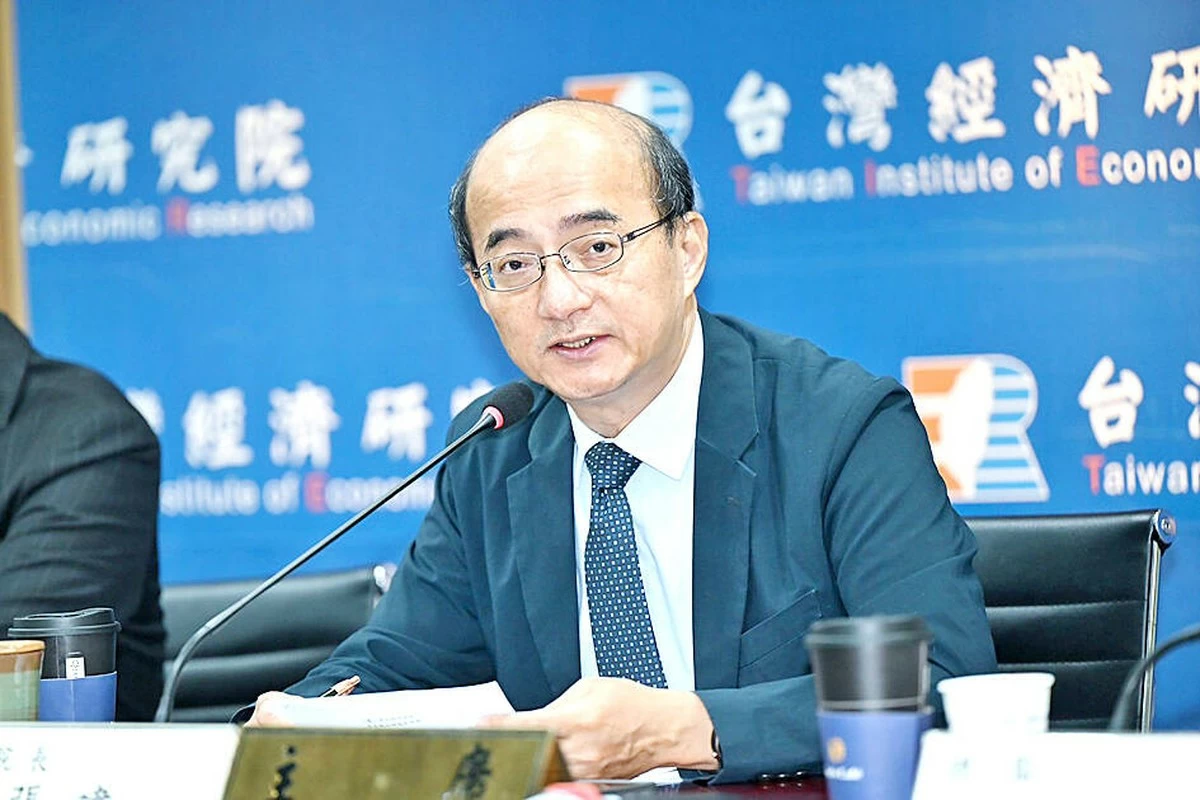
Dr. Chien-Yi Chang, President of the Taiwan Institute of Economic Research (TIER)
TAIPEI, Oct 15: The Taiwan Institute of Economic Research (TIER) is marking its 50th anniversary in 2026, highlighting five decades of economic research, industrial development and policy advice aimed at helping Taiwan adapt to global changes and strengthen its position in international technology supply chains.
Speaking at a press briefing, TIER President Chien-Yi Chang said the institute has contributed to Taiwan’s economic transformation through industry research, economic forecasting and policy recommendations.
“Over the past half century, we have contributed to Taiwan’s transformation into a key partner in global technology supply chains,” Chang said.
Founded in 1976, TIER is an independent private research institute that provides economic analysis and policy advice to support Taiwan’s government and industries in responding to changing global conditions.
Chang said the institute regularly publishes economic forecasts based on academic models and monthly business surveys to monitor economic trends and business conditions.
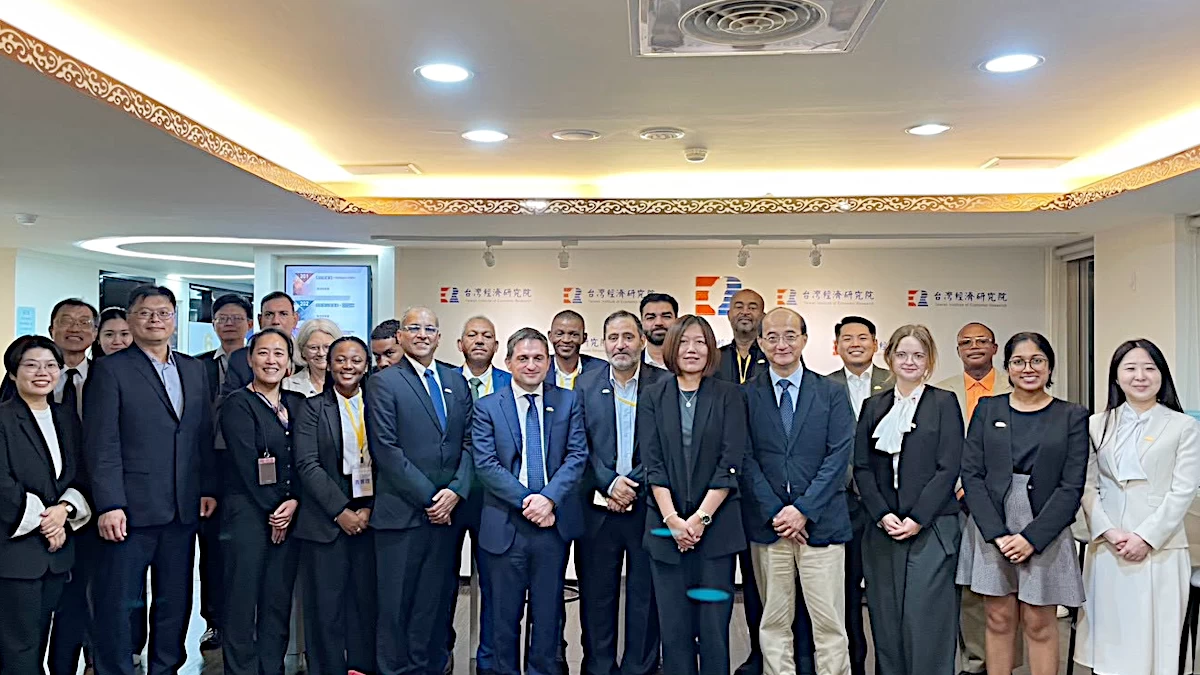
International Media delegation with Dr. Chien-Yi Chang, President and Think Tank Management of the Taiwan Institute of Economic Research (TIER)
AI and emerging technologies create new industrial opportunities
TIER’s research agenda this year includes the transformation driven by artificial intelligence (AI), low-Earth-orbit satellites and net-zero technologies, examining the opportunities these emerging fields could create for Taiwan’s industries.
The institute is also assessing the implications of changing international trade arrangements and supply chain developments for Taiwan’s economic outlook.
Chang said TIER had contributed research assessing the impact of the Taiwan-US tariff agreement, global supply chain shifts and shipping and energy disruptions associated with the blockade of the Strait of Hormuz.
The analysis is intended to provide timely information to help government agencies and businesses assess risks and plan ahead amid an uncertain international economic environment.
Bridging government and industry
Chang said TIER serves as a long-standing link between government and industry, helping policymakers respond to business needs while supporting a stable and predictable environment for investment and innovation.
During the briefing, he introduced the institute’s Department of International Affairs and Research Division, outlining their respective roles in regional economic cooperation and domestic industrial development.
The Department of International Affairs, led by Dr. Grace Zhou, oversees TIER’s Asia-Pacific Economic Cooperation (APEC) Study Center, which conducts policy research to support Taiwan’s participation in APEC.
The department also serves as the secretariat for the Chinese Taipei Pacific Economic Cooperation Committee, bringing together government, business and academic perspectives on regional economic issues.
In addition, it supports the APEC Business Advisory Council secretariat in assisting business representatives with recommendations for APEC leaders.
Supporting small and medium-sized enterprises
Chang also introduced the Research Division, led by Dr. Liang Kexiu and his team, which focuses on helping Taiwan’s small and medium-sized enterprises (SMEs) grow and expand their operations.
The division also studies Taiwan-US economic relations and provides policy recommendations to the government.
Its wider research areas include legal reform, regional revitalisation, social innovation and sustainability.
Chang concluded his opening remarks by inviting participants to raise questions on the issues submitted in advance, handing the discussion over to the institute’s specialists for further exchanges.
As TIER enters its sixth decade, its work continues to focus on economic analysis, industrial upgrading and policy research to help Taiwan respond to technological transformation, shifting trade relationships and emerging global economic challenges.
Taiwan’s Semiconductor Resilience and Energy Partnership with Australia
During the question-and-answer session, a journalist from The Australian Financial Review, based in Sydney, asked about Taiwan’s economic dependence on Taiwan Semiconductor Manufacturing Company (TSMC) and the semiconductor boom, as well as the potential for cooperation with Australia in energy and artificial intelligence.
In response to questions about the overseas expansion of Taiwan’s semiconductor industry, a TIER representative said that investment abroad did not automatically mean the industry was leaving Taiwan. The key issues, the representative explained, were whether overseas expansion could reduce domestic investment or shift significant research and development activities away from Taiwan.
The representative cited semiconductor manufacturing projects in Germany, Japan and the United States, noting that Japan’s Kumamoto facility had begun production and that TSMC’s first Arizona fabrication plant had started production in late 2024. The overseas facilities serve different customer requirements, including demand from the automotive industry.
The expansion could strengthen manufacturing capabilities in both Taiwan and the United States, the representative said, while cautioning that staffing and higher operating costs remained significant challenges. Companies would need to balance their investments between Taiwan and overseas locations.
The representative also stressed that overseas production shares alone did not provide a complete picture of Taiwan’s industrial position. The location of core expertise and the ability to maintain key technological capabilities were important factors in assessing the long-term implications of international expansion.
Addressing Taiwan–Australia energy cooperation, TIER representative Ariel highlighted Australia’s established role as a major supplier of Taiwan’s imported energy, particularly coal.
Against the backdrop of heightened tensions in the Middle East over the previous year, Taiwan had also been seeking to diversify its energy procurement. Ariel said Australia accounted for 35 percent of Taiwan’s total energy imports during the first eight months of the year, underscoring the strength of the existing energy partnership.
Looking ahead, Ariel said Taiwan and Australia had further opportunities to cooperate in supporting artificial intelligence development.
The discussion highlighted the importance of maintaining Taiwan’s technological expertise while expanding international manufacturing links and strengthening energy partnerships to support future economic and industrial development.
by John C Fernandes Online Media Manager Arab Times