


18/10/2026

Share:
18/10/2026
Share:

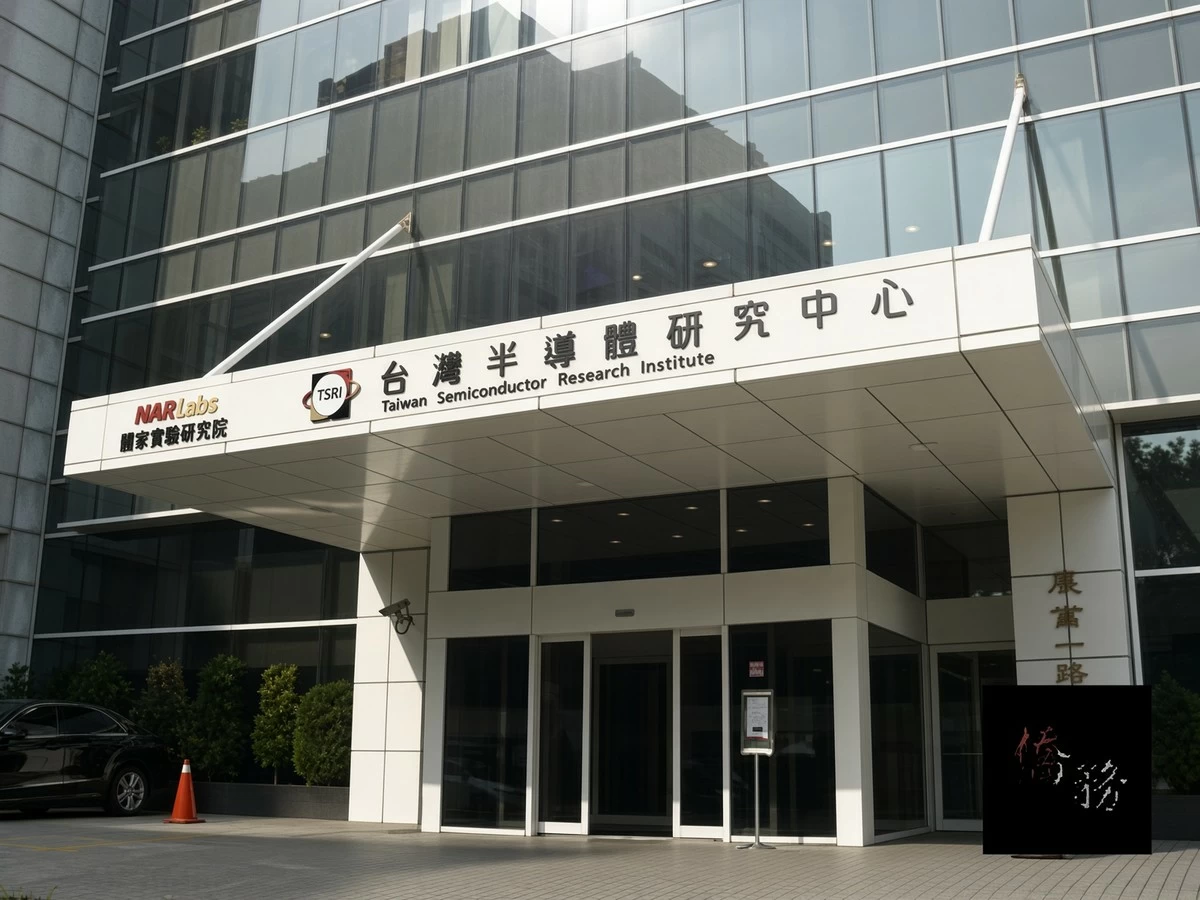
TSRI Director General Jimmy Liu says AI chips, advanced packaging, silicon photonics and international talent development will shape Taiwan’s next phase of semiconductor growth
TAIPEI, Oct 18: The Taiwan Semiconductor Research Institute (TSRI) is strengthening Taiwan’s semiconductor industry by connecting universities, research institutions and businesses to accelerate chip innovation and train skilled engineers.
TSRI provides advanced fabrication facilities, chip-design tools and specialised training to turn academic research into practical industrial applications. Its three main services cover fabrication and prototyping, chip design and verification, and semiconductor talent development.
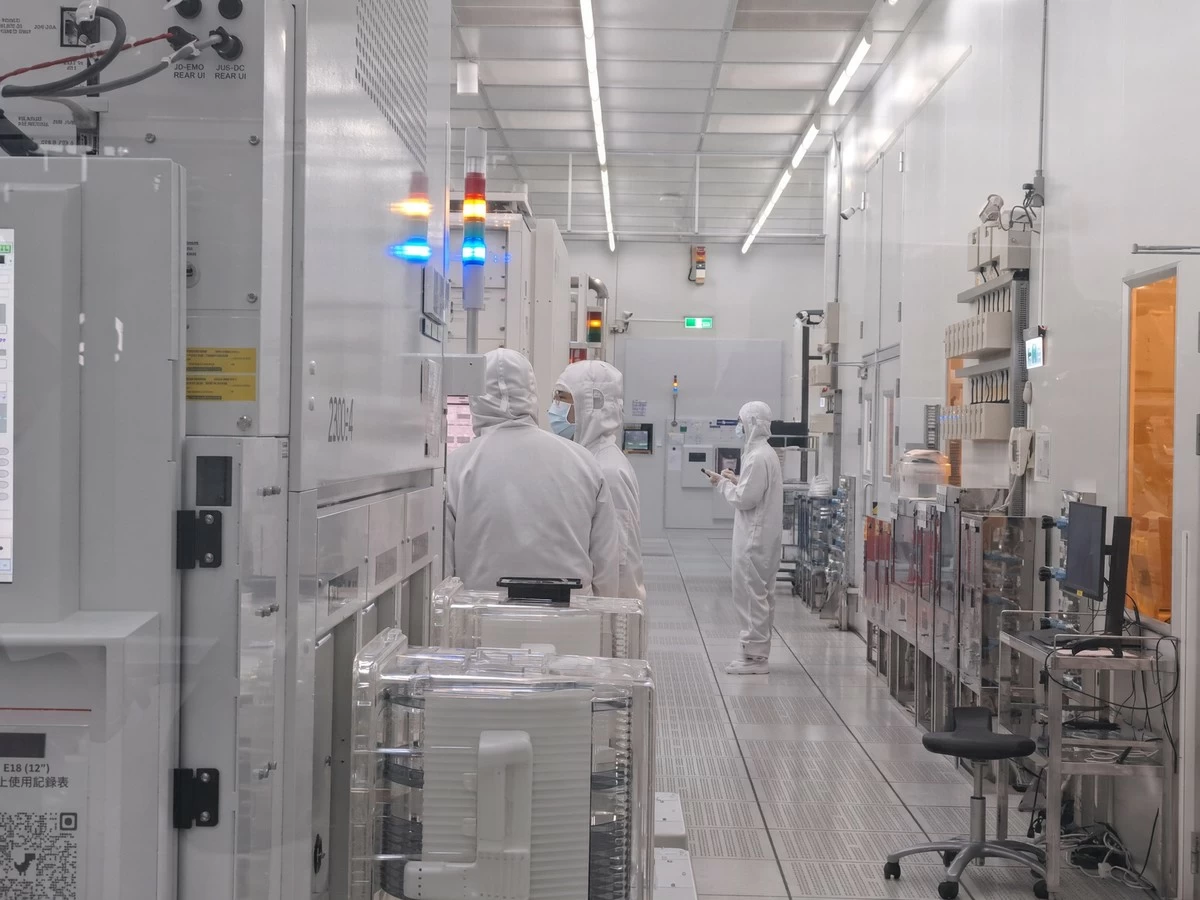
Its 3,200-square-metre cleanroom offers 24-hour access to research teams, supporting more than 250 teams annually. TSRI also provides over 100 commercial electronic design automation (EDA) tools, supports more than 2,000 academic chip tape-outs and conducts approximately 7,000 analytical measurements each year.
These facilities help researchers develop and test new semiconductor technologies, moving innovations from laboratory concepts towards commercial applications.
Taiwan will continue to expand its international semiconductor partnerships while keeping core research and advanced manufacturing capabilities at home, as the global chip industry faces growing geopolitical pressures and efforts to diversify supply chains, according to Chien-Nan (Jimmy) Liu, Director General of the Taiwan Semiconductor Research Institute (TSRI).
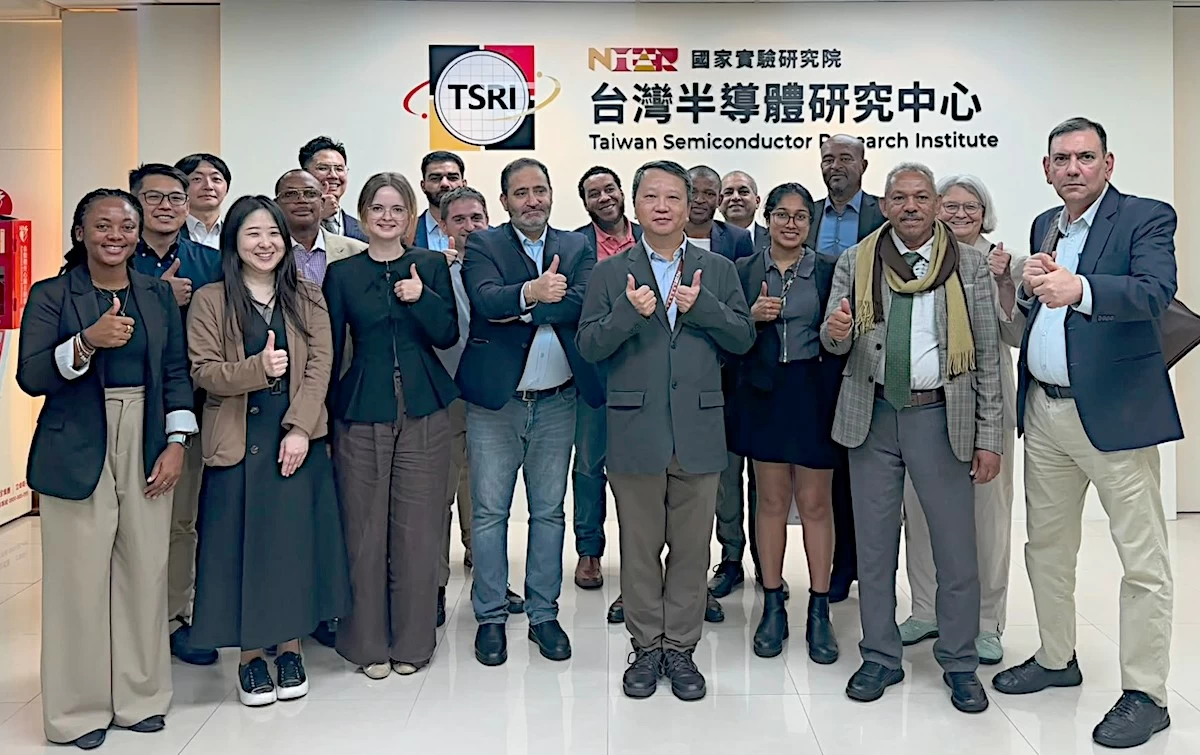
In an interview with Arab Times and other international media representatives, Liu said Taiwan’s competitive advantage rested on a comprehensive semiconductor ecosystem built over decades through close cooperation among government, universities, research institutions and private companies.
He said Taiwan was upgrading its semiconductor strategy through the National Science and Technology Council’s Chip-based Industrial Innovation Program (CbI), with the next phase focusing on advanced packaging, heterogeneous integration, artificial intelligence computing and silicon photonics.
These technologies are becoming increasingly important as demand for AI computing grows and industry seeks more efficient ways to integrate chips, sensors and other components.
Liu said Taiwan’s research institutions were also working to address the challenges posed by limited water and electricity resources and the rising energy requirements of AI computing.
While industry is pursuing energy-saving manufacturing processes, TSRI provides advanced research platforms to help universities and research teams explore next-generation semiconductor devices and heterogeneous integration technologies.
The aim is to develop scientific solutions that could reduce computing energy consumption at the hardware level, helping the industry manage growing computational demands and resource constraints.
Advanced packaging, AI chips and silicon photonics to drive next phase
Liu said Taiwan's comprehensive semiconductor ecosystem remains the foundation of its competitive advantage. To respond to global competition, Taiwan is upgrading its technological capabilities through the National Science and Technology Council's (NSTC) Chip-based Industrial Innovation (CbI) Program.
The next phase will place particular emphasis on advanced packaging, heterogeneous integration, AI computing and silicon photonics.
These technologies are becoming increasingly important as AI applications demand greater computing power, faster data transfer and improved energy efficiency.
Addressing concerns over talent shortages, water and electricity supplies, and rising computing demand, Liu said TSRI, under the National Institutes of Applied Research (NIAR), supports research teams by providing advanced research and development platforms for semiconductor devices and heterogeneous integration technologies.
The objective is to develop early-stage scientific solutions that could eventually help the semiconductor industry reduce computing power consumption at the hardware level.
On talent development, he said international students and researchers are encouraged to enter Taiwan through domestic universities and academic collaboration programmes before participating in NIAR's International Internships Program and other training initiatives.
Through a dual-mentor system, international students receive guidance from both university professors and institute experts, helping prepare them for advanced research and development roles.
Taiwan's research model offers lessons for AI and drone industries
Liu identified industry-academia-research collaboration and hardware-software integration as two of the most important lessons from Taiwan's semiconductor development.
He said emerging sectors such as AI and drones also depend on the close integration of sensors, communications systems, power management and computing chips.
TSRI has promoted its Shared-facility Service Organization (SSO) model, which provides shared integrated circuit (IC) design and fabrication platforms. The approach reduces research and development barriers for universities, academic researchers and startups that may otherwise struggle to access expensive equipment.
The institute is extending this model to emerging technologies through AI system-on-chip (SoC) design and verification platforms, as well as research services for advanced packaging and heterogeneous integration.
Liu said TSRI assists research teams in the early exploration and prototype design of technologies that integrate AI algorithms and sensors into microchips, including Edge AI.
Such technologies could enable low-power, high-efficiency autonomous computing in applications such as drones and other intelligent devices.
Saudi Arabia cooperation possible through universities and research training
Outlining TSRI's priorities for the next five years, Liu said the TSRI 2.0 strategy will focus on semiconductor research platforms, support for Taiwanese universities conducting frontier research and international talent development in Taiwan.
Priority research areas include early-stage AI chip development, silicon photonics and advanced packaging.
He said Taiwanese research teams have established deep academic research partnerships with institutions in Europe, the United States and Japan.
TSRI would also welcome discussions on potential cooperation with countries such as Saudi Arabia, particularly through programmes encouraging talented students to enrol at Taiwanese universities.
After establishing university links, international students could use TSRI's research platforms and internship programmes to develop expertise in semiconductor technologies, IC design and basic AI.
Asked about possible cooperation with resource-rich countries such as Sudan in areas related to critical minerals, Liu acknowledged the importance of such resources to semiconductor supply chains.
However, he said critical-mineral development involves broader industrial supply chains and commercial considerations that require comprehensive assessment by the relevant authorities.
TSRI's principal contribution to international cooperation, he added, would remain the provision of research platforms and support for advanced talent development.
Invisible AI will depend on smaller, more energy-efficient hardware
Looking ahead, Liu said the development of increasingly integrated and less visible AI technologies is already underway.
Future applications could allow smartphones, vehicles, medical devices, homes and urban infrastructure to respond more intelligently to human needs. Achieving this vision, however, will require not only advanced AI models but also highly miniaturised, low-power sensing and computing hardware.
TSRI's role, he said, is to establish research platforms, support academic research, advance frontier science and technology, and cultivate high-tech talent.
The institute is upgrading research capabilities in areas including high-frequency measurement and quantum computing while supporting early-stage investigations into smart sensing, AI chips, silicon photonics and co-packaged optics (CPO).
By providing open research platforms covering IC design through system integration, TSRI aims to help research teams establish the scientific and hardware foundations required for more widespread AI applications.
Government, universities and industry form the backbone of Taiwan's ecosystem
Liu said the most important institutional arrangement behind Taiwan's semiconductor success is the vertical integration of government, academia, research institutions and industry, supported by shared research infrastructure.
Under the leadership of NSTC Minister and NIAR Chairperson Cheng-Wen Wu and President Hung-Yin Tsai, NIAR serves as a bridge connecting different stages of research and development.
Because advanced semiconductor research equipment is extremely expensive, TSRI provides an open research environment that allows universities and researchers to access facilities and technologies that would otherwise be difficult to obtain.
Under its TSRI 2.0 strategic upgrade, the institute aims to become a global semiconductor industry-academia-research value co-creation hub.
The initiative includes opening advanced cloud-based electronic design automation (EDA) platforms and research-grade fabrication equipment to domestic academic institutions.
Liu said the model allows public investment to absorb some of the initial costs of innovation, helping researchers develop basic scientific findings and proof-of-concept technologies that can subsequently be transferred to industry.
He described this mechanism as a continuing pillar of Taiwan's semiconductor ecosystem, with applications extending to AI and silicon photonics.
International research cooperation requires trust and technology safeguards
As semiconductor research becomes increasingly international and strategically sensitive, Liu said Taiwan supports cooperation based on trust and reciprocity while maintaining strict safeguards for critical technologies and intellectual property.
TSRI encourages basic research collaboration between Taiwanese and international research teams. However, cooperation arrangements clearly define research scope, data usage and ownership of results.
Non-disclosure agreements, intellectual property-sharing frameworks within joint research centres and compliance with national guidelines for protecting critical technologies form part of the institute's approach.
Liu said international cooperation and technology protection should not be viewed as opposing objectives.
Instead, he advocated appropriate levels of openness and protection based on the stage and nature of each research project, allowing scientific collaboration to continue while reducing the risk of sensitive technology leakage.
Taiwan open to semiconductor research and talent cooperation with Eswatini
Liu said TSRI is open to potential cooperation with the University of Eswatini and the Royal Science and Technology Park (RSTP), particularly in semiconductor education, talent development, IC design and sensing technologies.
He noted that semiconductor development does not necessarily have to begin with wafer fabrication.
Students and faculty members from Eswatini could first enrol at Taiwanese universities or establish academic collaborations, subsequently applying for NIAR's International Internships Program and using cloud-based IC design training platforms alongside Taiwanese research teams.
Initial cooperation could focus on talent training, IC design, embedded systems and sensing technologies.
Liu said professionals trained through such programmes could eventually apply smart sensing and power-management technologies to Eswatini's industrial development and smart city projects, with solutions adapted to local infrastructure requirements.
The approach could provide a foundation for long-term academic exchanges while helping emerging technology sectors develop local expertise.
Taiwan's semiconductor ecosystem difficult for other countries to replicate
Liu said Taiwan's technological leadership rests on the efficiency and speed of its integrated semiconductor ecosystem, which connects academic research, chip design, manufacturing and packaging.
Close geographical proximity and strong coordination between these sectors allow research findings to progress rapidly from proof-of-concept to industrial development, accelerating technological innovation.
Replicating the model is difficult because it requires more than investment, equipment and infrastructure. Decades of accumulated manufacturing experience, specialised engineering knowledge, industrial culture and trusted relationships between academia and industry are also essential.
Liu said other countries need not reproduce Taiwan's entire supply chain to establish competitive semiconductor industries.
Instead, they could identify areas that match their existing strengths, such as IC design or advanced packaging, and build complementary partnerships with Taiwan's research institutions and industrial ecosystem.
Supply-chain diversification must balance resilience and efficiency
Amid US-China tensions and efforts to diversify semiconductor production, Liu said geographic diversification can make global supply chains more resilient by reducing dependence on individual locations exposed to natural disasters or geopolitical disruptions.
However, excessive diversification or attempts to establish completely independent semiconductor supply chains could increase costs, duplicate investment and weaken the efficiencies created by specialised industrial clusters.
Taiwan's approach is to globalise its semiconductor ecosystem while retaining core research and advanced manufacturing capabilities at home.
Liu said companies can establish overseas operations and cooperate with international partners to distribute risks across key parts of the supply chain.
He added that resilience must extend beyond chip manufacturing to encompass equipment, materials, electronic design automation and packaging.
The objective, he said, is to strike a balance between global supply-chain security and the efficiency of an interconnected semiconductor industry.
India can build on software talent and IC design strengths
Commenting on India's expanding semiconductor ambitions, Liu said the country possesses world-class software talent and a large domestic market, giving it significant advantages in developing its semiconductor ecosystem.
However, he identified manufacturing yield improvement and the development of cross-disciplinary hardware talent as two of the most difficult capabilities to establish.
Manufacturing yield — the proportion of chips that meet required specifications — depends on extensive practical experience, rigorous engineering discipline and effective coordination between chip design, manufacturing and packaging.
Liu suggested that India could accelerate its development by combining its strengths in IC design and AI software with Taiwan's manufacturing expertise.
He also recommended that India consider a national-level semiconductor training model similar to TSRI's shared-facility approach.
Under such a model, university students and researchers could gain practical experience using industry-standard design tools and fabrication technologies while conducting academic research.
This would help narrow the gap between university education and industrial requirements.
Liu said India did not need to replicate Taiwan's entire semiconductor ecosystem. By adapting lessons from Taiwan to its own capabilities and market conditions, India could develop an industrial structure suited to its strengths.
Taiwan positions research and talent at the centre of its next phase
Liu's remarks highlight Taiwan's strategy of extending its semiconductor leadership beyond manufacturing capacity to include advanced research, international talent development, AI hardware and collaborative innovation.
Through shared research infrastructure, university partnerships and cooperation with international institutions, TSRI aims to help researchers develop technologies that could support the next generation of AI systems and intelligent devices.
The institute's approach also reflects a broader recognition that semiconductor competitiveness depends on an integrated combination of scientific research, engineering expertise, industrial coordination and international collaboration.
For countries seeking to strengthen their own semiconductor capabilities, Liu said Taiwan's experience offers a practical lesson: building sustainable technological capacity requires long-term investment in people, research infrastructure and partnerships rather than simply acquiring equipment or establishing fabrication facilities.