


29/11/2026

Share:
29/11/2026
Share:
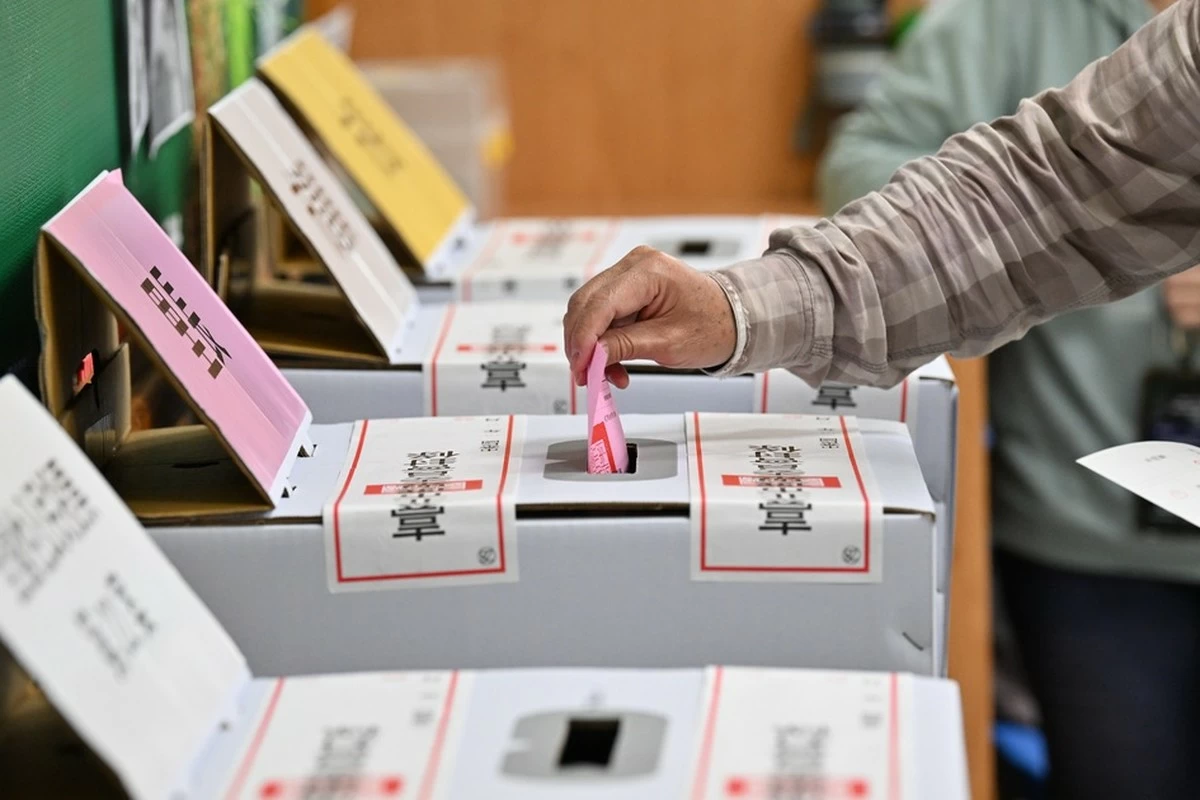

TAIPEI, Nov 29: Taiwan's ruling Democratic Progressive Party (DPP) has made significant gains in local elections, strengthening its political position ahead of the 2028 presidential race after winning control of 10 cities and counties, up from five in 2022.
The results delivered a stronger-than-expected performance for President Lai Ching-te's party, which captured six jurisdictions previously governed by the opposition Kuomintang (KMT), while losing Penghu County.
Among the DPP's notable victories was Taichung, where legislator Ho Hsin-chun defeated heavyweight KMT candidate Johnny Chiang, deputy speaker of the Legislative Yuan, ending eight years of KMT control of the municipality.
The DPP also secured victories in Changhua County, Yilan County, Hsinchu County, Chiayi City and Yunlin County, demonstrating its growing ability to compete in areas traditionally considered KMT strongholds.
Across the 22 city and county executive elections, DPP candidates received more than 6 million votes, approximately 1.29 million more than in 2022. The party's nationwide vote share reached 48.04%, an increase of more than six percentage points.
In city and county council elections, the DPP secured approximately 4.85 million votes, representing 38.92%, compared with 36.8% for the KMT. However, the KMT retained more council seats nationwide.
Taiwan's six largest cities, which account for approximately 70% of the population, are now evenly divided between the two major parties.
DPP loses Taipei but narrows the gap|nDespite the nationwide gains, the DPP failed to capture Taipei, where incumbent KMT Mayor Chiang Wan-an secured re-election with 53.72% of the vote.
DPP candidate Puma Shen, a cybersecurity expert and civil defence advocate, received 664,586 votes, or 45.69%, marking the party's second-highest vote total in a Taipei mayoral election.
Shen's performance was particularly notable because he entered the campaign facing a substantial disadvantage, with some May opinion polls placing him nearly 30 percentage points behind Chiang.
His campaign gained momentum in the final weeks, attracting younger voters and generating a grassroots movement dubbed the "O-Shen wave", driven by social media mobilisation and policy-focused campaigning.
The DPP also increased its representation in the Taipei City Council from 21 to 23 seats, with 23 of its 26 nominated candidates winning.
In neighbouring New Taipei City, DPP legislator Su Chiao-hui also delivered a stronger-than-expected performance, receiving 48.25% against KMT candidate Lee Shu-chuan, who won with 51.21%.
The result represented a considerable improvement for the DPP compared with 2022, when its candidate secured approximately 37% of the vote.
Implications for 2028
The election results are expected to reshape political calculations within both major parties as Taiwan approaches its 2028 presidential and legislative elections.
Chiang's narrow victory margin in Taipei and the DPP's success in Taichung could create challenges for prominent KMT figures considered potential contenders in the next presidential race.
Outgoing Taichung Mayor Lu Shiow-yen, who has frequently been mentioned as a possible presidential contender, leaves office after the municipality returned to DPP control.
Meanwhile, the results have strengthened the political profiles of emerging DPP figures, including Shen, Su and Ho.
The elections also highlighted the importance of domestic issues, with local governance, public accountability and municipal policies playing a central role in voters' decisions.
Although Beijing exerted pressure during the campaign, including military activity around Taiwan and alleged disinformation efforts, the local elections were largely focused on domestic concerns rather than solely on relations with mainland China.
Nuclear energy referendum signals policy shift
In another significant development, voters supported abolishing Taiwan's "Nuclear-Free Homeland" policy, opening the door to reconsideration of nuclear power as the island faces growing electricity demand.
The referendum outcome reflects increasing attention to energy security and long-term economic requirements, particularly as semiconductor manufacturing and artificial intelligence drive demand for electricity.
However, approval of the referendum does not automatically mean nuclear reactors will resume operations. It provides an opportunity for a broader reassessment of Taiwan's energy policy.
Strong voter participationThe elections also demonstrated substantial public participation in Taiwan's democratic process.
Preliminary turnout in Taipei reached 68.85%, surpassing the 67.7% recorded in the 2022 mayoral election.
Nangang District recorded the highest turnout at 72.19%, while Wanhua District registered the lowest at 65.65%.
More than 19.58 million people were eligible to vote in the local elections, with approximately 20 million eligible to participate in the nuclear energy referendum.
Voting took place across thousands of polling stations, with ballots counted publicly. Election workers held up each ballot and announced its contents aloud before recording the results on publicly visible tally sheets.
The process also saw candidates concede defeat, congratulate their opponents and thank voters for participating.
Newly elected officials are scheduled to take office on Dec 25.
The results have demonstrated the resilience of Taiwan's democratic institutions and delivered a clear message to political parties: voters expect effective local governance, meaningful political competition and the freedom to determine Taiwan's future without external intimidation.