

26/11/2026

Share:
26/11/2026
Share:

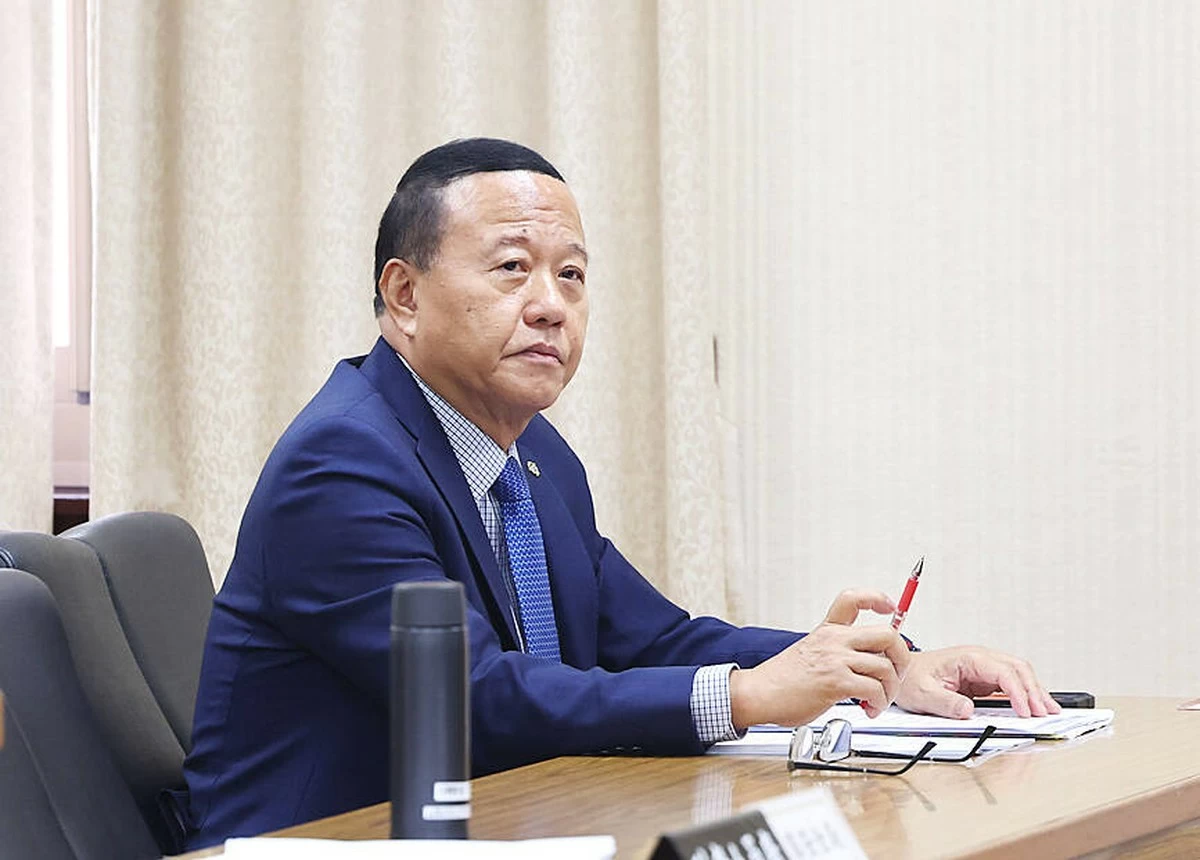
Horng huei po Deputy chief executive officer for research
TAIPEI, Nov 26: Taiwan is strengthening its asymmetric warfare capabilities, developing its domestic drone industry and preparing for possible military action by a neighbouring country, including a blockade or quarantine, as security tensions across the Taiwan Strait continue to shape regional and international defence planning.
Researchers at Taiwan's Institute for National Defense and Security Research (INDSR), a defence think tank sponsored by the Ministry of National Defense, outlined the island's security priorities during a question-and-answer session with an international group of journalists.
The discussions covered Taiwan's preparedness for a possible military operation by its neighbouring country, lessons drawn from the wars in Ukraine and the Middle East, US arms support, military reserve reforms, energy security, undersea cables and cooperation with regional and international partners.
The institute's representatives stressed that Taiwan could not rely entirely on external military assistance and needed to strengthen its own defence capabilities while expanding cooperation with other democracies.
Drones becoming central to Taiwan's asymmetric warfare
Responding to a question from a GCC journalist about how the wars in Ukraine and the Middle East had influenced Taiwan's thinking on drones and asymmetric warfare, associate research fellow Dr. Liang-chih Evans Chen said the conflicts had reinforced the strategic importance of unmanned aerial vehicles (UAVs) in modern warfare.
He said Ukraine had demonstrated how drones could be used extensively for both offensive and defensive operations since Russia's invasion in 2022.
The subsequent conflict in the Middle East, including Iran's extensive use of drones against US military positions and deployments, provided further evidence of their growing importance on the battlefield.
Chen said Taiwan had recognised the strategic significance of drones during the administration of former President Tsai Ing-wen and had begun coordinating research, development, industrial production and military applications through a national drone development initiative.
Although Taiwan started later than its neighbouring country, which has a well-established drone industry and globally recognised manufacturers, Chen said the island was developing its own capabilities and a non-red supply chain.
He said Taiwan was working to integrate civilian and military drone industries, research institutions and manufacturers to build a more reliable domestic supply network.
Drones, he added, would become an important component of Taiwan's asymmetric defence strategy, with the emphasis on using them effectively to protect the island rather than conducting long-range attacks against the neighbouring country.
Taiwan public increasingly focused on its own defence
Cheng-Yu Wu serves as a Policy Analyst and International Affairs Coordinator, addressed a question from Japan's Jiji Press regarding the outcome of the recent Trump's meeting and concerns that US arms sales could become bargaining chips in negotiations with the neighbouring country's leadership.
Wu said INDSR surveys indicated that Taiwanese people continued to place considerable importance on relations with the United States.
Almost 70% of respondents said maintaining good relations with Washington would increase Taiwan's security, while fewer than 50% expressed the same assessment regarding relations with the neighbouring country.
However, he acknowledged growing public uncertainty over international developments and changes in US policy.
Citing a survey conducted after the summit, Wu said expectations among Taiwanese respondents that the United States would intervene militarily in a Taiwan crisis had declined by approximately 10 percentage points compared with an earlier survey conducted in March.
He said the findings demonstrated that Taiwanese public opinion was sensitive to changes in US policy and relations between Washington and the neighbouring country's leadership.
Nevertheless, the surveys showed that the most important priority identified by respondents was strengthening Taiwan's own defence capabilities.
Wu said Taiwan needed international partners and allies but must continue developing its indigenous defence capabilities regardless of the future direction of US arms sales.
Defence spending to rise to 5% of GDP before 2030
Responding to a question from German journalist about recent purges within the neighbouring country's armed forces and their impact on military readiness, an INDSR researcher explained that the neighbouring country's military spending had increased continuously over approximately three decades.
He said the neighbouring country's military budget was now around 17 times that of Taiwan, making it essential for the island to adopt an asymmetric defence strategy based on affordable, sustainable and cost-effective weapons systems.
He said Taiwan had traditionally allocated approximately 2% of its GDP to defence, but the figure had increased to more than 3% this year, with a target of reaching 5% before 2030, in line with the NATO benchmark cited during the discussion.
He also highlighted the importance of maintaining sufficient ammunition, spare parts and military stockpiles.
Taiwan's Ministry of National Defense had reviewed its stockpile requirements and was increasing spending on ammunition and replacement parts to ensure its forces could sustain operations during a conflict.
The researcher said Taiwan had faced several major Taiwan Strait crises since 1949 and remained determined to defend itself.
However, he acknowledged that a smaller country could eventually face shortages of ammunition and resources during a prolonged conflict, making international support and replenishment arrangements essential.
Taiwan strengthens military reserve forces
A retired Taiwanese military officer, who served for 40 years and previously headed the Mobilization Agency under the Ministry of National Defense, outlined reforms to the island's reserve forces.
He said effective reserve mobilisation was an important element of deterrence because Taiwan needed the ability to expand its military strength beyond its regular armed forces during a crisis.
He cited Israel's reserve mobilisation experience as an example of the importance of maintaining a well-prepared reserve system.
Taiwan had increased annual reserve training from one week to two weeks over the past five years and strengthened the permanent personnel structure responsible for managing reserve formations.
The reforms also focused on improving weapons availability, ammunition supplies, equipment maintenance and training arrangements.
He said Taiwan had studied the US National Guard and reserve systems to improve its own mobilisation structure and ensure that reserve units remained operationally prepared during peacetime.
Australia urged to strengthen defence and energy cooperation
An INDSR policy analyst specialising in Middle East security and US foreign policy responded to questions from The Australian Financial Review about Taiwan's defence challenges and the role Australia could play in regional security.
The researcher identified three major challenges: limited visibility over complicated defence supply chains, Taiwan's relatively small domestic market and difficulties attracting foreign investment into its defence industry.
He said Taiwanese components and products had reportedly appeared in weapons used in conflicts involving Russia and Ukraine, highlighting the difficulty of tracking international supply chains and the potential dual-use applications of commercial technology.
He said Taiwan could not sustain its indigenous defence industry through domestic demand alone and needed international markets, investment, research cooperation and maintenance partnerships.
He suggested that Australia and Taiwan could expand cooperation in energy security, supply-chain resilience and undersea cable infrastructure.
Australia is an important energy trading partner for Taiwan, particularly in crude oil, while Taiwan supplies refined petroleum products.
The researcher said stronger energy cooperation could help both countries improve resilience against disruptions to maritime trade routes.
He also highlighted the strategic importance of undersea cables, warning that damage to Taiwan's communications infrastructure could have serious consequences.
He suggested that establishing stronger direct cable connections between Taiwan and Australia could create shared international interests in protecting critical infrastructure, making any attack or disruption a wider regional concern.
He also called for greater regional security cooperation involving Australia, Japan and Taiwan rather than depending exclusively on the United States.
Military purges raise questions about command structure
Addressing the German journalist's question again, another INDSR researcher said recent military purges in the neighbouring country could have implications for its armed forces' command structure.
He suggested that efforts by the country's leadership to consolidate control over the military could create resistance within the system and potentially weaken military effectiveness.
However, he cautioned that reports suggesting elements of the armed forces were not fully following the leadership's instructions remained rumours and could not be treated as confirmed facts.
He described the situation as a paradox in which efforts to centralise military authority could also generate internal resistance.
Taiwan watches for signs of possible military action
Responding to a question from a journalist from Mongolia about how Taiwan distinguishes routine military exercises from preparations for an actual operation by its neighbouring country, an INDSR researcher said large-scale military mobilisation would be among the most important indicators.
He said Taiwan monitored potential preparations through satellite imagery, photographs and intelligence shared by security partners, particularly the United States and Japan.
Movements involving military ships, troop mobilisation and other preparations could provide warning signs of a possible operation.
Another researcher said Taiwan would also need to consider developments within its own political environment, particularly any attempt to weaken its defence capabilities through internal political divisions or hostile influence.
He said a blockade or quarantine could be among the scenarios discussed by security analysts, rather than an immediate full-scale invasion.
Concerns over possible blockade or quarantine
During the session, a journalist from the Middle East raised the issue of Taiwan's vulnerability to an energy blockade, pointing out that the island imports approximately 90% of its energy requirements from overseas.
The journalist asked what contingency arrangements Taiwan had in place if its neighbouring country imposed a blockade and whether the island was prepared to sustain itself under such circumstances.
An INDSR policy analyst outlined five possible measures to strengthen energy resilience.
These included expanding renewable energy production through rooftop solar panels, accessing energy reserves from neighbouring countries, considering the reopening of nuclear power plants, maintaining coal and petroleum stockpiles, and requiring certain large companies to install their own power generators and energy storage systems.
The researcher said legislation passed on August 1 required buildings with a surface area exceeding 1,000 square metres to install rooftop photovoltaic panels.
However, she identified several shortcomings in the arrangements.
She said Taiwan's coal and petroleum reserves could provide a temporary buffer during a blockade, but cautioned that the available stockpiles might not sustain the island through a prolonged conflict. He estimated that the reserves could last between four and nine months, but specifically cautioned that the figures required verification and should not be quoted as definitive.
She also questioned who would be responsible for maintaining and replacing rooftop solar installations as they aged.
Regarding backup generators, he said current requirements applied mainly to new or expanding establishments, leaving many existing businesses outside the scope of the rules.
She added that densely populated urban areas, including Taipei, faced considerable space constraints in installing sufficient backup power infrastructure.
On nuclear energy, he said reopening previously closed plants would require complicated technical procedures and remained politically sensitive, making an immediate return to nuclear generation unlikely.
She also warned that Taiwan's renewable energy sector faced challenges in attracting foreign investment because of market restrictions and subsidies favouring domestic companies.
She cited the withdrawal of French energy company EDF from Taiwan's market as an example of the difficulties foreign investors faced.
The researcher called for clearer regulations, greater investment opportunities and stronger community participation to improve the island's energy resilience.
Whole-of-society resilience becomes a defence priority
The discussion also highlighted Taiwan's efforts to integrate civilian preparedness with military planning.
An INDSR representative said the government had been working to improve coordination between central and local authorities through civil defence and military exercises.
He referred to the Han Kuang military exercise, which had incorporated greater cooperation between local governments and central government agencies.
The objective was to prepare not only the armed forces but also hospitals, emergency services, local authorities and ordinary citizens for possible crises.
He said public training, emergency medical preparedness and the ability of citizens to provide basic assistance would become increasingly important in the event of a military emergency.
The representative stressed that Taiwan needed to continuously update its defence planning as technology and battlefield conditions changed, particularly in areas such as drones and unmanned systems.
Taiwan discusses cooperation with India
The session also included a discussion of possible defence cooperation between Taiwan and India.
A journalist raised questions about the military challenges India faces along its approximately 3,400-kilometre border with the neighbouring country and whether Taiwan and India could explore bilateral military exercises or exchange operational experience involving aircraft such as the F-16, Rafale and Mirage 2000.
Responding, the Taiwanese representative said cooperation could begin through exchanges of experience and discussions on defence technology.
He suggested that Taiwan could share its experience in semiconductor technology, electronic warfare components and drone development, while India could contribute its own operational and military experience.
He acknowledged that sharing classified military information would be difficult but said discussions and professional exchanges could help identify areas of mutual interest.
He also emphasised the importance of maritime security and sea lines of communication (SLOCs), saying cooperation among countries in the region could strengthen supply chains and provide support during a crisis.
International cooperation and democratic resilience
The institute also discussed cooperation with countries outside the Indo-Pacific, including Belize and other nations facing territorial disputes or security challenges.
An INDSR representative said Taiwan could share its experience in defence preparedness, military planning and countering foreign information manipulation.
He encouraged governments to work with civil society organisations to identify misinformation and build public awareness of hostile information campaigns.
The discussion also covered concerns about alleged influence operations and espionage activities by the neighbouring country overseas.
One researcher said democracies needed stronger legal frameworks and monitoring mechanisms to address activities that could threaten national security while respecting individual rights.
The session concluded with discussions on the growing role of artificial intelligence in warfare.
An INDSR analyst said AI could be used for both offensive and defensive purposes, including cyber operations and information attacks.
He stressed the importance of a zero-trust approach to information verification and maintaining human oversight over AI-assisted military decision-making.
He said a clear regulatory and operational framework was necessary before AI could be fully integrated into government and defence systems.
The institute's representatives repeatedly emphasised that Taiwan's security was not merely a local issue but one with wider implications for international trade, regional stability, democratic values and global security.
They called for continued international engagement and support, arguing that preventing conflict in the Taiwan Strait was in the interests of the wider international community.