



18/02/2026

Share:
18/02/2026
Share:
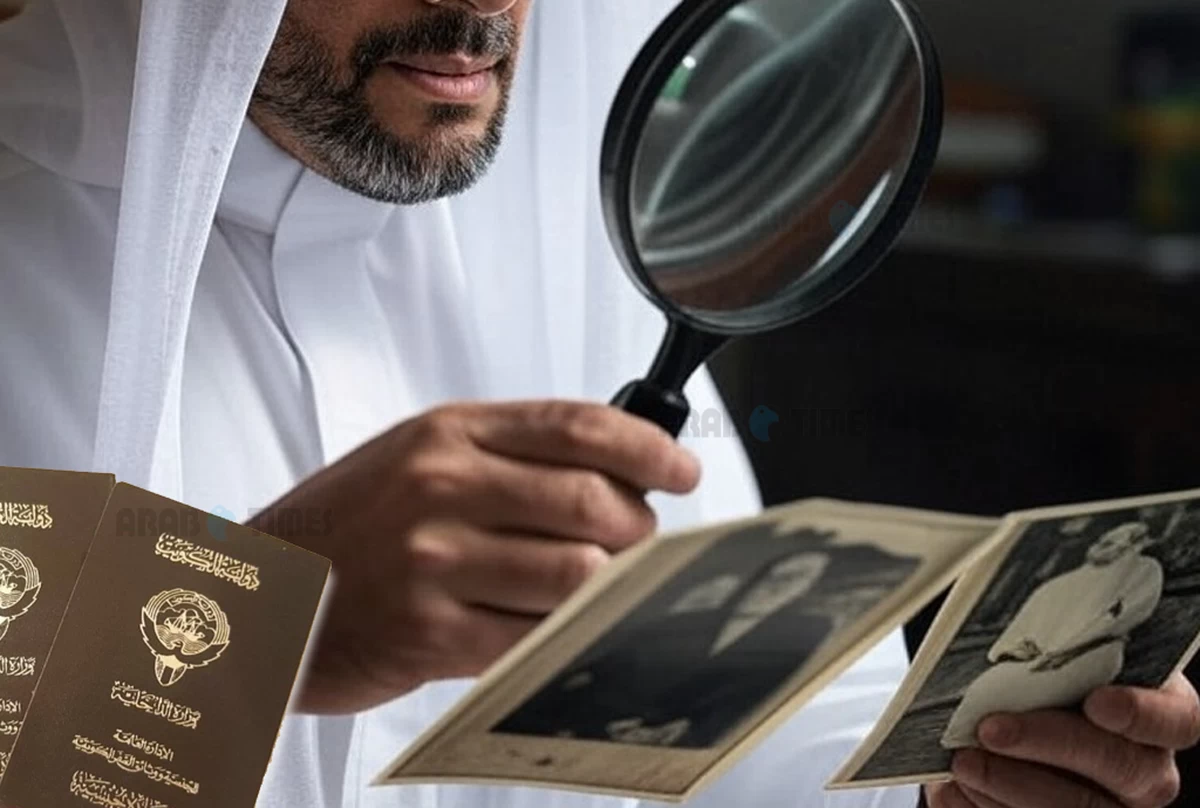

KUWAIT CITY, Feb 18: A nationality file dating back to the early 1970s has been thrust back into the spotlight after the Nationality Investigation Department uncovered what officials describe as a decades-old forgery involving a Syrian national who obtained Kuwaiti citizenship in his twenties by claiming affiliation under Article Five.
The original file holder is now deceased. Registered under his record are 16 children from two wives — 12 from one and four from the other. Investigations in recent years have already led to the withdrawal of citizenship from three of those children, while a fourth file remains under review by the Supreme Committee.
The latest case centers on a man born in the early 1950s who secured Kuwaiti nationality in his twenties. His file alone includes 15 sons and daughters, with a total of 53 dependents attached. He has been a fugitive from Kuwait since mid-2025, disappearing shortly after the Nationality Investigation Department initiated action against him.
Fingerprint That Ended the Claim
In a dramatic twist, a genetic fingerprint sample preserved for years at the General Department of Criminal Evidence — collected during a prior official procedure — became the decisive piece of evidence. Investigators summoned his alleged Kuwaiti brothers, who openly confirmed he was not related to them. DNA comparisons between the preserved sample and the brothers’ genetic profiles scientifically and conclusively proved there was no biological link.
The result was definitive: he is not their brother, not the son of their father, and therefore not entitled to the Kuwaiti citizenship he had claimed for decades.
Three Evidence
Sources outlined three conclusive elements that sealed the case:
- Explicit admissions from the real brothers denying any relationship.
- His sudden escape from Kuwait and failure to respond to repeated summonses.
- The decisive DNA fingerprint results that resolved the matter beyond doubt.
Investigators also pointed to a telling pattern in his travel history. For years, his trips abroad lasted only days. But once the probe began, he left Kuwait and remained away for nearly a year — a move authorities interpret as clear awareness of his legal vulnerability and fear of exposure.
Officials stressed that even after decades, forged identities cannot withstand scientific scrutiny. “No matter how long the forgery lasts, the truth will catch up,” sources said, underscoring that time and distance offer no shield against investigation.
The case now stands as another high-profile example of how modern forensic tools are dismantling fraudulent nationality claims — even those buried for half a century.