


06/06/2026

Share:
06/06/2026
Share:
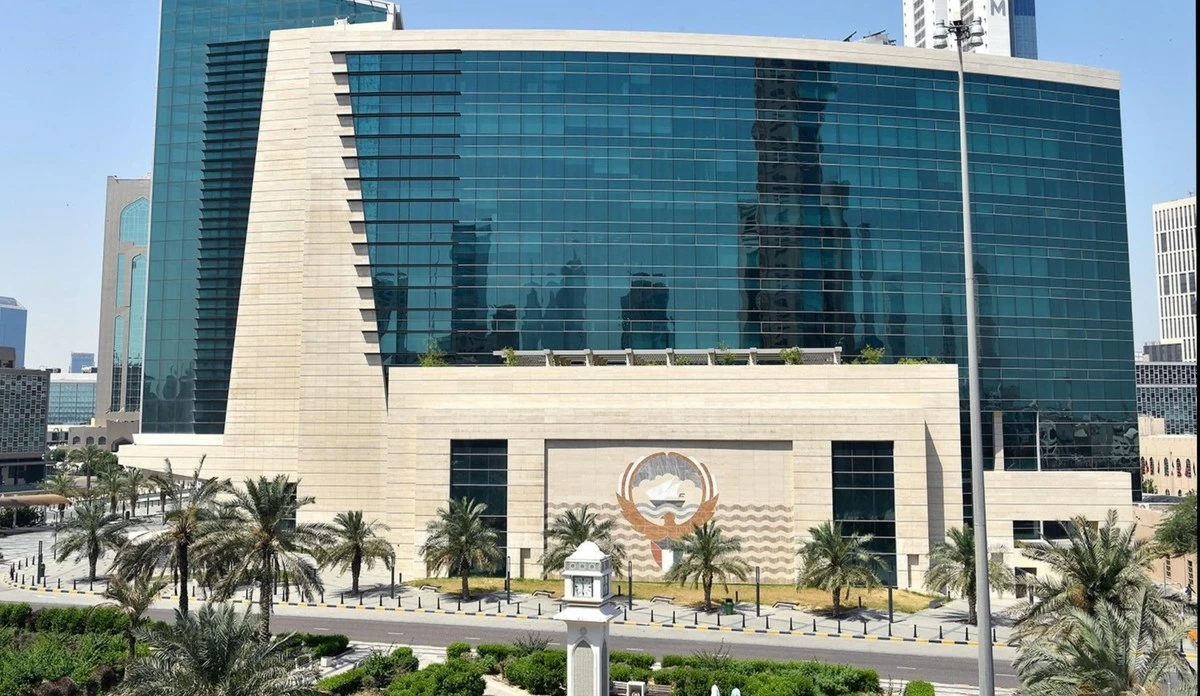

KUWAIT CITY, June 6: The Kuwait Municipality approved the request of the Ministry of Electricity, Water and Renewable Energy to allocate the five-meter-wide, 434.61-meter-long underground cable route (medium voltage 11 volts) starting from the main substation (WABM 1Z) in Block One in West Abdullah Al-Mubarak residential area and up to the cloud data site in Block Eight in Sulaibiya Agricultural Area. This approval is conditional, depending on adherence to the requirements of the Subcommittee for Public Utilities and Services, coordination with the relevant service ministries before installation, and authorization for the relevant departments to relocate or modify the route, provided it does not exceed the allocated length, in the event of conflict with existing infrastructure or for regulatory reasons.
The newspaper obtained a copy of the technical opinion, approved by Municipality Director Manal Al-Asfour, stating that part of the proposed route is in Farwaniyah Governorate and another part is in Jahra Governorate. Upon studying the route according to the provided coordinates, the Municipality found that it overlapped with several sites, such as two secondary transformer stations, one main transformer station, a mosque and roads. Consequently, the ministry was informed and it agreed that the proposed route could not be allocated due to the aforementioned overlaps. The ministry then provided new coordinates for the route to avoid these overlaps.
Meanwhile, the Legal and Financial Committee of the Municipal Council held its tenth meeting of the fourth session, chaired by Fahad Al-Abduljader, on Wednesday, during which it approved a draft regulation governing the erection of monuments and sculptures. The draft regulation has been referred to the Kuwait Municipality’s executive body for review and feedback, in preparation for completing the necessary legal procedures.
The draft regulation, which consists of 10 articles, aims to establish a unified regulatory framework for the erection of monuments and sculptures in public squares, parks, gardens, district entrances, and on state-owned land. This framework seeks to preserve the architectural and aesthetic identity of the country and prevent the use of these structures for advertising or commercial purposes. Article Two of the regulation, comprising 12 clauses, stipulates that monuments and sculptures must represent a historical, national, cultural, or social event and have aesthetic value that complements the overall character of the site.
The use of monuments and sculptures for advertising or branding purposes is prohibited, except for the inclusion of the initiating entity’s name within specific guidelines, provided that such inclusion does not exceed 30 percent of the monument’s total size. The regulations also stipulate that sites for which permits are sought for the erection of monuments and sculptures must not conflict with the services of government ministries or with current or future projects. Compliance with safety regulations, all decisions of the competent authority, and all relevant laws and regulations is mandatory.
The initiator is obligated to plant or pave the area surrounding the monument or sculpture if the site design requires it, in addition to ensuring the use of environmentally sustainable materials. The use of unstable or flammable materials in monuments and sculptures is prohibited. The regulations also specify technical and engineering requirements, most notably that the monument or sculpture must not obstruct pedestrian traffic or vehicular visibility, that the site must not conflict with current or future projects, and that sustainable and safe materials must be used. The height of the monument or sculpture must not exceed nine meters, except in special cases requiring additional approvals. The regulations require those wishing to erect a monument or sculpture to submit detailed engineering and architectural plans, as well as landscaping, planting, and lighting plans. Applications are subject to review by the relevant authorities at Kuwait Municipality and the site supervisor before final approvals are issued. The project stipulates a two-year construction permit for the completion of the work, while the occupancy permit is valid for three years and renewable for similar periods, subject to a fee of KD 150 per occupied area. A bank guarantee equivalent to ten percent of the project value is also required to ensure maintenance and removal upon the expiration of the permit. The initiating party bears all associated costs. The competent authority has the power to cancel the permit if the work is not completed within the permit period, if the public interest so requires, or if the approved requirements and regulations are not met.
By Inaas Awadh Al-Seyassah/Arab Times Staff