



11/01/2026

Share:
11/01/2026
Share:

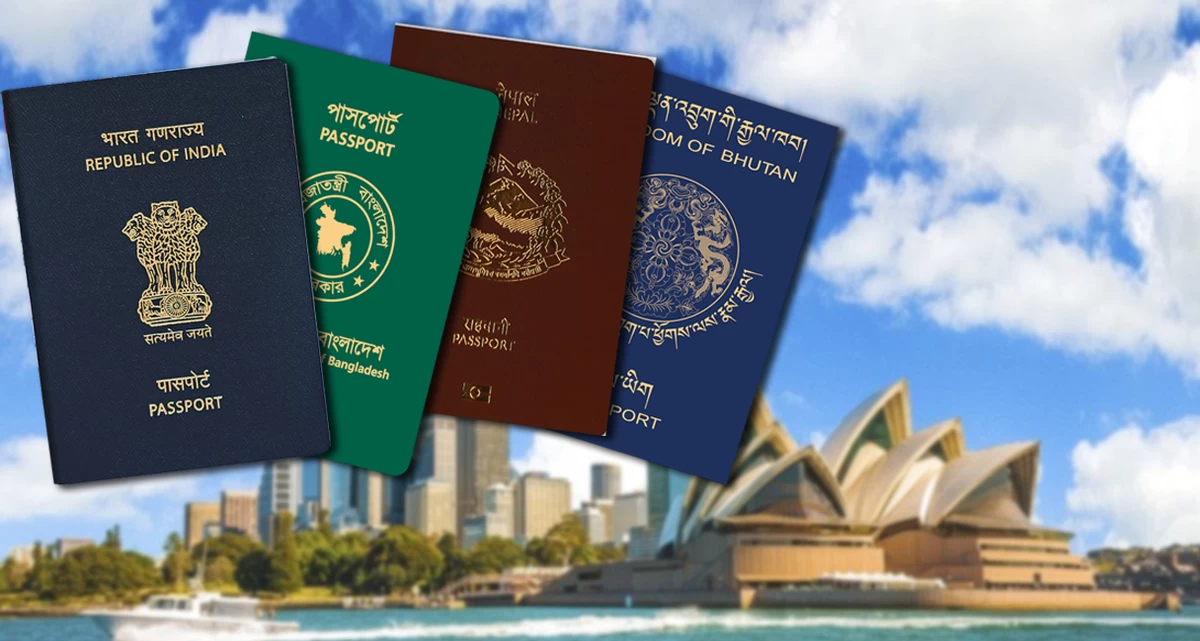
PERTH, Jan 11: Australia has introduced significantly stricter scrutiny for student visa applicants from India, Nepal, Bangladesh, and Bhutan, reclassifying all four countries into its “highest-risk” category under the Simplified Student Visa Framework (SSVF).
According to media reports, the revised assessment came into force on 8 January 2026 and represents a notable tightening of Australia’s international student visa regime. Under the change, the four South Asian nations were moved from Evidence Level 2 (EL2) to Evidence Level 3 (EL3)—the most stringent classification within the SSVF.
Former Deputy Secretary of Australia’s Department of Immigration, Dr Abul Rizvi, described the move as a “highly unusual” out-of-cycle reclassification, noting that such changes are typically made during scheduled annual reviews. The decision is particularly significant given that students from these four countries accounted for nearly one-third of all international student enrolments in Australia in 2025, underscoring their importance to the country’s education sector.
A spokesperson for the Department of Home Affairs said the re-rating was introduced to address emerging risks while safeguarding the integrity of the visa system. “This change will assist with the effective management of emerging integrity issues, while continuing to facilitate genuine students seeking a quality education in Australia,” the spokesperson said.
The government stressed that the objective is not to discourage legitimate students, but rather to ensure a positive study experience, protect Australia’s reputation as a global education destination, and maintain confidence in its international education framework.
Rising concerns over fraudThe decision follows growing concerns over fraudulent academic qualifications and financial documents, particularly in the wake of reported fake degree rackets uncovered in India. Authorities have also noted an increase in questionable applications as students who fail to secure placements or visas in other major destinations—such as the United States, the United Kingdom, and Canada—increasingly turn to Australia.
Phil Honeywood, Chief Executive Officer of the International Education Association of Australia (IEAA), said the reclassification reflects these shifting global trends. “Student applicants unable to secure places in the US, UK, or Canada are increasingly applying to Australia. This has coincided with a rise in fraudulent documents,” he said. “Placing these countries in the highest-risk category strengthens visa filtering to ensure applicants have genuine study intentions.”
How the Evidence Level system worksUnder the SSVF, countries are assigned an Evidence Level (EL) based on several risk indicators, including:
- Visa refusals linked to fraud
- Visa cancellations
- Rates of unlawful non-citizenship
- Subsequent applications for refugee or protection status
An EL3 rating triggers the most rigorous assessment process. Both applicants and education providers must submit extensive supporting documentation, particularly relating to:
- Financial capacity and source of funds
- Academic qualifications and study history
Students from the affected countries will now face more demanding application requirements, including:
- Detailed financial evidence, such as three months of bank statements and proof of sufficient funds
- Verified academic transcripts and certificates
- More frequent spot checks with education providers
- Enhanced biometric screening, with data cross-checked against Interpol databases
As a result of the heightened checks, student visa processing times are expected to increase significantly. What previously took around three weeks may now extend to six to eight weeks, depending on the complexity of the application and the need for further verification.
Prospective students are therefore being advised to apply well in advance, ensure all documentation is accurate and verifiable, and be prepared for possible requests for additional information. While the new measures raise the bar for applicants, Australian authorities maintain that the system remains open to genuine students seeking a legitimate and high-quality education.