



18/01/2026

Share:
18/01/2026
Share:
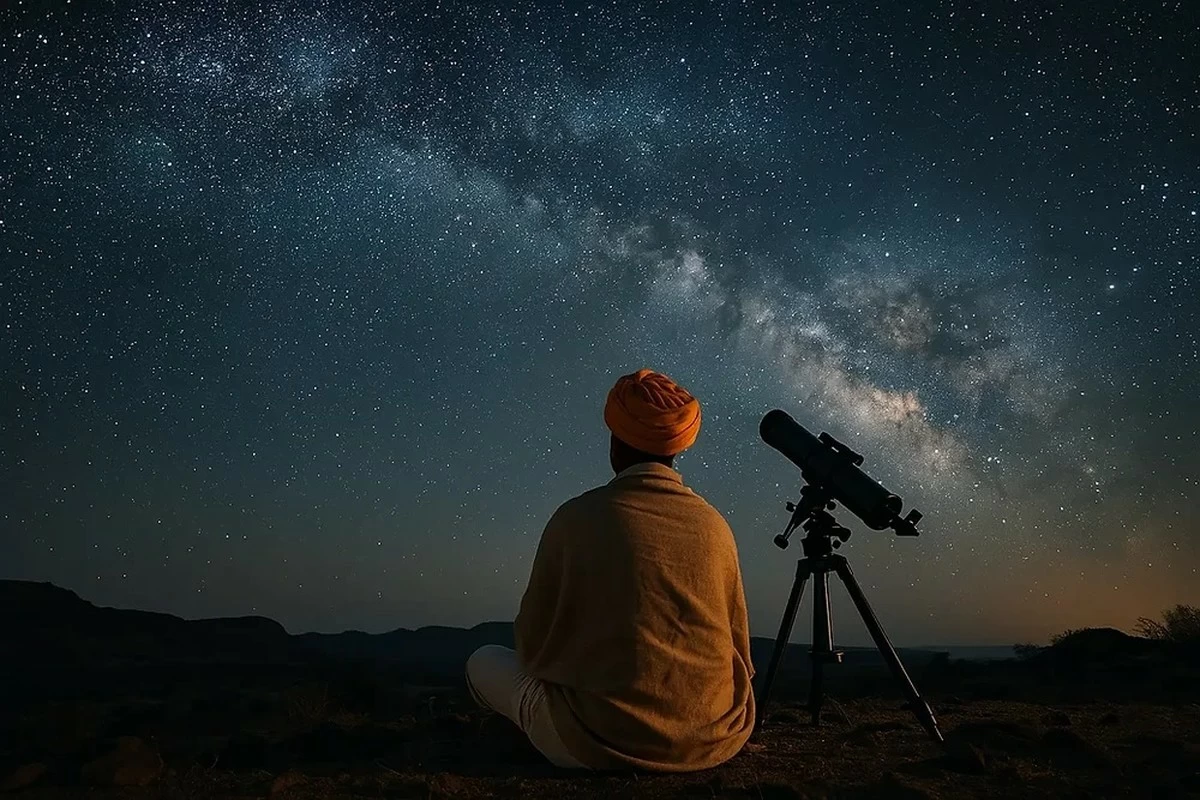

LEH, India, Jan 18: Indians are increasingly travelling to high-altitude regions like Ladakh, Rajasthan, and Himachal Pradesh to stargaze, as city lights and air pollution obscure night skies in urban centers.
On a cold winter night, about 200 kilometers from Delhi, dozens of enthusiasts gathered around telescopes to watch more than 150 meteors streak across the sky, an experience nearly impossible in light-polluted cities. For many travelers, stargazing is now as compelling as visiting monuments or wildlife sanctuaries.
Stargazing in India has traditionally been limited to amateur astronomers and science clubs, but the rise of urban pollution and light smog is fueling a new wave of astrotourism. Organized trips remain costly and logistically challenging, but demand is rising as city dwellers seek darker skies and clearer air.
The Himalayan village of Hanle in Ladakh, home to the Indian Astronomical Observatory, received around 5,000 visitors annually before being designated India’s first dark-sky reserve in 2022. Last year, visitor numbers jumped to over 30,000, according to Dorje Angchuk, engineer-in-charge at the observatory.
Private operators are also reporting growth. Astroport Global, offering stargazing experiences and astronomy workshops at resorts across India, says annual visitor numbers have risen to 20,000 from just a few hundred in previous years.
Visibility is a key factor driving interest. Urban skies, such as Delhi’s, rank eight or nine on the Bortle dark-sky scale, limiting stargazing to the brightest stars. Fine particulate matter (PM2.5) further reduces visibility, making constellations and deep-space objects nearly invisible. In contrast, high-altitude destinations offer cleaner air and darker skies, improving observation conditions.
On December 13, more than three dozen participants attended an astronomy workshop near Sariska Tiger Reserve in Rajasthan to view the Geminid meteor shower. The site’s Bortle scale ranking of four allowed attendees to see the Milky Way and dense star fields without telescopes. Navjot Singh, a space educator at the resort, said most participants come from Delhi, where deep-space observation is nearly impossible.
Costs for stargazing workshops range from 1,200 rupees ($13) for short sessions to 8,000–12,000 rupees for extended stays at remote resorts, excluding food and travel. Winter offers optimal conditions due to low humidity and clear skies.
Experts say astrotourism in India is still developing, but is providing educational opportunities and economic benefits. In Hanle, the growth has created jobs for locals as guides and “astro-ambassadors,” while small hotels have increased to accommodate visitors.
“When people look through a telescope or watch a meteor shower, space science stops being abstract,” said Dr. Sachin Bahmba, founder of the Space Group of Companies.
State authorities are also promoting stargazing by offering training in telescope use and skywatching, particularly in Uttarakhand and Himachal Pradesh.
Despite the boom, challenges remain. High travel costs, limited infrastructure, and expanding cities continue to restrict access to dark skies. India currently has only one officially recognized dark-sky reserve at Hanle, with a second emerging at Pench Tiger Reserve in Madhya Pradesh.
For now, city residents say these trips offer more than leisure. They provide a rare chance to reconnect with night skies largely lost to pollution and urban lighting.