


31/07/2026

Share:
31/07/2026
Share:

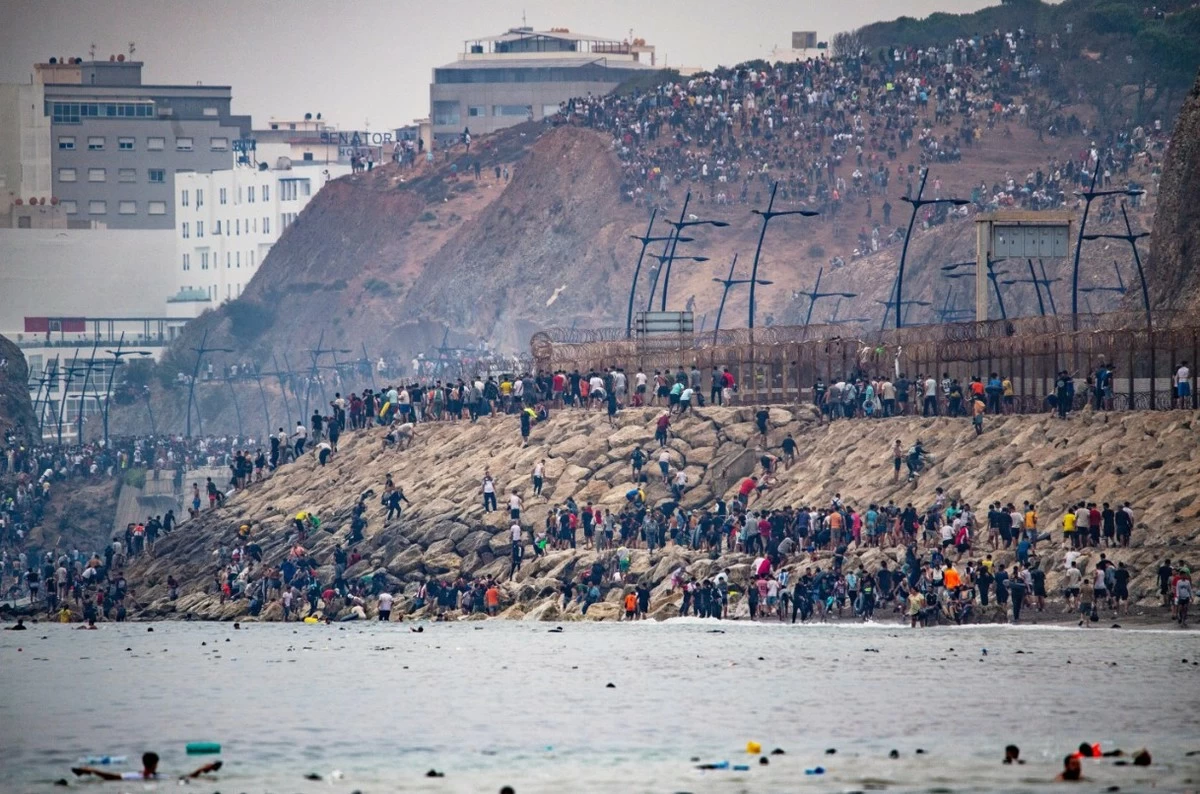
MADRID: More than 48,300 of the roughly 50,000 migrants who entered Spain’s North African enclave of Ceuta from Morocco since early Thursday had returned to Morocco by Friday afternoon, Spain’s Interior Ministry said, according to the EFE news agency.
The figure, compiled at 3:30 p.m. local time (1330 GMT), represents the overwhelming majority of those who crossed into Ceuta during the unprecedented influx. Earlier, Spain’s Interior Ministry said migrants were returning to Morocco at a rate of around 150 people per minute.
Despite the large-scale returns, thousands of migrants were still reported to be in different parts of Ceuta on Friday, with many having no clear destination.
EFE reported that hundreds more migrants were moving toward the border to return to Morocco, citing the repatriation arrangement between Spain and Morocco as well as the lack of functioning shops, supermarkets and restaurants in parts of Ceuta to meet basic needs.
The mass influx placed enormous pressure on the enclave, whose population is far smaller than the number of migrants who arrived within a short period. Spanish authorities deployed additional security forces as they moved to regain control of the border and prevent further arrivals.
Spain’s Civil Guard and the Army’s Regulares Group No. 54 were deployed around the Tarajal beach area to stop further entries by sea.
According to EFE, security forces turned back a group of around 40 people who reached the shore by swimming, directing them back toward Morocco.
Commercial activity in Ceuta also remained largely at a standstill, with businesses closed amid security concerns following the mass arrivals.
The latest episode represents an extraordinary surge in migration toward Ceuta, with Spain estimating that around 49,000 people crossed from Morocco into the enclave within roughly 24 hours.
Spanish authorities said the migration crisis had also resulted in deaths, with at least 57 people reported dead, although figures from different reports have varied as rescue and recovery operations continued.
The situation has prompted a major security and humanitarian response from Spain, while authorities work with Morocco to manage the returns and prevent additional crossings.