



08/04/2024
 Arab Times

Share:

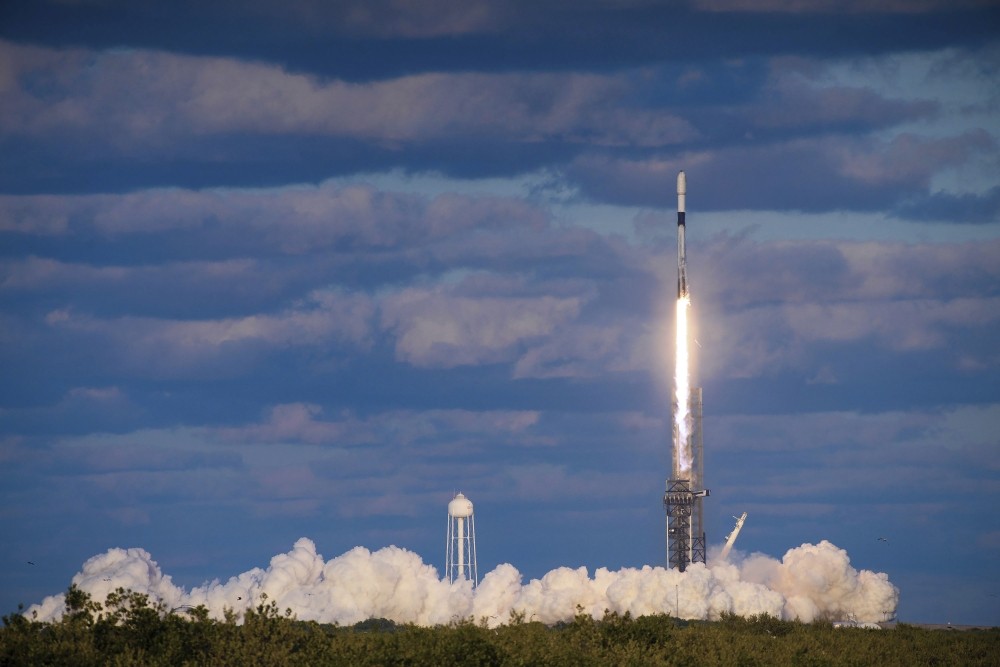
SEOUL, South Korea, April 8, (AP): South Korea has successfully launched its second military spy satellite into orbit, days after North Korea reaffirmed its plan to launch multiple reconnaissance satellites this year.
The Koreas each launched their first spy satellites last year - North Korea in November and South Korea in December - amid heightened animosities. They said their satellites would boost their abilities to monitor each other and enhance their own missile attack capabilities.
South Korea’s second spy satellite was launched from the Kennedy Space Center in Florida on Sunday evening local time, which was Monday morning in Seoul.
South Korea’s Defense Ministry said it confirmed the satellite entered orbit and communicated with an overseas ground station after separation from a rocket.
"With the success of the second military spy satellite launch, our military has acquired an additional independent surveillance ability and further bolstered our ‘kill chain’ capability,” Defense Ministry spokesperson Jeon Ha Gyu told reporters, referring to the military’s preemptive missile strike capability.
Under a contract with SpaceX, South Korea was to launch five spy satellites by 2025. South Korea’s first spy satellite launch on Dec. 1 was made from California’s Vandenberg Space Force Base.
South Korea in 2022 became the world’s 10th nation to successfully launch a satellite with its own technology by using a homegrown rocket to place what it called a "performance observation satellite” in orbit. But experts say it’s economical to use a SpaceX rocket to launch spy satellite and that South Korea needs more launches to ensure the reliability of a rocket.
North Korea is also eager to acquire its own space-based surveillance network to cope with what it calls military threats posed by the United States and South Korea.
After two launch failures earlier in 2023, North Korea placed its Malligyong-1 spy satellite into orbit on Nov 21. North Korea has since said its satellite had transmitted imagery with space views of key sites in the US and South Korea, including the White House and the Pentagon. But it hasn’t released any of those satellite photos, and foreign experts doubt whether the North Korean satellite can transmit militarily meaningful imagery.