



13/08/2026

Share:
13/08/2026
Share:

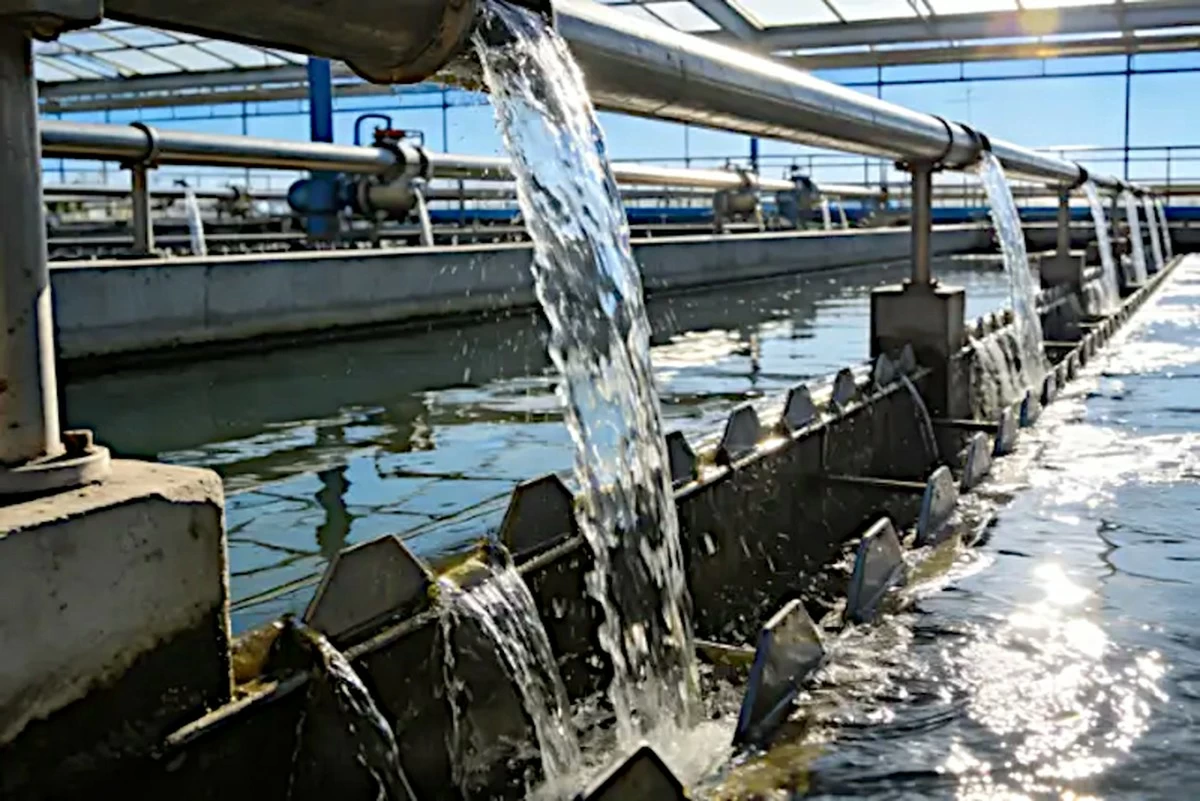
WUHAN, Aug. 13: China is deploying an integrated network of artificial intelligence, unmanned vessels, drones, automated monitoring stations and satellite-based remote sensing to protect the water quality of Danjiangkou Reservoir, a critical source for the country’s massive South-to-North Water Diversion Project.
The reservoir, located primarily in central China’s Hubei Province, supplies a major share of Beijing’s drinking water through the project’s middle route. Water travels more than 1,200 kilometres north from Danjiangkou to reach cities and communities across northern regions, making continuous monitoring of the reservoir essential to the security of the water supply.
According to officials with the Changjiang Water Resources Commission, 23 automatic water-quality monitoring stations have been established around the Danjiangkou Reservoir area and along 16 major inflow rivers. Together, they provide continuous surveillance rather than relying solely on conventional, point-based sampling.
At a monitoring station near the Taocha Canal Head, the starting point of the middle route, automated equipment continuously measures 19 water-quality indicators. These include ammonia nitrogen, permanganate, total phosphorus, total nitrogen and heavy metals, alongside six meteorological parameters.
Water pumps automatically collect samples every four hours, producing six sets of monitoring data each day. The information is transmitted to a backend system in real time, allowing officials to identify unusual changes quickly. When an abnormal reading is detected, the station can automatically preserve a sample for 24 hours so laboratory personnel can retrieve it for additional testing.
The monitoring system also uses an intelligent plankton-monitoring system to detect potential algae outbreaks. Water samples are passed through pipes to an automated microscope, which captures images and uses algorithms to identify plankton species and measure algae density. The technology is designed to provide an early warning of potentially harmful algae proliferation.
Another layer of protection comes from biological monitoring. Small freshwater fish are kept in transparent tanks at monitoring facilities, where sensors track their swimming frequency and movement patterns. Changes in their behavior or physiological condition can provide an early indication of trace toxins or other changes in water quality.
On the reservoir itself, unmanned surface vessels equipped with intelligent microscopes and autonomous monitoring equipment patrol selected areas. These vessels can collect data including water temperature, pH levels and dissolved oxygen, helping authorities monitor conditions across a much wider area than fixed stations alone can cover.
Drones and remote-sensing satellites add another layer of surveillance from above. Hyperspectral water-quality monitoring can rapidly gather information across large stretches of the reservoir, improving the ability to detect pollution and changes associated with algae growth that might otherwise be missed by conventional sampling points.
At the centre of the system is a digital-twin platform that brings together data from the different monitoring technologies. The platform supports routine patrols, data analysis and management decisions while providing forecasting, early-warning, simulation and emergency-response capabilities.
The technology is particularly important because of the reservoir’s vast surface area and long shoreline. Authorities say traditional point-based monitoring alone is insufficient for comprehensive oversight, while the combination of fixed sensors, autonomous vessels, aerial surveillance and satellites provides a more extensive picture of changing water conditions.
The Danjiangkou Reservoir is a key component of China’s South-to-North Water Diversion Project, which transfers water from relatively water-rich southern regions toward the north. The project has three routes spanning the Yangtze, Huaihe, Yellow and Haihe river basins, with the middle route playing a particularly important role because it supplies Beijing.
Officials said the middle route has consistently maintained surface-water quality at Class II or better in recent years. The presence of freshwater jellyfish in the Danjiangkou Reservoir has also been cited as an indicator of favorable water conditions, as the species is highly sensitive to changes in water quality.
Authorities say they will continue combining technological, engineering and management measures to protect the reservoir and maintain the safety of the water diversion system, with the goal of ensuring a stable supply of clean water to northern China.