


22/06/2026

Share:
22/06/2026
Share:
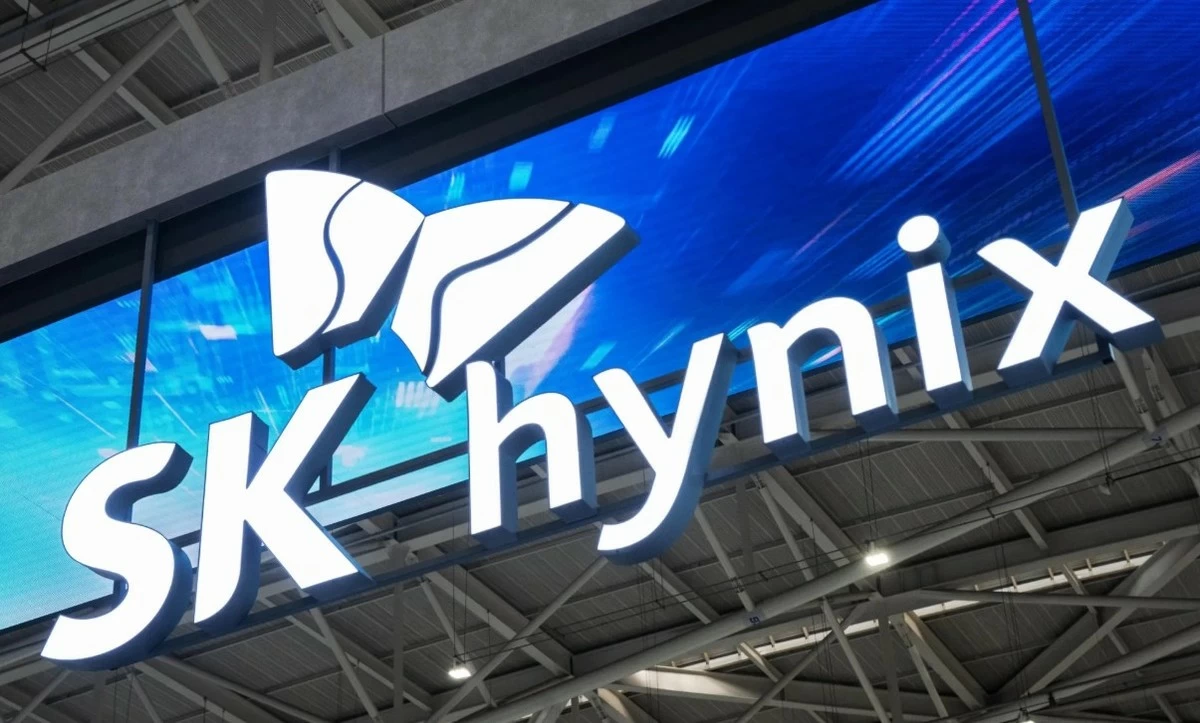

SEOUL, Jun 22: SK Hynix on Monday surpassed Samsung Electronics to become South Korea’s most valuable listed company, marking a striking reversal for a memory-chip maker that nearly collapsed under debt two decades ago.
Shares of SK Hynix closed up 5.6% , lifting its market capitalisation to 2,080.4 trillion won ($1.35 trillion). Samsung Electronics shares slipped 0.14% , giving the company a market value of 2,066.7 trillion won , excluding preferred shares. Samsung said its market capitalisation should include preferred shares, which would put its value at 2,246.4 trillion won as of the close.
Samsung had held the top position among South Korean listed companies since 2000.
SK Hynix’s rise has been driven by soaring demand for high-bandwidth memory chips, or HBM, which are used in artificial intelligence systems by customers including Nvidia and Alphabet’s Google. The company’s shares have surged more than 340% this year, making it the world’s most valuable memory chipmaker and lifting it above both Samsung and Micron.
AI has reshaped the semiconductor industry, turning advanced memory chips from commodity products into essential components for data centres and AI applications such as ChatGPT and other advanced models.
“The emergence of customised AI memory fundamentally changed the industry’s economics and allowed SK Hynix to establish itself as the market leader,” said Kim Sunwoo, a senior analyst at Meritz Securities.
Unlike Samsung, which produces memory chips, logic chips and consumer electronics such as smartphones and televisions, SK Hynix is focused mainly on memory. Analysts say that focus helped the company move faster in HBM, a specialised type of memory stacked vertically to deliver faster performance and lower power consumption.
SK Hynix continued investing in HBM during a downturn in the memory market, a decision analysts say positioned it at the centre of the global AI supply chain. By 2025, the company had captured 61% of the global HBM market, compared with 21% for Micron and 17% for Samsung.
The achievement caps one of South Korea’s most dramatic corporate turnarounds. In 2002, then-Hynix Semiconductor was close to being sold to Micron after being weighed down by debt from an aggressive expansion drive. The deal collapsed, and the company remained under creditor control for nearly a decade. Its shares fell as low as 135 won in 2003, earning it the label of a penny stock, or “Dongjeon-ju” in Korean.
The company later recovered but remained exposed to the memory industry’s boom-and-bust cycle. In 2023, a severe downturn pushed SK Hynix to an annual operating loss of 7.73 trillion won . A year later, as AI investment accelerated among companies such as Microsoft, Google and Meta, SK Hynix reported a record operating profit of 23.5 trillion won .
SK Hynix was founded in 1983 as part of Hyundai before being spun off and later acquired by SK Group, the family-controlled conglomerate with businesses spanning telecoms and energy.
SK Group Chairman Chey Tae-won, who faced opposition to the acquisition at the time, said in a book published in January that his goal was to transform Hynix from a commodity memory producer into a company making indispensable semiconductor products.
“In the past, it did not matter whether memory came from Hynix, Samsung or Micron. They were interchangeable commodity products,” Chey said. “HBM is different. If SK Hynix’s HBM is replaced with another product, the AI system may not function properly.”
Analysts say Samsung’s position as the world’s largest DRAM producer could also come under pressure. Bank of America estimates SK Hynix’s monthly DRAM output will reach about 589,000 wafers this year, compared with roughly 691,000 wafers for Samsung. However, SK Hynix is expected to expand DRAM output by about 38% between 2025 and 2028, compared with about 17.5% growth at Samsung.
That would narrow SK Hynix’s production gap with Samsung to less than 10% by 2028, from about 23% in 2025.
“Previously, the difference in manufacturing scale meant there was simply no way for rivals to close the profitability gap with Samsung,” Kim said.
Reuters has reported that SK Hynix is choosing Nasdaq for a planned US listing, a move that could broaden its investor base and further raise its profile among global investors.