



21/02/2026

Share:
21/02/2026
Share:

At a defining moment in human history, the world gathered at the AI Impact Summit 2026 in New Delhi. For us in India, it was a moment of immense pride and joy to welcome Heads of State, Heads of Government, delegates and innovators from across the world.
India brings scale and energy to everything it does and this Summit was no exception. Representatives from over 100 nations came together. Innovators showcased cutting-edge AI products and services. Thousands of young people could be seen in the exhibition halls, asking questions and imagining possibilities. Their curiosity made this the largest and most democratised AI summit in the world. I see this as an important moment in India’s development journey, because a mass movement for AI innovation and adoption has truly taken off.
Human history has witnessed many technological shifts that changed the course of civilisation. Artificial Intelligence belongs in the same league as fire, writing, electricity and the internet. But with AI, changes that once took decades can unfold within weeks and impact the entire planet.
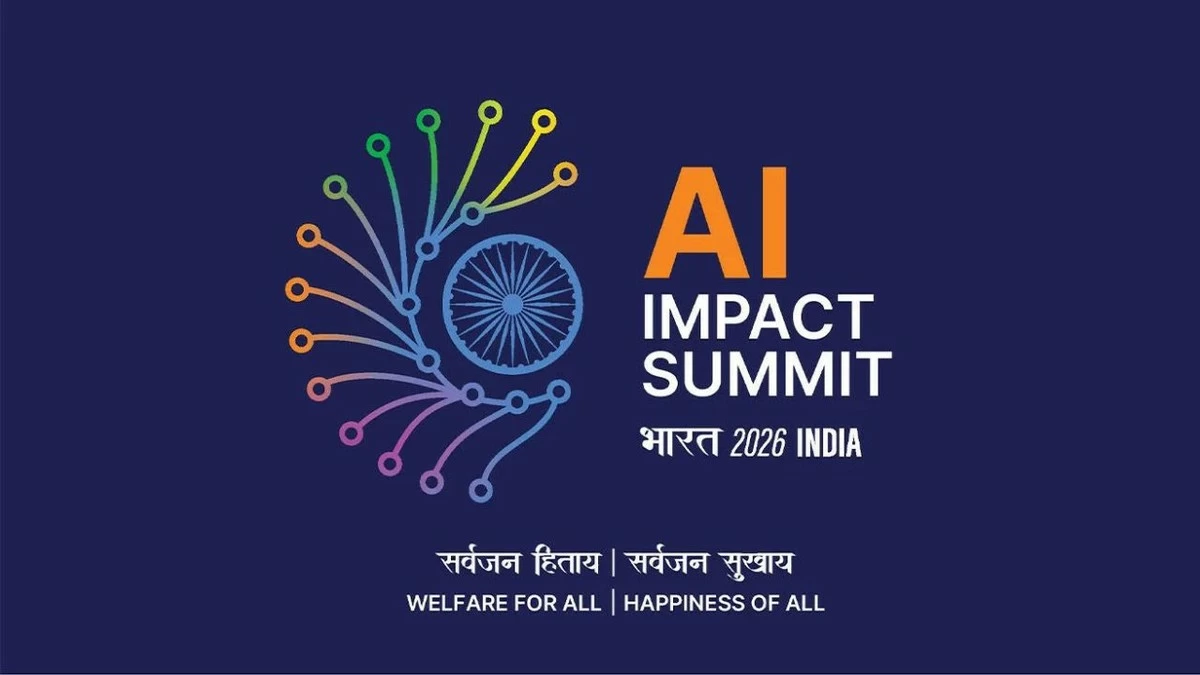
AI is making machines intelligent, but it is even more a force multiplier for human intent. Making AI human-centric instead of machine-centric is vital. At this Summit, we placed human well-being at the heart of the global AI conversation, with the principle of ‘Sarvajana Hitaya, Sarvajana Sukhaya’ (Welfare for All, Happiness of All).
I have always believed that technology must serve people, not the other way around. Whether it is digital payments through UPI or COVID vaccination, we have ensured that Digital Public Infrastructure reaches everyone, leaving none behind. I could see the same spirit in the Summit, in the work of our innovators in domains like agriculture, security, assistance for Divyangjan and tools for multilingual populations.
There are already examples of the empowering potential of AI in India. Recently, ‘Sarlaben’, an AI powered digital assistant launched by Indian dairy cooperative AMUL, is providing real-time guidance to 3.6 million dairy farmers, mostly women, about cattle health and productivity in their own language. Similarly, an AI-based platform called Bharat VISTAAR gives multilingual inputs to farmers, empowering them with information about everything from weather to market prices.
Humans must never become mere data points or raw material for machines. Instead, AI must become a tool for global good, opening new doors of progress for the Global South. To translate this vision into action, India presented the MANAV framework for human-centric AI governance.
M – Moral and Ethical Systems: AI should be based on ethical guidelines.
A – Accountable Governance: Transparent rules and robust oversight.
N – National Sovereignty: Respect for national rights over data.
A – Accessible and Inclusive: AI should not be a monopoly.
V – Valid and Legitimate: AI must adhere to laws and be verifiable.
MANAV, which means ‘human’, offers principles that anchor AI in human values in the 21st century.
Trust is the foundation upon which AI’s future rests. As generative systems flood the world with content, democratic societies face risks from deepfakes and disinformation. Just as food carries nutrition labels, digital content must carry authenticity labels. I urge the global community to come together to create shared standards for watermarking and source verification. India has already taken a step in this direction by legally requiring clear labelling of synthetically generated content.
The welfare of our children is a matter close to our hearts. AI systems must be built with safeguards that encourage responsible, family-guided engagement, reflecting the same care we bring to education systems worldwide.
Technology yields its greatest benefit when shared, rather than guarded as a strategic asset. Open platforms can help millions of youth contribute to making technology safer and more human-centric. This collective intelligence is humanity’s greatest strength. AI must evolve as a global common good.
We are entering an era where humans and intelligent systems will co-create, co-work and co-evolve. Entirely new professions will emerge. When the internet began, no one could imagine the possibilities. It ended up creating a huge number of new opportunities and so will AI.
I am confident that our empowered youth will be the true drivers of the AI age. We are encouraging skilling, reskilling and lifelong learning by running some of the largest and most diverse skilling programmes in the world.
India is home to one of the world’s largest youth populations and technology talent. With our energy capacity and policy clarity, we are uniquely positioned to harness AI’s full potential. At this Summit, I was proud to see Indian companies launch indigenous AI models and applications, reflecting the technological depth of our young innovation community.
To fuel the growth of our AI ecosystem, we are building a robust infrastructure foundation. Under the India AI Mission, we have deployed thousands of GPUs and are set to deploy more soon. By accessing world-class computing power at highly affordable rates, even the smallest startups can become global players. Further, we have established a national AI Repository, democratising access to datasets and AI models. From semiconductors and data infrastructure to vibrant startups and applied research, we are focusing on the complete value chain.
India’s diversity, democracy and demographic dynamism provide the right atmosphere for inclusive innovation. Solutions that succeed in India can serve humanity everywhere. That is why our invitation to the world is: Design and develop in India. Deliver to the world. Deliver to humanity.
By Narendra Modi