


26/09/2026

Share:
26/09/2026
Share:

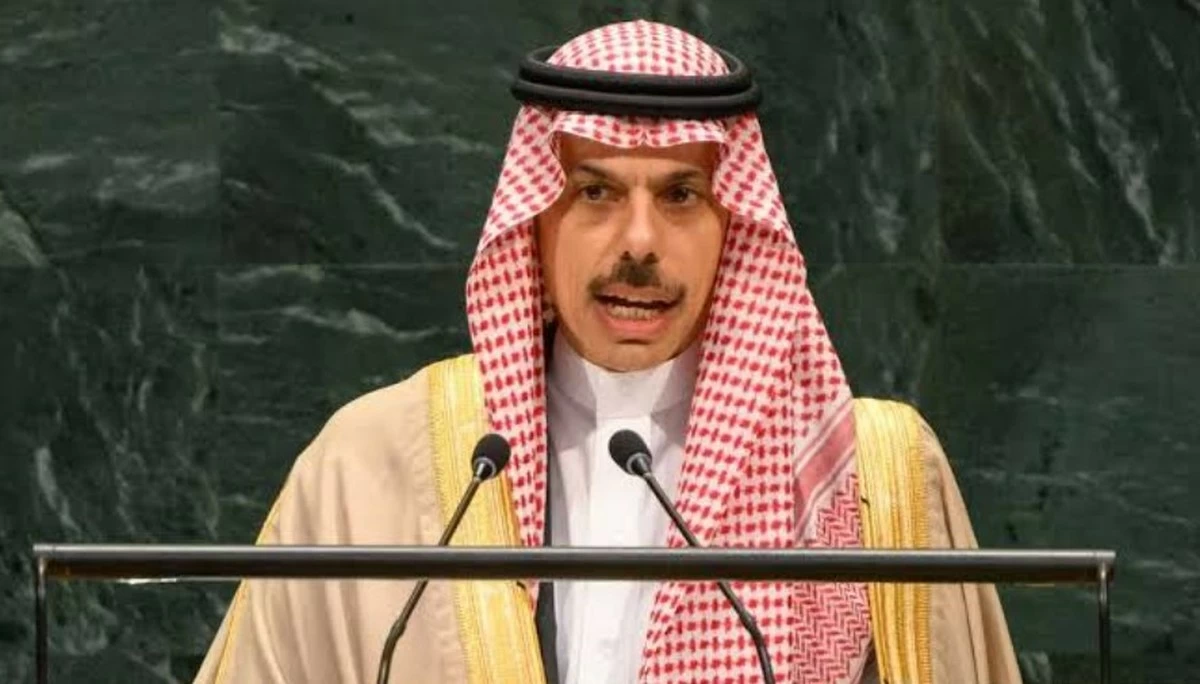
NEW YORK, Sept 26: Saudi Foreign Minister Prince Faisal bin Farhan warned the UN General Assembly on Saturday that the world is facing “unprecedented challenges,” while condemning what he described as “flagrant” Iranian and Houthi attacks against Saudi Arabia and calling for greater international attention to Gulf security.
Addressing the 81st session of the UN General Assembly, Prince Faisal said sustainable regional relations cannot be built on domination, influence or exploitation of crises, but must be based on mutual respect, sovereignty, good-neighborly relations and compliance with international law.
He stressed that stability in the Middle East is directly linked to global energy security, international trade and supply chains, calling for stronger international cooperation to protect maritime navigation.
Prince Faisal called for freedom of navigation through key waterways, including the Strait of Hormuz, Bab Al-Mandab, the Red Sea and the Gulf of Aden. He rejected any attempt by Iran to impose fees or transit conditions on civilian vessels passing through Hormuz, saying vital waterways must not be used as instruments of pressure or threats.
The Saudi foreign minister also welcomed diplomatic and mediation efforts by Qatar and Pakistan and called for regional security arrangements that address the causes of instability and are comprehensive and sustainable.
On Yemen, Prince Faisal welcomed the UN Security Council’s condemnation of Houthi missile and drone attacks against Saudi Arabia and called on the international community to condemn Houthi attacks threatening navigation in the Red Sea and Bab Al-Mandab. Saudi Arabia, he said, has provided more than $29 billion in humanitarian and development assistance to Yemen.
Prince Faisal also addressed the Gaza conflict, accusing Israel of targeting civilians, obstructing humanitarian aid, attempting forced displacement and expanding settlements. He reiterated Saudi Arabia’s rejection of any attempt to displace Palestinians from their land and reaffirmed the Kingdom’s support for a two-state solution.
On Iran, he called for the Middle East to remain free of weapons of mass destruction and said civilian nuclear programs should be subject to international safeguards and oversight.
The Saudi minister also called for a political solution to the conflict in Sudan, supported the strengthening of state institutions in Lebanon and Iraq, and welcomed the lifting of US sanctions on Syria.
He highlighted Saudi Arabia’s Vision 2030, energy-security investments and efforts to maintain global oil supplies during disruptions. He also pointed to Saudi investments in renewable energy, carbon-capture technologies, sustainable fuels and clean hydrogen.
On artificial intelligence, Prince Faisal said Saudi Arabia supports using AI “in the service of humanity and development” and highlighted the Kingdom’s role in international AI capacity-building and research initiatives.
He concluded by calling for greater international cooperation, respect for the UN Charter and international law, and peaceful solutions to regional and global crises. Saudi Arabia, he said, would continue working with international partners to promote stability, sustainable development and diplomacy.