



19/08/2026

Share:
19/08/2026
Share:

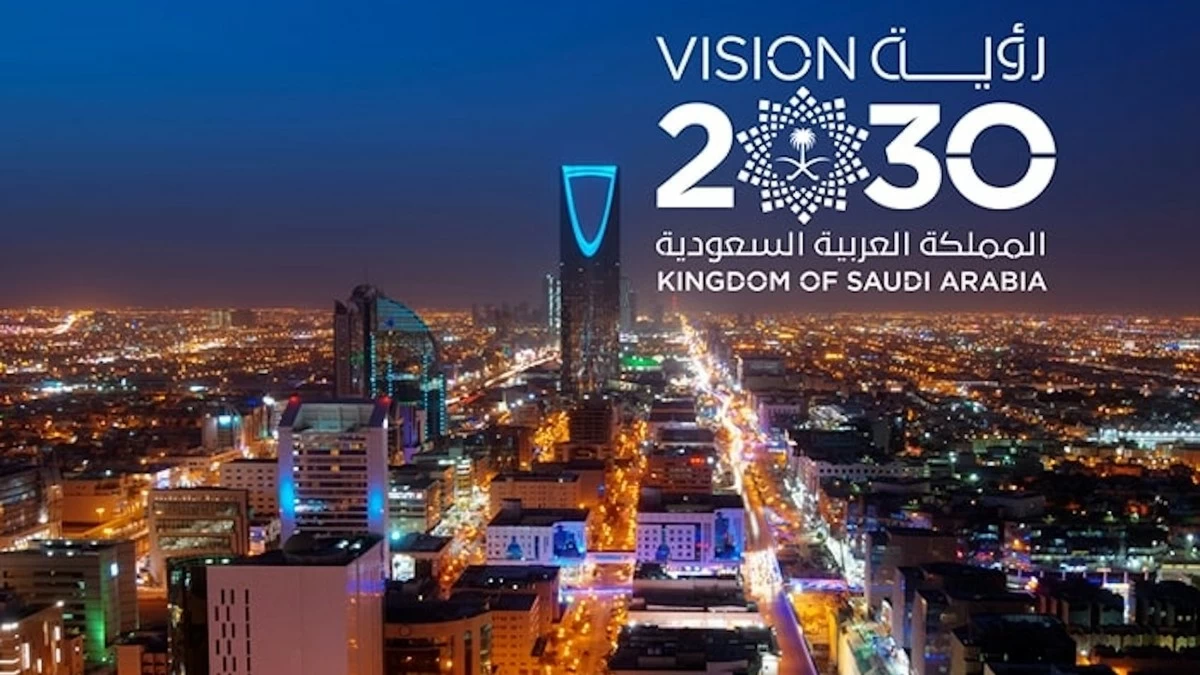
RIYADH, Aug 19: When Saudi Arabia first announced Vision 2030 back in 2016, much of the international commentary focused on the headline-grabbing megaprojects: NEOM, the Red Sea development, Qiddiya. But nearly a decade later, it is arguably the quieter, less glamorous work of legal and regulatory reform that has done the most to change the country's business landscape. Behind every giga-project and every new foreign investment license issued lies a substantial overhaul of the commercial, corporate, and regulatory framework that governs how business actually gets done in the Kingdom. For companies and investors watching the region, understanding these legal shifts is arguably more important than tracking any individual construction milestone.
From Oil Dependency to Diversified Investment
The core premise of Vision 2030 was always about reducing Saudi Arabia's reliance on oil revenue by building out sectors like tourism, entertainment, technology, manufacturing, and financial services. But diversification on that scale doesn't happen simply because a government wants it to; it requires an entirely new legal architecture capable of attracting and protecting foreign capital. The transformation of the old Saudi Arabian General Investment Authority into the Ministry of Investment (MISA) was one of the earliest and most consequential moves in this direction, streamlining what had previously been a notoriously slow and opaque licensing process into something considerably more navigable for international investors.
Alongside MISA's reforms came sweeping changes to foreign ownership restrictions. Where once foreign investors were required to partner with a Saudi national or entity to operate in most sectors, full foreign ownership is now permitted across the vast majority of industries. This single change alone has been transformative, opening the door to multinational companies that previously viewed the Saudi market as too cumbersome to enter directly.
Corporate Governance Takes Center Stage
As foreign capital has poured into the Kingdom, so too has scrutiny around how companies are actually governed once they are operating. Saudi Arabia's Capital Market Authority and Ministry of Commerce have introduced increasingly sophisticated corporate governance requirements, aligning much of the framework with international standards that global investors expect to see. Board composition rules, disclosure obligations, and shareholder protections have all been strengthened considerably.
For companies operating in the Kingdom, whether publicly listed or privately held, building strong internal governance is no longer optional; it is a genuine competitive advantage. Investors, particularly institutional ones, increasingly view robust corporate governance as a proxy for overall business quality and risk management, which means companies that get this right find it considerably easier to raise capital, attract joint venture partners, and pursue listings on the Saudi Exchange (Tadawul). This is why an increasing number of businesses are turning to specialized legal advisors early in their growth journey, seeking guidance on corporate governance frameworks that will hold up to the kind of scrutiny sophisticated investors now expect as standard practice in the Kingdom.
M&A Activity and the New Regulatory Environment
One of the clearest indicators of Vision 2030's success has been the acceleration of merger and acquisition activity across the region. Saudi Arabia has seen a wave of consolidation, cross-border acquisitions, and strategic joint ventures, particularly in sectors like fintech, logistics, healthcare, and renewable energy. This surge in deal activity has been matched by regulatory modernization: competition approval processes have become more predictable, foreign direct investment screening has been clarified, and sector-specific regulators have issued clearer guidance on what transactions require prior approval.
None of this means M&A in Saudi Arabia has become simple. Deal structuring still requires careful navigation of local ownership rules in restricted sectors, tax implications under the newly expanded Zakat, Tax and Customs Authority framework, and labor law considerations around workforce transitions. But compared to a decade ago, the path from letter of intent to closing has become considerably more structured and time-bound, which is precisely what sophisticated investors need in order to commit serious capital.
Employment Law Modernization
A diversifying economy needs a modern labor market to match, and Saudi Arabia has made significant strides in reforming employment regulations to better balance the interests of a growing expatriate workforce with the government's Saudization goals under the Nitaqat program. New rules around labor mobility, allowing workers greater flexibility to change employers without requiring the previous employer's consent in many cases, have made the Saudi labor market considerably more dynamic and attractive to skilled international talent.
For businesses, this means employment law compliance has become a more central part of doing business in the Kingdom rather than a peripheral administrative concern. Companies expanding their Saudi workforce need employment contracts, HR policies, and termination procedures that are fully aligned with current regulations, something that requires ongoing attention given how frequently the details continue to evolve.
Intellectual Property Protection Comes of Age
As the Kingdom pushes into technology, entertainment, and creative industries, robust intellectual property protection has become essential infrastructure rather than an afterthought. The Saudi Authority for Intellectual Property has significantly strengthened trademark, copyright, and patent enforcement mechanisms, giving both domestic innovators and foreign companies entering the market meaningfully more confidence that their intellectual property will be protected.
What This Means for Businesses Entering the Market
For any business, whether a multinational considering a Saudi expansion or a regional player scaling up operations, the practical takeaway from all of this regulatory transformation is straightforward: the opportunity is real, but capturing it requires genuine legal sophistication. The days of treating Saudi market entry as a simple formality are over; today it requires the same level of diligence, structuring, and compliance planning that companies would apply to entering any major global market. Firms that invest early in proper guidance from a trusted international law firm, from entity structuring through to ongoing governance and employment compliance, consistently find themselves better positioned to capitalize on the opportunities Vision 2030 has created, while those that cut corners on the legal fundamentals often find themselves scrambling to fix structural problems after the fact.
Capital Markets and the Path to Public Listing
Another dimension of Vision 2030's legal transformation worth highlighting is the maturation of Saudi Arabia's capital markets. The Saudi Exchange (Tadawul) has grown into one of the largest and most liquid exchanges in the emerging markets category, and the Capital Market Authority has steadily refined listing requirements, disclosure standards, and investor protection rules to match. This has created a genuine pathway for successful private companies, both Saudi-founded and foreign-owned, to pursue an eventual public listing as a growth and liquidity strategy, something that was far less realistic a decade ago given the market's smaller scale and less developed regulatory infrastructure.
For founders and investors thinking several years ahead, understanding what a future listing would actually require, in terms of governance maturity, financial reporting standards, and ownership structure, can and should inform decisions made much earlier in a company's life. Retrofitting a company's governance and reporting infrastructure in the eighteen months before an intended listing is considerably harder than building toward those standards progressively from an earlier stage.
Sector-Specific Regulatory Evolution
It's also worth noting that Vision 2030's legal reforms have not been uniform across sectors; some industries have seen far more dramatic regulatory transformation than others. Tourism and entertainment, essentially nonexistent as formal commercial sectors in Saudi Arabia a decade ago, now operate under entirely new regulatory frameworks built from scratch. Renewable energy has seen the introduction of new licensing and power purchase agreement frameworks designed to attract the kind of long-term infrastructure investment these projects require. Financial technology has benefited from a dedicated regulatory sandbox approach through the Saudi Central Bank, allowing fintech companies to test new products under controlled regulatory conditions before full licensing. Businesses considering entry into any of these newer sectors should expect a regulatory environment that, while genuinely investor-friendly in intent, is often still actively evolving, which makes staying current on regulatory developments a continuous rather than one-time exercise.
The Human Capital Dimension of Reform
It's worth remembering that legal reform alone doesn't diversify an economy; it needs to be matched by a workforce capable of executing on the new opportunities that reform creates. Saudi Arabia has paired its regulatory transformation with substantial investment in education and workforce development, from expanded technical and vocational training programs to scholarship initiatives sending Saudi students abroad for specialized education before returning to contribute to the domestic economy. For businesses evaluating the Kingdom's long-term trajectory, this human capital investment matters just as much as the legal framework itself, since a modern regulatory system paired with an underdeveloped talent pool would struggle to deliver on its full potential. The steady improvement in the depth and sophistication of Saudi Arabia's professional labor market, across legal, financial, and technical disciplines, has been a genuine and somewhat underappreciated companion story to the headline regulatory reforms.
Regional Competition and Comparative Positioning
Saudi Arabia's reform program hasn't happened in isolation; it exists within a broader context of regional competition for investment, talent, and corporate headquarters among Gulf states. The UAE, Qatar, and other regional economies have pursued their own reform agendas, creating a genuinely competitive environment where Saudi Arabia's legal modernization needs to be understood partly as a response to, and partly as an attempt to leapfrog, similar efforts elsewhere in the region. For investors weighing where to establish a regional presence, understanding how Saudi Arabia's specific regulatory advantages, market size, and strategic priorities compare to alternatives elsewhere in the Gulf provides useful context beyond simply evaluating the Kingdom's reforms in isolation.
Looking Ahead
Vision 2030 was never just an infrastructure plan; at its heart, it has always been a legal and institutional transformation designed to make Saudi Arabia function like a modern, investment-grade economy. The steady stream of regulatory reforms over the past several years, spanning corporate governance, foreign ownership, employment law, and intellectual property, has done exactly that. As the Kingdom moves into the next phase of its transformation, the businesses that thrive will be the ones that treat legal strategy not as a compliance checkbox, but as a genuine driver of competitive advantage.