


17/09/2026

Share:
17/09/2026
Share:

CAIRO (AP), Sep 17: Saudi Arabia is running low on missile interceptors and has turned to regional and Western allies for assistance as its standoff with Houthi rebels in Yemen drags on, two regional officials said Wednesday.
The officials said the Saudis have asked France, Britain, Pakistan and Egypt to deploy air-defense support to the region to help defend against missiles and drones fired by Houthis and other Iran-backed groups.
The outreach was initiated because Saudi Arabia’s main ally and arms supplier, the United States, has seen its own stock of interceptors dwindle over the course of a six-month war with Iran, one official said. Both officials spoke on condition of anonymity because they were not authorized to brief the media.
Saudi officials did not immediately respond to a request seeking comment.
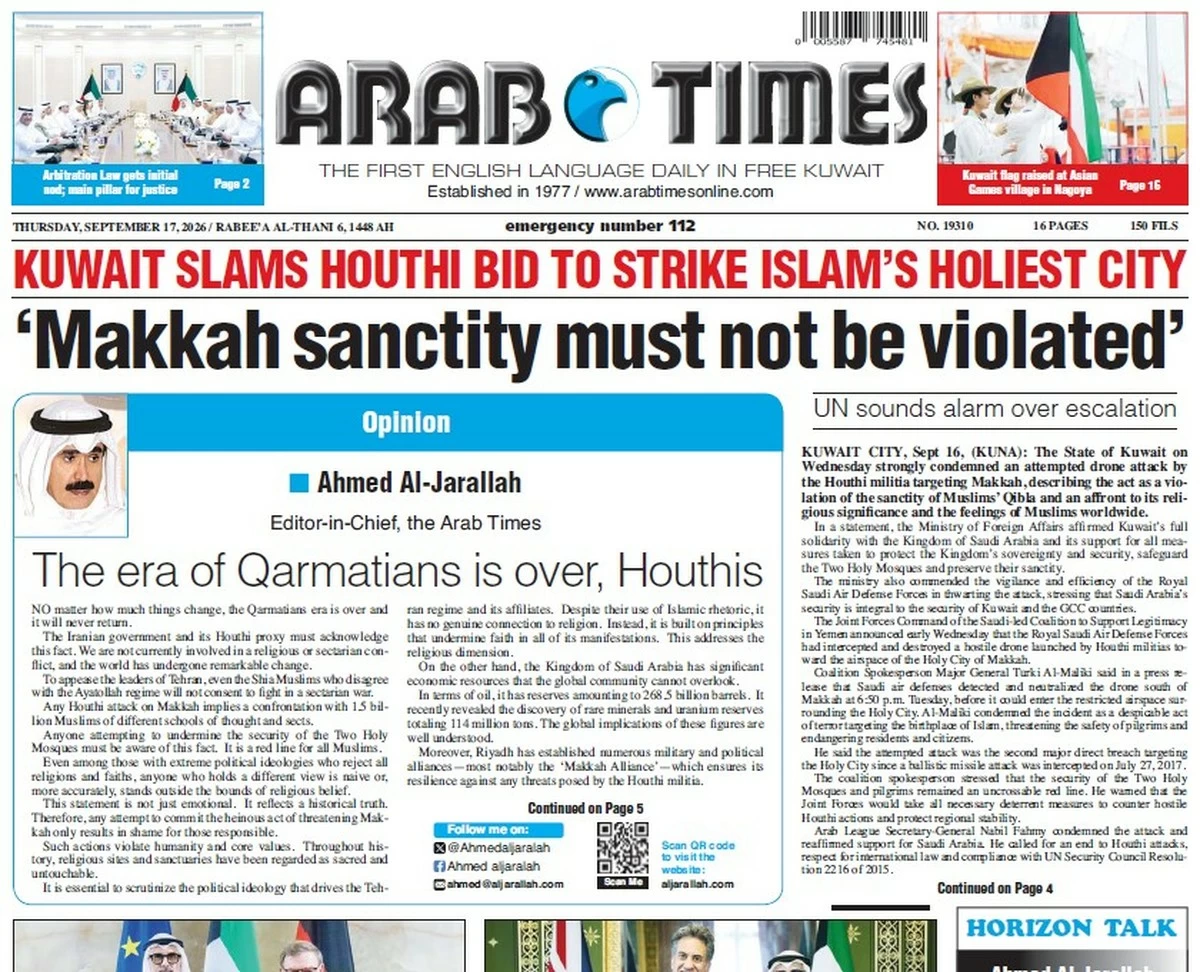
The fighting between Saudi Arabia and the Houthis is the latest front to erupt as a result of the Iran war. On Wednesday, Saudi Arabia accused the Houthis of trying to attack Islam’s holiest city with a drone; the region responded with condemnation but no sign of military support.
The kingdom declared Mecca, the birthplace of the Prophet Muhammad, a “red line” and said it had intercepted the drone. The Houthis denied targeting Mecca, about 1,100 kilometers (680 miles) from Yemen’s border.
Saudi Arabia struggles to rally support
With the world’s biggest oil exporter under fire from rebels backed by the Saudis’ regional adversary, the kingdom needs a safe outlet for its crude as well as military assistance. There’s no clear path to either.
A crucial Saudi pipeline has been shut down, reportedly for weeks, after an attack by Iranian-backed militias in Iraq. The Houthis have been targeting infrastructure in the kingdom and its shipping on the Red Sea, where they have seized several islands in the Bab el-Mandeb Strait. And Iran is still targeting ships in the Strait of Hormuz. Oil prices remain above $100 a barrel.
One of the regional officials said Saudi Arabia is in a “very difficult position,” since it has to protect not only its military bases and vital government installations, but also oil facilities across the kingdom.