

22/10/2026

Share:
22/10/2026
Share:

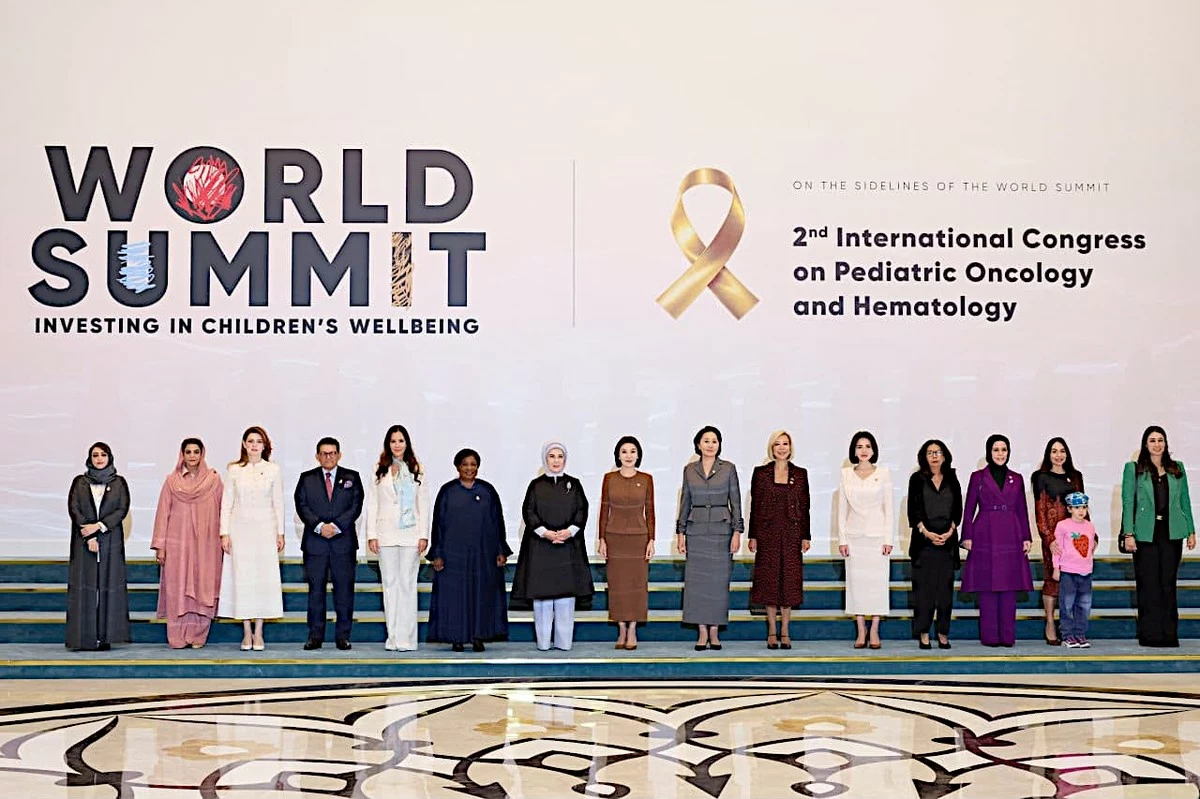
SAMARKAND, Uzbekistan, Oct 22: World leaders, first ladies, senior government officials and representatives of international organizations gathered in the historic Uzbek city of Samarkand on Wednesday for the opening of the World Summit on Investing in Children’s Well-being and the Second International Congress on Pediatric Oncology, calling for stronger global cooperation to protect children’s rights and ensure equal opportunities for every child.
Held under the theme “Investing in Children’s Well-being: A Pathway to Sustainable and Equitable Development for Future Generations,” the summit brings together representatives from more than 100 countries to advance practical solutions in social protection, healthcare, education and child safeguarding.
The gathering is advancing a central message: children’s well-being is not merely a social concern but a strategic investment in human capital, long-term economic growth and the sustainable development of societies.
The opening ceremony featured a greeting from Uzbek President Shavkat Mirziyoyev, delivered by his press secretary, Asadov Sherzod Ikromovich. An address by United Nations Secretary-General António Guterres was delivered by UN Resident Coordinator in Uzbekistan Sabine Machl, highlighting the international significance of the gathering.
Speakers included Uzbekistan’s First Lady, Ziroat Mirziyoyeva; Najat Maalla M’jid, the UN Secretary-General’s Special Representative on Violence Against Children; and Shakhnoza Mirziyoyeva, First Deputy Director of Uzbekistan’s National Agency for Social Protection. First Ladies and representatives of participating countries also addressed the importance of protecting children’s rights and improving their well-being.
A video message from UN Deputy Secretary-General Amina Mohammed further underscored the need for international cooperation.
Global initiative for children with cancer
One of the most significant developments emerging from the parallel International Congress on Pediatric Oncology was the announcement of a new Global Network bringing together First Ladies and spouses of heads of state to strengthen international cooperation in support of children with serious and life-threatening illnesses, including cancer.
Carlos Rodriguez-Galindo, vice-president of St. Jude Children’s Research Hospital and director of St. Jude Global in the United States, announced the initiative, which aims to facilitate the exchange of expertise, promote collaboration and improve support for affected children and their families.
Ziroat Mirziyoyeva was appointed chair of the Global Network for a two-year term. The ceremony marking her assumption of the position took place during the International Congress on Childhood Cancer.
The appointment recognizes Uzbekistan’s efforts to develop pediatric oncology services and Mirziyoyeva’s role in supporting children with cancer, improving access to quality medical care and promoting conditions that allow every child to grow and develop, regardless of personal circumstances.
The initiative adds a practical dimension to the summit’s discussions by seeking to connect international leadership with coordinated action for children facing some of the most serious health challenges.
The congress is also focusing on early detection, effective treatment and improved experiences in the diagnosis and management of childhood cancer, with international medical partnerships expected to play a central role.
Recognition of Uzbekistan’s child welfare efforts
Another notable moment at the opening ceremony was the presentation of a World Health Organization certificate to Ziroat Mirziyoyeva, who chairs the Board of Trustees of the Zamin International Public Foundation. The certificate was presented by WHO representative Dr. Natasha Azzopardi-Muscat.
The recognition drew attention to Uzbekistan’s efforts to advance children’s health and strengthen cooperation with international partners.
Uzbekistan is hosting the summit through its National Agency for Social Protection under the President, the Ministry of Health, the Ministry of Preschool and School Education, and the Zamin International Public Foundation. A global advisory committee comprising the UN special representative on violence against children, UNICEF, WHO and the World Bank supports the initiative.
From policy commitments to practical solutions
The summit’s plenary sessions are examining how governments can better integrate social protection, healthcare, education and child protection systems to ensure that support reaches children and families when it is needed most.
Discussions are focusing on five interconnected priorities: investing in children as a driver of long-term development; identifying the needs of vulnerable children and families early; strengthening mechanisms to prevent violence and other risks; improving the effectiveness of healthcare services; and expanding access to quality, inclusive early childhood development and education.
Participants are also addressing poverty reduction, comprehensive child protection services and greater opportunities for children with special needs to participate fully in education and society.
The emphasis on early intervention reflects the importance of identifying risks before they escalate and providing coordinated assistance to children and families. By linking health, education and social services, countries can work toward more effective support systems rather than relying on isolated interventions.
The broader objective is to translate investment into tangible improvements in children’s everyday lives, from access to medical treatment and quality education to protection from violence and the opportunity to develop their abilities.
Children’s voices and international cooperation
A particularly poignant contribution came from children of the Mehrli Maktab State School, whose participation underscored the importance of including young people in discussions about policies that directly affect them.
Their presence reinforced the principle that children should not be regarded solely as beneficiaries of public programs but also as participants whose experiences and perspectives can help shape better decisions.
The summit also provides a platform for governments, international organizations, experts and civil society representatives to exchange best practices and identify approaches that can be adapted across different national contexts.
Participants are scheduled to visit social facilities in Uzbekistan to learn from local experiences in supporting children and families, connecting the international discussions with practical examples of service delivery.
The participation of First Ladies, including Emine Erdoğan of Türkiye and representatives from Kyrgyzstan, Serbia, Lebanon and Zimbabwe, further highlights the role of international solidarity in advancing children’s rights.
In her remarks, Emine Erdoğan emphasized that children must remain at the center of the global agenda and reaffirmed Türkiye’s commitment to supporting all children without discrimination. She drew particular attention to children affected by armed conflict, especially in Gaza, stressing that a world in which no one is left behind requires an end to the suffering caused by war.
Her remarks highlighted the vulnerability of children in conflict zones and the need for sustained international efforts to protect their lives, health and future prospects.
Samarkand Declaration to set the course
The two-day summit is expected to conclude with the adoption of the Samarkand Declaration on Investing in Children’s Well-being, intended to provide a practical roadmap for sustainable policies and coordinated action to safeguard children’s rights.
The declaration is expected to reinforce the importance of turning international commitments into measurable improvements through stronger public services, targeted social protection, inclusive education and accessible healthcare.
As discussions continue in Samarkand, the summit’s central challenge is to ensure that international cooperation produces lasting results beyond the conference itself.
The message emerging from the gathering is that investing in children must be treated as a long-term development priority, requiring sustained political commitment, effective institutions and partnerships that reach every child.
Ultimately, the success of the Samarkand Summit will depend not only on the commitments adopted but also on how effectively they are translated into healthier, safer and more equitable futures for children around the world
By Marlon Aquino Malinao, Managing Editor - Arab Times