

23/10/2026

Share:
23/10/2026
Share:

Academy Award-winning actor Adrien Brody presents a painting he created to Shakhnoza Mirziyoyeva during the world summit.

SAMARKAND, Oct 23: The Samarkand Declaration on Investing in Children’s Wellbeing was adopted on Oct 22 at the conclusion of a two-day World Summit in Uzbekistan, with participating countries pledging to strengthen child protection, improve access to essential services and mobilize greater resources to secure a better future for the next generation.
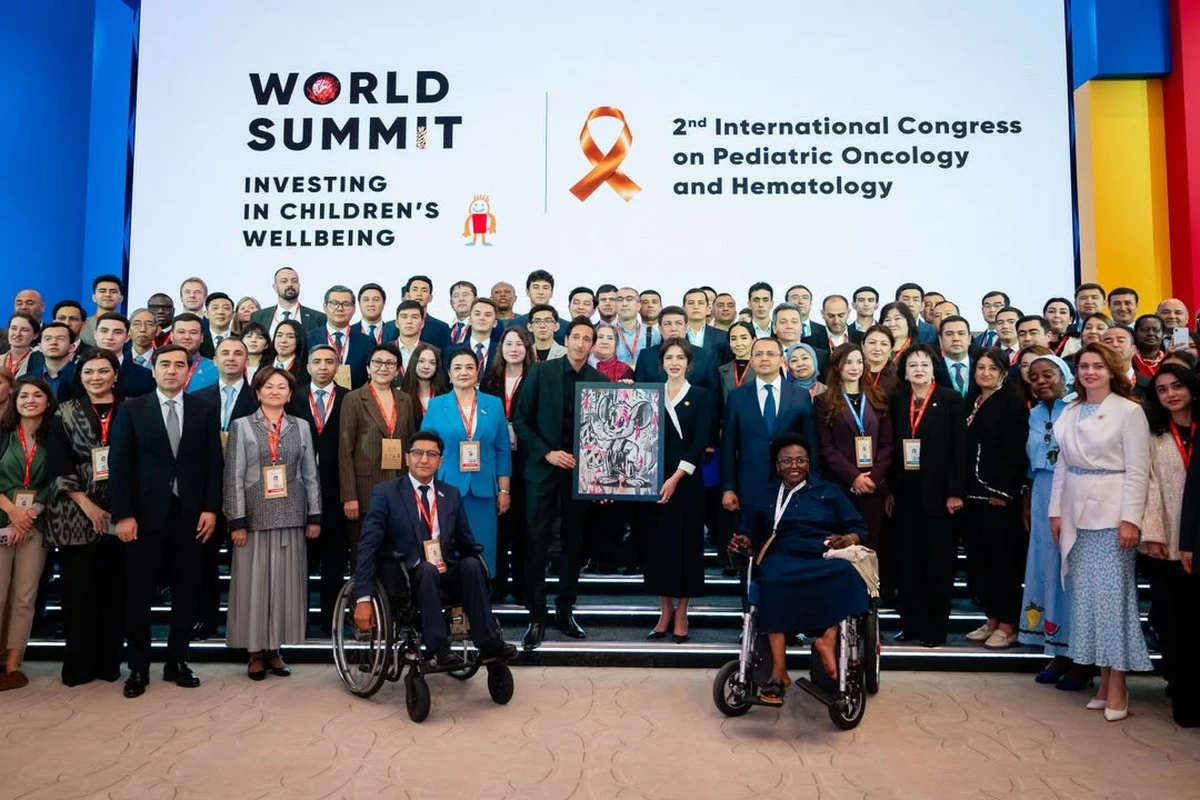
Group photo.
The summit, held on Oct 21-22 under the theme “Investing in Children’s Wellbeing: A Path Toward Sustainable and Just Development for Future Generations,” was organized by Uzbekistan in cooperation with the Special Representative of the UN Secretary-General on Violence Against Children, UNICEF, the World Health Organization (WHO) and the World Bank.

Academy Award-winning actor Adrien Brody presents a painting he created to Shakhnoza Mirziyoyeva during the world summit.
Group photo.
It brought together First Ladies, ministers responsible for social protection, health, education and finance, government representatives, international organizations, civil society, academia and the private sector, alongside children and young people.
The declaration reaffirmed participants’ commitment to the Convention on the Rights of the Child and the principle of prioritizing children’s best interests. Recognizing that children account for one-third of the global population, the document emphasized that investing in their wellbeing produces lasting benefits in health, education, productivity, social cohesion and peace.
Under the declaration, participating states committed to advancing child-focused policies in line with their national circumstances, priorities and capacities. These include strengthening social protection systems and expanding benefits for children and families, particularly during crises, as well as improving safeguards against violence, abuse and exploitation, including in the digital environment.
Other priorities include supporting early childhood development, expanding inclusive education and healthcare, and strengthening efforts to combat childhood cancer. The declaration also calls for greater support for parents and caregivers to prevent unnecessary separation of children from their families.
Preparing young people for the future economy is another key objective, with an emphasis on developing green and digital skills and promoting decent employment opportunities, including for young people with disabilities.
Financing emerged as a central pillar of the agreement. Participating states underscored the need to steadily increase public investment in children and make national budgets more transparent and responsive to their needs.
International financial institutions, development partners, philanthropic organizations and the private sector were urged to scale up funding, particularly for low- and middle-income countries and those affected by conflict, climate change and natural disasters.
The declaration also recognizes children and adolescents as rights holders and agents of change, calling for their safe and meaningful participation in decision-making, including in implementing the commitments outlined in the document.
Implementation will be pursued through national policies and budgets, with each country determining its own timelines and providing regular progress reports. Participants also agreed to reconvene to assess progress, while the organizations that co-hosted the summit were invited to help countries translate the declaration into concrete action.
Expressing gratitude to the people and government of Uzbekistan for hosting the gathering in Samarkand, participants described the historic city as a “crossroads of civilizations.”
The summit’s outcomes were also highlighted by Academy Award-winning actor Adrien Brody, who presented Shakhnoza Mirziyoyeva with a painting he had created himself.
Protecting children’s present
The declaration’s commitments were echoed in discussions on the immediate challenges facing children, with Shakhnoza Mirziyoyeva, First Deputy Director of Uzbekistan’s National Agency for Social Protection, stressing that safeguarding children must begin with ensuring their safety, dignity and access to protection.
Speaking at the summit on Wednesday, Mirziyoyeva said any discussion about protecting children should begin with a fundamental question: What happens to a child when there are no adults beside them to provide protection?
Every child, she emphasized, must have the right to seek help and feel that they are not alone. Achieving this requires society to adopt a zero-tolerance approach to violence against children and uphold their rights and dignity without compromise.
She also pointed to the growing challenges posed by the digital environment, global instability and other emerging risks affecting children and families.
No country can address these challenges in isolation, she said, underscoring the importance of cooperation among governments, businesses, civil society and international organizations.
Before discussing children’s future, Mirziyoyeva stressed, societies must protect their present, ensuring that every child can live with love, attention and safety.
Health systems in focus
Beyond protection and social welfare, the summit also placed particular emphasis on ensuring that children receive quality healthcare throughout their lives.
A high-level plenary session titled “Investing in Equitable and Resilient Child Health Systems that Deliver Measurable Outcomes across the Life Course” brought together health leaders from Uzbekistan, Kyrgyzstan, Russia, Tajikistan and Belarus, alongside representatives of UNICEF, WHO, the World Bank and other international organizations.
Participants discussed ways to safeguard children’s health, ensure equitable access to quality medical services and strengthen the resilience of healthcare systems.
The discussions also examined the importance of sustained investment in children’s health at every stage of life, with participants exchanging international experiences, effective approaches and opportunities for closer cooperation.
Together, the declaration and the summit’s discussions underscored a common message: meaningful investment in children requires more than long-term promises. It demands coordinated action, adequate financing and effective systems that protect children’s rights, support their development and safeguard their wellbeing today and in the years ahead.
By Marlon Aquino Malinao, Managing Editor - Arab Times